 The organic food industry has evolved from a niche market into a global powerhouse. Organic food sales have surpassed $60 billion annually in the United States alone, and the growth trajectory shows no signs of slowing. Consumers across every demographic are actively seeking organic produce, health food products, farm-to-table experiences, and transparent supply chains. For organic farms, health food stores, artisan food producers, and farm-direct delivery brands, this represents an enormous opportunity, but only if you have a website that can capture it.
Unlike conventional food retail, the organic food market is built on trust, transparency, and storytelling. Customers do not just want to buy organic products. They want to understand where their food comes from, how it is grown, who grows it, and what makes it different from the conventional alternatives on supermarket shelves. Your website is the primary platform for telling that story, and the quality of your online presence directly determines whether a health-conscious consumer chooses your brand over the dozens of competitors they can find with a single Google search.
This guide provides a complete roadmap for choosing and deploying a website template for an organic food business. Whether you run a family farm, operate a health food delivery service, manage an organic grocery store, or produce artisan food products, you will learn which features drive sales, how to structure your site for maximum search visibility, and what technology decisions matter most for your specific niche within the organic food space.
The organic food industry has evolved from a niche market into a global powerhouse. Organic food sales have surpassed $60 billion annually in the United States alone, and the growth trajectory shows no signs of slowing. Consumers across every demographic are actively seeking organic produce, health food products, farm-to-table experiences, and transparent supply chains. For organic farms, health food stores, artisan food producers, and farm-direct delivery brands, this represents an enormous opportunity, but only if you have a website that can capture it.
Unlike conventional food retail, the organic food market is built on trust, transparency, and storytelling. Customers do not just want to buy organic products. They want to understand where their food comes from, how it is grown, who grows it, and what makes it different from the conventional alternatives on supermarket shelves. Your website is the primary platform for telling that story, and the quality of your online presence directly determines whether a health-conscious consumer chooses your brand over the dozens of competitors they can find with a single Google search.
This guide provides a complete roadmap for choosing and deploying a website template for an organic food business. Whether you run a family farm, operate a health food delivery service, manage an organic grocery store, or produce artisan food products, you will learn which features drive sales, how to structure your site for maximum search visibility, and what technology decisions matter most for your specific niche within the organic food space.
The Organic Food Consumer: What They Expect from Your Website
Organic food consumers are among the most research-driven buyers in any market. They read ingredient labels obsessively, compare certifications, investigate sourcing practices, and share their discoveries with communities of like-minded health-conscious shoppers. Your website needs to match this level of conscientiousness. The organic buyer’s journey typically begins with a search query that signals high intent and specific values: “organic produce delivery near me,” “farm-to-table CSA subscription,” “non-GMO snacks online,” or “organic meal kit service.” When these customers land on your site, they are evaluating three things simultaneously: your product quality, your values alignment, and your trustworthiness.Organic food buyers spend an average of 24 percent more per transaction than conventional food shoppers. They are also significantly more brand-loyal once they find a source they trust. Your website’s ability to communicate quality, transparency, and values alignment directly affects both customer acquisition cost and lifetime value.
Essential Pages for an Organic Food Website
An organic food website requires a page structure that supports both e-commerce functionality and the educational content that drives organic consumer decisions. Homepage with Seasonal Showcase Your homepage should immediately communicate freshness, seasonality, and your brand story. Multiple homepage variations (ideally five or more) let you rotate seasonal themes: spring planting, summer harvest, autumn preserves, winter root vegetables, and year-round staples. Featured product carousels and countdown timers for seasonal availability create urgency and return visit motivation. Product Shop with Filtering Your shop page should display products in a filterable grid format. Essential filter categories for organic food include product type (produce, grains, dairy, pantry, snacks, beverages), dietary needs (gluten-free, vegan, keto, paleo), certification type, and price range. Individual product detail pages must include high-quality photography, complete ingredient lists, nutritional information, certification badges, sourcing details, and clear add-to-cart functionality. Recipe Module A dedicated recipe section with both archive and individual detail pages creates the content-commerce integration that drives organic food sales. Each recipe page should list ingredients (linked to your shop), preparation steps, cooking times, dietary tags, serving suggestions, and nutritional information. This module transforms your website from a simple store into a culinary resource that customers return to regularly. Multi-Step Checkout Organic food orders often involve considerations beyond standard e-commerce: delivery schedule preferences, subscription frequency, special handling for perishables, and gift wrapping for artisan products. A multi-step checkout form breaks these options into logical stages, reducing form abandonment and ensuring all customer preferences are captured. Blog Content marketing is essential for organic food brands. Blog content should cover seasonal eating guides, farm updates, behind-the-scenes growing practices, nutrition education, food preservation techniques, and sustainability topics. Each blog post is a search engine entry point that attracts health-conscious consumers in the research phase of their journey. About Page For organic brands, the about page is often the second-most-visited page on the site (after the homepage). It is where customers evaluate your authenticity and values. Your story, your farming or sourcing practices, your certifications, and your team should be presented with the transparency that organic consumers demand. Contact and Account Pages Contact pages with farm or store location, hours, and inquiry forms serve both online and local customers. Login and registration pages support account features like order history, saved preferences, and subscription management that drive repeat purchases.Design Principles for Organic Food Brands
Organic food website design must communicate freshness, naturalness, and artisan quality through every visual element. Color palettes should draw from the natural world: leaf greens, earth browns, harvest golds, cream whites, and soft terracotta. These colors create an instant association with organic growing practices and natural ingredients. Avoid the harsh, saturated greens and yellows that budget health food brands overuse, as they undermine the premium positioning that drives higher margins. Photography is the most important element on any food website, and organic food photography carries additional responsibility. Images must convey freshness (water droplets on produce, just-harvested textures), artisan quality (handmade packaging, rustic display), and provenance (farm landscapes, growing conditions, harvest scenes). Lifestyle photography showing families preparing meals with organic ingredients creates emotional resonance that product shots alone cannot achieve. Typography for organic brands should feel warm and approachable without sacrificing readability. Clean sans-serif fonts for body text paired with slightly organic or handwritten-style accents for headings and callouts create a brand feel that is natural without being unprofessional. White space is critical for food websites. Cramped layouts with competing visual elements make food look less appetizing. Generous margins, clean card layouts, and ample spacing between product listings create the visual breathing room that makes each product feel carefully curated rather than mass-merchandised.Technology Stack for Organic Food Templates
The technology behind your organic food website needs to support e-commerce, content management, and the visual presentation that food photography demands.| Technology | Purpose | Organic Food Application |
|---|---|---|
| Bootstrap 4 | Responsive grid and components | Product cards, recipe layouts, shop pages |
| Isotope | Filterable grid layouts | Filter products by type, diet, certification |
| Slick Carousel | Image and content sliders | Featured products, testimonials, seasonal items |
| jQuery Steps | Multi-step forms | Checkout wizard with delivery preferences |
| Countdown | Timer functionality | Seasonal product availability, flash sales |
| Magnific Popup | Full-screen lightbox | High-res food photography viewing |
SEO Strategy for Organic Food Websites
Organic food SEO combines local, commercial, and informational keyword strategies to capture customers at every stage of their journey. Product pages should target commercial keywords with specific qualifiers: “organic delivery,” “non-GMO online,” “farm-fresh near me,” “best organic subscription.” Each product page needs a unique title tag, meta description, and heading structure optimized for its specific target terms.Recipe content is the highest-ROI blog strategy for organic food websites. Recipe pages can rank for hundreds of long-tail keywords simultaneously (“organic quinoa salad recipe,” “farm-fresh tomato sauce recipe,” “healthy organic meal prep ideas”) and each recipe naturally links to your product pages through ingredient lists. This creates a content flywheel that drives traffic and sales simultaneously.
Cost of Building an Organic Food Website
Your organic food website investment should match both your business stage and your growth ambitions.| Approach | Cost Range | Timeline | Best For |
|---|---|---|---|
| Premium HTML5 Template | $19 – $59 | 1 – 2 weeks | Farms, artisan producers, local shops |
| WordPress + WooCommerce | $150 – $500 | 3 – 6 weeks | Online stores with payment processing |
| Custom Freelance Build | $3,000 – $10,000 | 4 – 8 weeks | Branded subscription services |
| Full Agency Build | $12,000 – $35,000+ | 8 – 16 weeks | National organic brands |
| SaaS E-Commerce Platform | $30 – $300/mo | 1 – 2 weeks | Quick launch, limited customization |
An organic food customer who subscribes to weekly delivery at $60 per order generates over $3,000 in annual revenue. If your website converts even one additional subscriber per month through improved design and SEO, that is $36,000 in annual revenue from a template investment of under $60. The math overwhelmingly favors investing in a professional website.
Cinagro: A Complete Organic Food Website Template
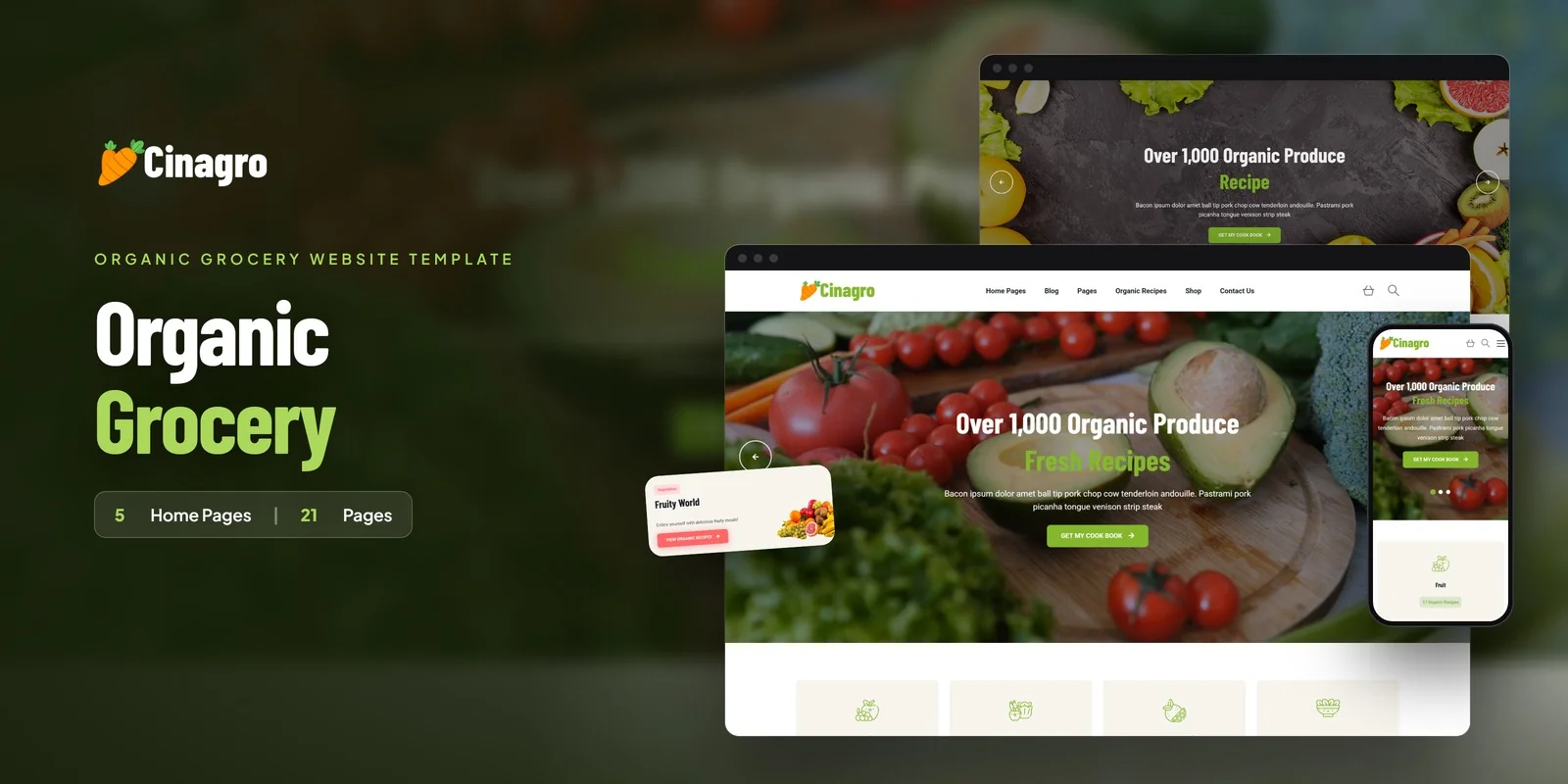
Cinagro is a fresh, feature-rich HTML5 template built specifically for organic farms, food delivery brands, health food stores, recipe platforms, and agri-food businesses. With 21 fully crafted HTML pages and 5 unique home layouts, it delivers the most versatile organic food web presence available in a single template. The five homepage variations set Cinagro apart from competitors that offer one or two layouts at most. Each variation presents a distinct seasonal or brand personality, allowing you to match your homepage to harvest seasons, promotional campaigns, or brand refresh cycles without rebuilding the page from scratch. This flexibility is particularly valuable for organic businesses whose product mix and visual branding shift with the agricultural calendar. Cinagro’s standout feature is its dedicated recipe module. The recipe archive and individual recipe detail pages create the content-commerce integration that drives organic food sales. Each recipe page provides the structure for ingredients lists, preparation methods, cooking times, and nutritional information, naturally linking to your product shop for ingredient purchases. This feature alone transforms the template from a simple store into a culinary destination that customers bookmark and revisit. The e-commerce shop includes a product archive with Isotope filtering, individual product detail pages, a shopping cart, and a multi-step checkout powered by jQuery Steps. The Countdown timer adds urgency for seasonal products and limited-time offers. Six blog post formats (grid, list, masonry, and three distinct single-post styles) provide exceptional content marketing flexibility, ensuring your farm stories, nutrition guides, and seasonal eating content are presented with the visual variety that maintains reader engagement. Built on Bootstrap 4 with Slick carousels, Isotope filtering, jQuery Steps, Countdown, and Magnific Popup lightbox, Cinagro delivers responsive performance across all devices. The authentication module (login and register pages) supports the customer accounts that subscription-based organic food businesses rely on for retention and repeat revenue.Launch Guide: Getting Your Organic Food Website Live
A phased launch approach ensures your organic food website attracts customers from day one. Week One: Brand and Design Setup Deploy the template and customize your brand identity: logo, color palette (natural tones), typography, and hero photography. Select the homepage variation that best matches your current season and brand personality. Replace all placeholder content with your actual copy, emphasizing your organic certifications, sourcing story, and values. Week Two: Product Catalog and Recipes Build your product catalog with professional food photography, detailed descriptions including certifications and nutritional information, and clear pricing. Create at least five recipe pages that feature your most popular products as ingredients. Link recipe ingredients to their respective product pages. Week Three: Blog Content and SEO Write and publish five foundational blog posts: your farm or sourcing story, a seasonal eating guide for the current quarter, a nutrition education post, a recipe roundup, and a post about your certification journey. These posts provide the initial content foundation for search engine indexing. Set up Google Search Console and submit your sitemap. Week Four: Checkout Testing and Launch Thoroughly test the multi-step checkout flow on all devices. Verify that product filtering, recipe navigation, and account registration work correctly. Configure analytics, set up email collection, and launch. Announce to your existing customer base and local community.Frequently Asked Questions
The three highest-impact features are a product shop with dietary and certification filtering, a recipe module that links ingredients to your products, and mobile responsiveness. Secondary features like seasonal countdown timers, multiple blog formats, and multi-step checkout with delivery scheduling significantly improve conversion and customer experience.
Extremely important. Recipe content serves three critical functions: it drives organic search traffic from meal-planning queries, it creates natural cross-selling opportunities by linking recipe ingredients to your product pages, and it increases customer engagement and return visits. Organic food websites with recipe modules consistently outperform those without in both traffic and average order value.
(adsbygoogle = window.adsbygoogle || []).push({});A premium HTML5 template costs $19-$59 and can be deployed in one to two weeks. Total first-year costs including hosting and domain typically stay under $250. WordPress with WooCommerce adds payment processing for $150-$500. Custom builds for branded subscription services range from $3,000 to $10,000.
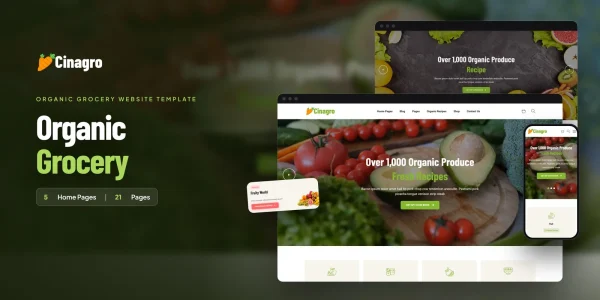
Cinagro – Bootstrap 5 Organic Grocery HTML5 Website Template
At minimum, two or three variations give you the flexibility to match your homepage to seasonal changes. Five variations are ideal for organic food businesses, as they allow you to create distinct seasonal themes (spring, summer, autumn, winter, and year-round) that keep your site feeling fresh and connected to the agricultural calendar your customers care about.
Yes. Organic food orders frequently involve preferences beyond standard e-commerce: delivery schedule, subscription frequency, handling instructions for perishables, and gift packaging options. A multi-step checkout breaks these decisions into manageable stages, reducing form abandonment and ensuring all customer preferences are captured. jQuery Steps is the most widely used technology for this pattern.
Cinagro — Grocery Mart Angular Website Template
Three content types dominate organic food SEO: recipe posts (which target meal-planning keywords and link to your products), seasonal eating guides (which capture timely search interest and showcase your current inventory), and educational posts about organic farming, certifications, and nutrition (which build topical authority and attract health-conscious consumers in the research phase).
(adsbygoogle = window.adsbygoogle || []).push({});Display every relevant certification prominently on your product pages and about page: USDA Organic, Non-GMO Project Verified, Fair Trade, Rainforest Alliance, Certified B Corporation, and any state-specific organic certifications. These trust signals are the primary decision factors for organic consumers and should be visible without scrolling on product detail pages.