
What Is a Janitorial Service Website Template?
A janitorial service website template is a pre-designed, fully coded website built specifically for commercial cleaning companies, janitorial service providers, facility maintenance firms, and office cleaning operations. It includes every page a janitorial business needs — homepage with service highlights, service pages with detailed cleaning descriptions, portfolio showcasing completed projects, team profiles for your cleaning staff, gallery of before-and-after results, blog for industry content and SEO, FAQ section for client pre-qualification, and contact page with quote request functionality — all designed, responsive, and ready for your cleaning brand.
For janitorial service owners who need a professional web presence without paying $5,000 to $10,000 for a custom build or relying solely on directory listings and word-of-mouth, a template delivers the most cost-effective path to a credible online identity. But commercial cleaning websites have unique requirements that generic service templates miss. Your services must be segmented by industry (office, medical, industrial, retail). Your portfolio must show before-and-after proof of cleaning quality. Your team profiles must communicate trust signals like background checks and insurance. This guide covers what facility managers expect from your website, what features drive quote requests, and how to choose the right template for your janitorial business.
Template vs Cleaning Platform vs Custom Build
Janitorial service owners typically face three paths when building their online presence:
| Factor | Cleaning Directory (Yelp, Thumbtack) | Janitorial Service Template | Custom Website Build |
|---|---|---|---|
| Upfront Cost | Free (basic listing) | $29–69 | $5,000–10,000 |
| Monthly Cost | $0–300/month (ads) | $3–10/month (hosting only) | $50–200/month |
| 3-Year Total Cost | $0–10,800 | $137–429 | $6,800–17,200 |
| Code Ownership | No — you are a listing | Yes — you own it forever | Yes — you own it |
| Design Uniqueness | Same profile as all vendors | Fully customisable | Fully custom |
| Service Pages | Basic description box | Dedicated overview + detail pages | Any format |
| Lead Quality | Shared leads, price-focused | Direct — exclusive leads to you | Direct |
| Time to Launch | 30 minutes (profile) | 3–7 days | 4–12 weeks |
| Vendor Lock-in | High — reviews stay on their platform | None | None |
Cleaning directories like Yelp and Thumbtack give you a listing — not a business identity. Your profile competes directly against dozens of other janitorial companies on the same page, leads are often shared or price-driven, and your brand is reduced to a rating and a description box. A template gives you a standalone website where facility managers evaluate your company independently, leads come exclusively to you, and your brand communicates the professionalism and reliability that commercial cleaning contracts require.
What Facility Managers Expect From Your Janitorial Website
Janitorial service buyers are different from residential cleaning customers. Facility managers, property managers, and office administrators are making B2B purchasing decisions that affect employee health, workplace safety, and company image. They evaluate janitorial companies methodically — checking credentials, comparing service scopes, requesting proposals, and often requiring presentations before signing contracts. Your website must speak their language and address their professional concerns.
Service Pages Segmented by Industry
Commercial cleaning is not one-size-fits-all. Office cleaning, medical facility sanitation, industrial cleaning, retail space maintenance, educational institution janitorial services, and post-construction cleanup each require different protocols, equipment, and certifications. Your service overview page should list every cleaning category you handle, while individual service detail pages explain the specific protocols, equipment, and compliance standards for each facility type.
A facility manager searching for “medical office cleaning service” wants to see that you understand healthcare sanitation protocols — not just that you clean offices generally. A warehouse manager searching for “industrial cleaning contractor” needs to see that you handle heavy-duty degreasing and compliance with safety standards. Service detail pages that address industry-specific requirements build the confidence that leads to contract discussions.

Before-and-After Portfolio That Proves Results
A before-and-after portfolio is one of the most powerful trust-building tools for janitorial websites. Real photos showing the transformation of a grimy warehouse floor, a neglected office space, or a post-event venue cleanup demonstrate your cleaning quality in a way that no written claim can match. Organize your portfolio by facility type or cleaning service category so facility managers can see results relevant to their specific needs.
Each portfolio entry should document the facility type, the cleaning challenge, your approach, and the visual result. A project detail page with multiple before-and-after comparisons, process photos, and a brief description of the cleaning scope provides the documentation that B2B buyers need to justify their vendor selection internally.
Team Profiles With Trust Credentials
Janitorial staff enter client facilities — often after hours, with access to sensitive areas. Facility managers need assurance that your team is trustworthy. Team profiles should display employee certifications, background check status, insurance coverage, years of experience, and any specialised training (OSHA compliance, healthcare sanitation, green cleaning certification). Individual team member profiles with photos humanize your company and build the personal trust that B2B relationships require.
For larger janitorial companies, team profiles can feature supervisors, account managers, and quality assurance personnel — the people clients interact with directly. Showing the management structure behind the cleaning crew communicates operational maturity and reliability.
Quote Request Process for Contract-Based Sales
Janitorial services sell through proposals, not shopping carts. Your website must make it easy for facility managers to request a quote with enough detail for you to prepare a meaningful proposal. The contact form should capture facility type, square footage or size, cleaning frequency needed (daily, weekly, monthly, one-time), special requirements, and contact information. A well-structured intake form qualifies leads before you invest time in site visits and proposals.
Including a “Request a Free Walk-Through” call to action is particularly effective for commercial cleaning — it lowers the commitment barrier while setting up the in-person assessment that most janitorial contracts require before pricing.

FAQ That Handles Procurement Questions
Facility managers have operational questions that generic FAQ pages do not address. Do you carry commercial general liability insurance? What is your coverage limit? Do you provide your own supplies and equipment? What are your employee screening procedures? How do you handle key control and facility access? What is your response time for emergency cleaning? A comprehensive FAQ that addresses procurement and operational questions demonstrates professionalism and reduces the back-and-forth that delays contract decisions.
Mobile Experience for Decision Makers
Over 70% of local service searches happen on mobile devices. Facility managers may browse your website during a site walk-through, while evaluating their current cleaning vendor’s performance, or during a property management meeting. Your website must load fast, present your credentials clearly, and make quote requests easy on a touchscreen. A mobile-unfriendly website signals operational negligence — exactly the impression a janitorial service cannot afford.
Technical Features That Elevate Janitorial Websites
Beyond clean design and service descriptions, specific technical features make janitorial websites more effective at generating commercial cleaning leads.

Services Module With Overview and Detail Pages
A structured services module with a master overview page and individual service detail pages creates the information architecture that both facility managers and search engines need. The overview page gives a quick scan of all your cleaning capabilities. Each detail page provides in-depth information about a specific service — cleaning protocols, equipment used, frequency options, industry-specific compliance, and pricing models. These detail pages also serve as SEO landing pages for industry-specific searches.
Portfolio With Project Documentation
A portfolio system with project archive and individual detail pages lets you document completed cleaning projects comprehensively. The archive view shows your range of completed work. Detail pages provide the before-and-after photography, scope description, and facility information that B2B buyers need. For janitorial companies, the portfolio doubles as a case study library — each entry demonstrating your ability to handle a specific type of cleaning challenge.
Gallery Page for Visual Impact
A dedicated gallery page provides immediate visual proof of your cleaning quality. While the portfolio tells project stories, the gallery delivers visual impact — a curated collection of your most impressive before-and-after results that makes an instant impression on facility managers evaluating your company. Think of it as your visual elevator pitch.
Blog System for Industry Authority
Blog content positions your janitorial company as an industry authority. Articles about cleaning best practices, sanitation protocols for different facility types, green cleaning methodologies, OSHA compliance tips, and seasonal cleaning guides attract facility managers researching cleaning topics. A blog with multiple layout options (list, grid, detail views) gives you the content infrastructure to build organic search visibility and demonstrate expertise that differentiates you from competitors.
B2B Trust Signals: Commercial cleaning is a trust-dependent industry. Facility managers are granting your team unsupervised access to their buildings, equipment, and sensitive areas. Your website must communicate this trustworthiness through insurance documentation, background check policies, certification displays, team profiles with credentials, and a portfolio of verifiable completed work. Every trust signal on your website reduces the perceived risk of hiring your company and accelerates the contract decision.
How to Evaluate a Janitorial Template Before You Buy
Inspect the Services Architecture
Open the template demo and navigate to the services section. Does it offer both an overview page and individual service detail pages? Is there enough space on each detail page for cleaning protocols, equipment descriptions, and industry-specific compliance information? Can you envision your office cleaning, medical facility sanitation, and industrial cleaning services each presented on their own dedicated page? A template with only a single services page cannot adequately represent a multi-service janitorial operation.
Evaluate the Team Profile System
Review the team section carefully. Does it offer individual profile pages — not just a grid of thumbnails? Can you display certifications, training credentials, and professional bios for your key personnel? Janitorial service buyers care deeply about who will be entering their facilities. A team section that only shows names and photos without detail pages misses the trust-building opportunity that individual profiles provide.
Test the Contact and Quote Flow
Check the contact page. Is the form structured enough to capture the information you need for proposal preparation — facility type, square footage, cleaning frequency, special requirements? Can you reach the quote request from every major page in under two taps? Facility managers who decide to request a quote should be able to act on that decision immediately, from any page on your site.
Janitorial Service Website Cost Breakdown
Here is the realistic cost comparison for janitorial service website approaches:
| Cost Category | Template Approach | Custom Build |
|---|---|---|
| Website Design | $29–69 (one-time) | $5,000–10,000 |
| Hosting | $3–10/month | $20–80/month |
| Domain | $10–15/year | $10–15/year |
| SSL Certificate | Free (Let’s Encrypt) | Free–$200/year |
| Before-and-After Photography | $200–600 (DIY/one session) | $200–600 |
| CRM Integration | Free–$50/month (Hubspot Free, Zoho) | $1,000–3,000 |
| Lead Capture Form Tool | Free–$20/month | $500–1,500 (custom) |
| Annual Maintenance | $100–500 | $1,000–5,000 |
| First-Year Total | $450–1,700 | $7,500–20,000 |
Janitorial Service SEO and Lead Generation Strategy
Commercial cleaning SEO targets facility managers and property managers actively searching for janitorial service providers in their area.
Industry-Specific Service Pages
Create individual pages for each facility type you serve, optimized for industry-specific searches. “Medical office cleaning service [city],” “warehouse janitorial service [county],” “office cleaning company [city]” — each search represents a facility manager looking for a cleaning vendor with relevant experience. Your service detail pages serve as the foundation for these SEO landing pages, each targeting a specific industry keyword.
Google Business Profile and Local SEO
Your Google Business Profile is critical for local service searches. Post weekly updates with cleaning project photos, industry certifications, and service announcements. Respond to every review. Keep your service area and hours accurate. A properly built cleaning website with local SEO signals — service area pages, Google Business Profile integration, geo-targeted content, and schema markup — makes your business visible exactly when potential clients are searching.
LinkedIn B2B Outreach
LinkedIn is one of the most powerful and underused platforms for commercial cleaning lead generation. It gives you direct access to facility managers, property managers, and operations directors who sign cleaning contracts. Your website serves as the credibility destination — when a facility manager receives your LinkedIn message and clicks to your website, they need to see the professional services pages, team credentials, and project portfolio that justify scheduling a walk-through.
Content Marketing With Industry Education
Blog content targeting facility management questions builds organic traffic and positions your company as an industry authority. Articles about cleaning frequency guidelines for different facility types, green cleaning ROI for commercial spaces, sanitation protocols for medical facilities, and seasonal deep cleaning checklists attract facility managers in the research and evaluation phases. This educational content builds trust before the first sales conversation.
Multi-Channel Lead Generation: Commercial cleaning lead generation works best as a multi-channel system. Your website drives organic traffic from facility managers searching for cleaning services. Your Google Business Profile captures local searchers. Your LinkedIn outreach targets decision-makers directly. Your blog content builds authority and organic rankings over time. Each channel feeds the others — LinkedIn prospects check your website, organic visitors see your Google reviews, blog readers request quotes. The janitorial companies investing in all channels consistently outperform single-channel competitors.
Candu — A Template Built for Janitorial and Service Businesses
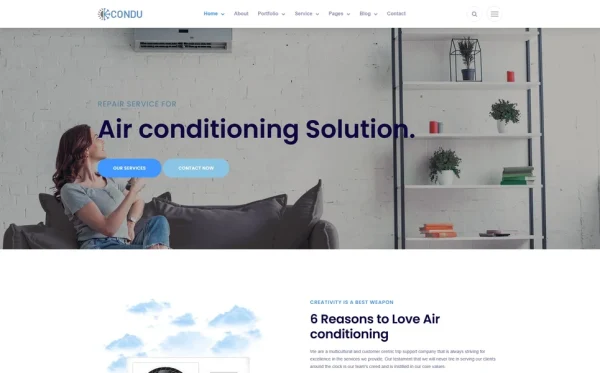
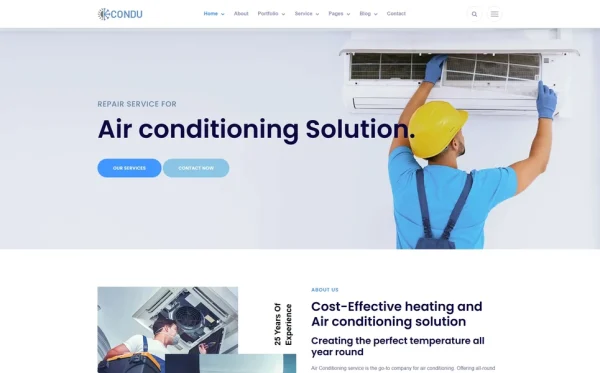
Candu is an HTML5 template that provides janitorial services, commercial cleaning companies, and facility maintenance firms with a professional, trust-building web presence. With 15 fully designed pages, dedicated service pages with detail views, a portfolio for project documentation, team profiles with individual detail pages, gallery, FAQ, and a multi-format blog system — Candu delivers the components that convert facility managers evaluating cleaning vendors into signed contracts.
What Candu Includes
- 2 Homepage Layouts — two distinct designs for different janitorial service brand identities
- Services Module — services overview page plus individual service detail pages for each cleaning category
- Portfolio Showcase — project archive plus individual project detail pages for before-and-after documentation
- Team Pages — staff profiles grid plus individual team member detail pages for displaying credentials
- Gallery Page — project and cleaning result image gallery for visual proof of quality
- Blog Module — blog archive, blog grid, and full article detail pages for industry content marketing
- FAQ Page — comprehensive frequently asked questions for client pre-qualification
- Contact Page — contact form with map integration for quote requests
- Bootstrap 5 Framework — fully responsive, mobile-first design for browsing on any device
- 15 Total Pages — focused page set covering every janitorial service website requirement
- Cross-Browser Compatible — tested on Chrome, Firefox, Safari, Edge, and Opera
Why Candu Works for Janitorial Services
What makes Candu effective for janitorial businesses is its service-and-trust architecture. The services module with overview and individual detail pages maps perfectly to how commercial cleaning companies present their capabilities — each facility type or cleaning service gets its own dedicated page with protocols, equipment, and compliance information. The portfolio with detail pages provides the before-and-after documentation that proves cleaning quality to skeptical facility managers.
The team pages with individual detail views are particularly critical for janitorial services. Facility managers need to see who will be entering their buildings — names, credentials, certifications, and background check status. Candu’s individual team member detail pages provide the space for this trust-building information that a simple team grid cannot accommodate. The FAQ page handles the procurement questions that every janitorial company fields repeatedly. The blog system with three format options (archive, grid, detail) supports the industry content marketing that builds organic visibility and authority.
Individual Team Detail Pages: Candu offers both a team profiles grid and individual team member detail pages — a feature that most service templates skip. For janitorial companies, individual detail pages are essential. Each team member page can display certifications, background check status, training credentials, years of experience, and a professional bio. When a facility manager can review the credentials of the people who will be cleaning their building, the trust barrier drops and the contract conversation accelerates.
Customisation Roadmap for Janitorial Companies
Week One — Content and Photography: Photograph your current cleaning results — before-and-after comparisons of office spaces, medical facilities, warehouses, and other facility types you serve. Gather team member photos, certifications, and credential information. Write service descriptions for each cleaning category with industry-specific protocols and equipment details. Replace all placeholder content with your janitorial company’s brand identity.
Week Two — Portfolio and Launch: Populate the portfolio with your before-and-after project documentation organized by facility type. Create individual service detail pages for each cleaning category. Set up team profiles with credentials and background check information. Write your FAQ content addressing the procurement questions facility managers ask. Integrate Google Maps on the contact page and connect the form to your business email or CRM. Test across all devices and deploy.
Frequently Asked Questions
Need Help Launching Your Janitorial Service Website?
MetropolitanHost provides professional web development services for HTML template deployments. Our team understands service industry website requirements and delivers clean, lead-generating implementations.
- WordPress Theme Installation — live in under 24 hours
- Full Website Package — complete front-to-back deployment
- Colour Customisation — match your cleaning brand across all pages
- Website Speed Optimisation — Core Web Vitals improvements
- Accessibility Compliance — WCAG audit and remediation