What Is a Design Studio Website Template?
A design studio website template is a pre-designed, fully coded website built specifically for graphic design studios, creative agencies, branding consultancies, interior design firms, illustration studios, UX/UI design practices, and freelance design professionals. It includes every page a creative business needs — homepage with portfolio highlights and studio philosophy, event management for exhibitions and workshops, sermon-style case study archives with detail pages for deep project documentation, team profiles showcasing creative directors and designers, a product shop for design assets and creative resources, donation and sponsorship pages for community creative projects, blog for design thinking and process articles, and contact page with project inquiry forms — all designed, responsive, and ready for your brand.
For design studios that need a professional web presence without paying $10,000 to $30,000 for a custom build or $100 to $300 per month for a portfolio platform subscription, a template delivers the most practical path to a compelling online presence. But design studio websites carry the highest visual stakes of any industry — you are literally selling design expertise, so your website is your most scrutinised portfolio piece. Every colour choice, typographic decision, whitespace allocation, and interaction detail signals your design competence to prospective clients who evaluate your skill before reading a single word. This guide covers what design clients expect from your website, what features drive project inquiries, and how to choose the right template for your creative practice.
Template vs Portfolio Platform vs Custom Build
| Factor | Portfolio Platform (Squarespace, Cargo) | Design Studio Website Template | Custom Website Build |
|---|---|---|---|
| Upfront Cost | $0–50 | $29–69 | $10,000–30,000 |
| Monthly Cost | $16–49/month | $3–10/month (hosting only) | $100–300/month |
| 3-Year Total Cost | $576–1,814 | $137–429 | $13,600–40,800 |
| Code Ownership | No — you rent it | Yes — you own it forever | Yes — you own it |
| Design Customisation | Limited by platform constraints | Full source code access | Unlimited |
| Case Study Depth | Blog or portfolio entries | Dedicated archive + detail pages | Any format |
| Product Shop | Platform-integrated with fees | Built-in with 3 layout variants | Custom development |
| Event Management | Requires third-party tools | Events module with detail pages | Custom development |
| Vendor Lock-in | High — export limitations | None | None |
Portfolio platforms like Squarespace and Cargo offer convenience but constrain the very creative freedom that design studios need to showcase. When your website looks like every other Squarespace site with different images, your design differentiation is undermined before the client reads your portfolio. A template provides full source code access — every pixel, every animation, every interaction is customisable to express your unique creative identity without platform limitations.
What Design Clients Expect From Your Studio Website
Design clients evaluating studios are visual professionals themselves — marketing directors, brand managers, startup founders, and creative directors who understand design quality and assess it critically. Here is what they evaluate when visiting a design studio website:
Deep Project Case Studies
The single most influential element on a design studio website is the depth of project documentation. A grid of portfolio thumbnails showing final deliverables communicates nothing about your design process, strategic thinking, or problem-solving approach. Clients hiring design studios want to see the journey — the brief, the research, the concept development, the iterations, the rationale behind design decisions, and the measurable outcomes. A dedicated case study archive with individual detail pages provides the depth that transforms a portfolio from a visual gallery into a strategic capabilities demonstration.
Each case study detail page should accommodate the complete project narrative: the client challenge, your research and discovery process, strategic positioning, concept development with sketches and iterations, final deliverables across all touchpoints, and quantifiable results (brand awareness increase, conversion rate improvement, user engagement metrics). This level of documentation requires a content structure more substantial than a standard blog post — it needs a dedicated page template designed for long-form visual storytelling with generous image placement, section headings, pull quotes, and embedded media.
Event Portfolio and Exhibition Presence
Design studios that participate in industry events — design exhibitions, creative conferences, workshop series, portfolio reviews, brand identity competitions, and community art programmes — need an events management system on their website. An events module with archive and individual event detail pages documents your studio’s thought leadership and community presence. Past events demonstrate industry engagement. Upcoming events create anticipation and registration opportunities. Event countdown timers build urgency for limited-capacity workshops and exhibition openings.
This event presence serves a dual function: it attracts clients who value studios engaged in the broader design community, and it attracts talent who want to work at studios that invest in creative culture. Many design studios report that their event programming — workshops, talks, exhibitions — generates as many inbound client inquiries as their direct portfolio work.
Team Profiles That Showcase Creative Depth
Design clients are hiring people, not just a studio brand. Team profiles presenting creative directors, senior designers, strategists, illustrators, motion designers, and UX researchers with their individual expertise, creative backgrounds, and project highlights help clients assess whether your team has the specific skills their project requires. A branding project requires different expertise than a UX redesign, which differs from a motion graphics campaign. Team profiles that surface these specialisations allow clients to self-qualify before making contact.
Individual profile pages with personal design philosophies, favourite projects, awards, publications, and speaking engagements create the personal connections that distinguish studios from faceless agencies. When a client can see that your lead designer spent five years in fashion branding before joining your studio, their confidence in your team’s capability for their fashion brand project increases substantially.
Design Resource Shop
Modern design studios increasingly monetise their expertise through digital products — icon packs, font families, UI kits, presentation templates, brand guideline templates, social media template packages, and creative tool presets. A built-in shop with multiple layout options enables this revenue diversification without relying on third-party marketplaces that take 30%–50% commission on each sale. Left sidebar, right sidebar, and full-width shop layouts accommodate different product catalogue sizes and browsing preferences, from curated collections of premium assets to expansive libraries of design resources.
Blog for Design Thinking and Process Content
Design studio blogs serve a strategic purpose beyond marketing. Articles on design process, brand strategy frameworks, user research methodologies, design system thinking, typography selection rationale, and colour theory application demonstrate the intellectual depth behind your visual work. Clients hiring for significant branding or product design projects need assurance that your studio applies strategic thinking, not just aesthetic taste. Blog content that reveals your thinking process builds this confidence more effectively than any portfolio thumbnail.
Blog content also captures organic search traffic from queries like “how to create a brand identity system,” “design thinking process for startups,” or “UX audit methodology.” These searches represent exactly the audience — business leaders and marketing professionals researching design approaches — who eventually need studio services. A blog with multiple formats (archive, sidebar for long-form articles, and detail pages for comprehensive guides) provides the editorial flexibility that consistent design content publishing requires.
Community Support and Sponsorship Pages
Many design studios invest in community creative programmes — pro bono branding for nonprofits, design mentorship programmes, sponsoring local art exhibitions, and funding creative scholarships. A dedicated page for community engagement and support creates a formal channel for these initiatives, attracting both community partners and clients who value socially engaged creative practice. This feature is particularly valuable for studios positioning themselves as purpose-driven creative partners rather than purely commercial service providers.
Client Account Access and Collaboration
Design studios managing ongoing client relationships benefit from login and account functionality that provides clients with a dedicated portal experience. Whether used for project status updates, asset delivery, invoice access, or community membership, account pages create a professional client interface that platforms like email and file-sharing services cannot match. Login and sign-up pages with clean, studio-branded design reinforce your creative identity at every touchpoint — even the login screen becomes a design statement rather than a generic form.
Animation and Visual Polish
For design studios, the quality of website micro-interactions and visual transitions directly reflects perceived creative capability. Owl Carousel sliders presenting project work with smooth transitions, Magnific Popup lightbox galleries revealing project details at full resolution, and refined CSS animations throughout the browsing experience all communicate the attention to detail that clients expect from a studio they are considering for their brand. The visual polish of your website is your first live project demonstration — a poorly animated portfolio page undermines the quality of the work it displays.
Essential Features for a Design Studio Website
Case Study Archive With Detail Pages
A dedicated archive page listing all case studies with a filterable, scannable layout — plus individual detail pages for each project with space for full visual narratives, strategic documentation, and outcome metrics — is the non-negotiable foundation of a design studio website. This structure supports the deep project storytelling that converts portfolio browsers into project inquiry contacts.
Events Module With Countdown
An events archive with individual event detail pages and a countdown timer for upcoming events provides the community engagement infrastructure that establishes design studios as industry participants rather than isolated service providers. Each event page accommodates descriptions, schedules, speaker information, registration forms, and post-event documentation — creating a living record of the studio’s creative community investment.
Multi-Layout Product Shop
A shop module with left sidebar, right sidebar, and full-width layout variants — plus price range filtering through ion.rangeSlider — provides the e-commerce infrastructure for selling design resources. The shop operates alongside service revenue, creating a passive income stream from digital products that leverages existing design expertise without additional billable hours.
Mobile-First Responsive Framework
Design studio websites receive traffic from creative professionals browsing on every device — desktop monitors in offices, tablets in meetings, and smartphones at industry events. A responsive framework ensures that case studies, team profiles, event pages, and shop listings present beautifully across all screen sizes. For a design studio, responsive quality is not just a technical requirement — it is a visible demonstration of your attention to cross-device design execution.
How Much Does a Design Studio Website Cost?
| Cost Component | Template Approach | Custom Build |
|---|---|---|
| Website Template / Design | $29–69 (one-time) | $10,000–30,000 |
| Domain Name (.com) | $10–15/year | $10–15/year |
| Web Hosting | $3–10/month | $20–80/month |
| SSL Certificate | Free (Let’s Encrypt) | Free–$200/year |
| Professional Email | $6/user/month | $6/user/month |
| Photography / Portfolio Assets | $0 (own project work) | $0 (own project work) |
| E-Commerce Integration | $0–29/month (Snipcart, Gumroad) | Custom built |
| Year 1 Total | $250–1,200 | $11,500–33,000 |
| Annual Maintenance (Year 2+) | $150–500 | $1,500–5,000 |
Common Mistakes in Design Studio Web Design
Prioritising Visual Flash Over Content Depth
Many design studio websites are visually impressive but content-shallow — beautiful animations and transitions surrounding portfolio thumbnails with no strategic documentation. Clients hiring for $50,000+ branding projects need evidence of strategic thinking, not just aesthetic execution. Case study detail pages with process documentation, strategic rationale, and measurable outcomes convert high-value inquiries. Portfolio grids with pretty pictures attract compliments but fewer signed contracts.
Hiding the Team Behind the Brand
Studios that present only a brand logo and portfolio without team profiles miss the personal connection that drives hiring decisions. Design clients are buying a team relationship — they want to know who will be working on their project, what expertise each person brings, and whether the creative chemistry will work. Individual team profiles with personal design philosophies and project highlights humanise the studio and build the trust that an anonymous brand presence cannot achieve.
Neglecting Revenue Diversification
Studios that only showcase service capabilities leave money on the table. Design resource shops selling templates, icon packs, fonts, and creative tools generate passive revenue from expertise you already possess. Event pages monetise workshops and speaking engagements. Blog content captures organic traffic that feeds the inquiry pipeline. A website with only portfolio and contact pages is a brochure; a website with portfolio, shop, events, and blog is a business platform.
Failing to Showcase the Studio Environment
Design studios with physical spaces — workshops, meeting rooms, material libraries, printing facilities — should showcase these environments through gallery pages and behind-the-scenes content. Clients visiting a studio website want to envision working with your team. Photos of the creative workspace, process boards, material samples, and collaborative sessions create an atmosphere of productive creativity that purely digital portfolios miss. A dedicated gallery page serves as a virtual studio tour that builds familiarity and trust before the first meeting.
Undervaluing Blog Content for Client Acquisition
Many design studios view blogging as a distraction from client work. In reality, design process articles, brand strategy frameworks, and creative methodology pieces capture organic search traffic from exactly the audience that hires studios — marketing directors, startup founders, and brand managers researching design approaches. A single well-written article on brand identity methodology can generate client inquiries for years, making blog content the highest-ROI marketing investment a studio can make alongside its portfolio.
How to Evaluate a Design Studio Template
Case Study Architecture
Does the template provide a dedicated case study or project archive with individual detail pages? A template that only offers a portfolio grid without detail pages cannot support the deep project documentation that design clients expect. Individual case study pages with generous image placement, section headings, and long-form text support are the minimum requirement for effective design studio presentation.
Events and Community Infrastructure
Does the template include an events module with archive and individual event pages? Studios investing in creative community engagement need event pages with countdown timers, schedule details, and registration support. A template without event functionality requires third-party tools and custom integration to add later.
Visual Sophistication
Does the template demonstrate the design quality that creative professionals expect? Owl Carousel sliders, smooth animations, generous whitespace, refined typography, and thoughtful colour palettes all signal that the template was designed with creative industry standards in mind. A template with basic styling and generic layouts will undermine your studio’s credibility regardless of your portfolio quality.
Darma: A Design Studio Website Template Built for Creative Businesses
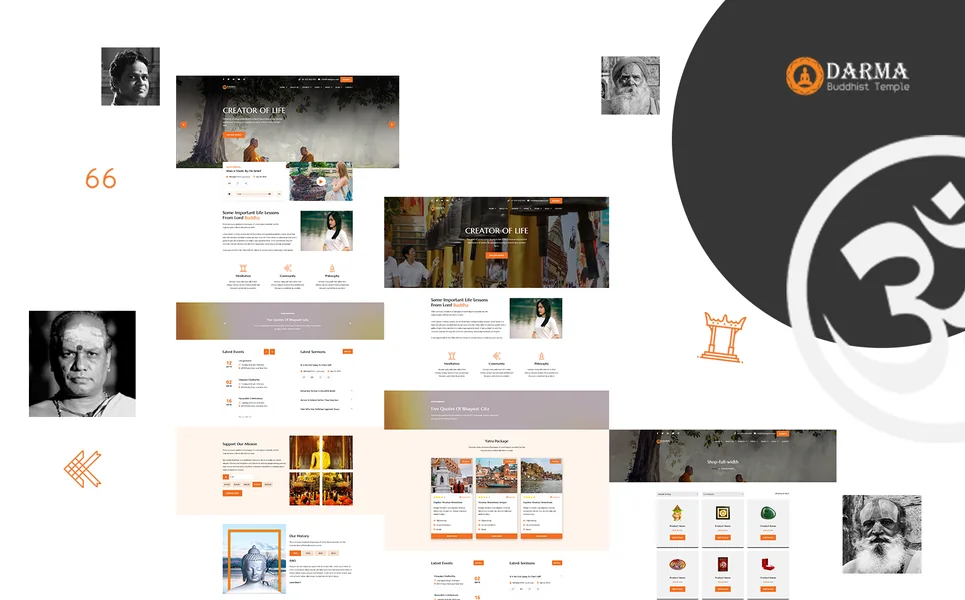
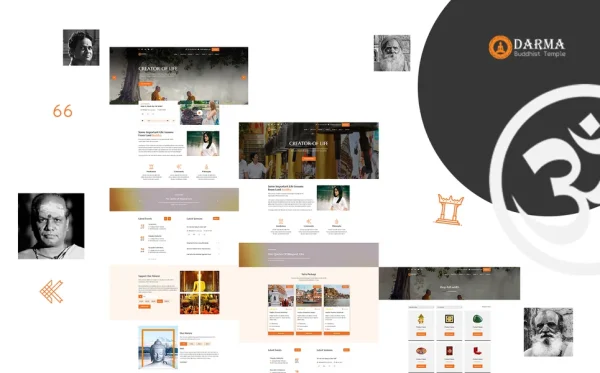
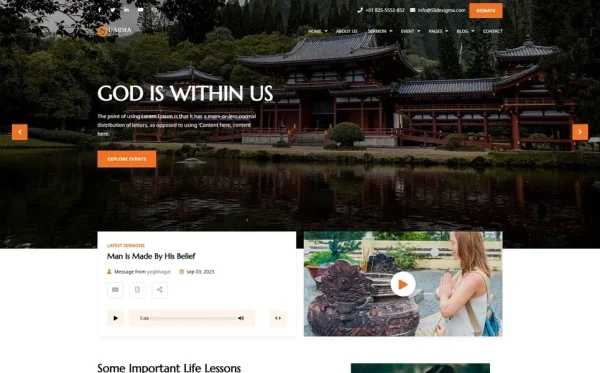
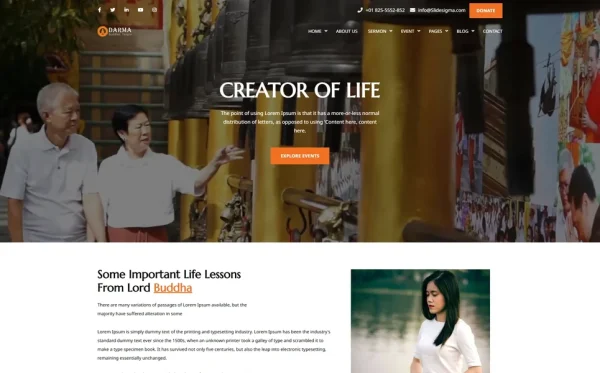
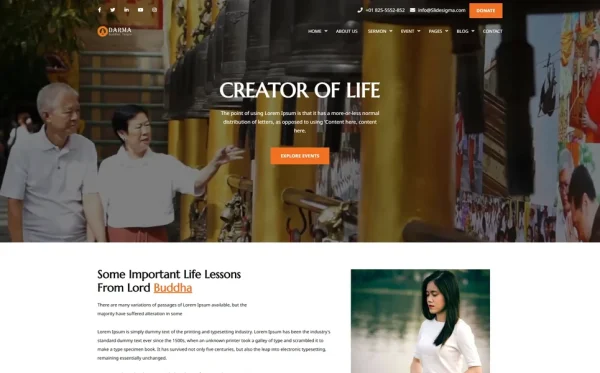
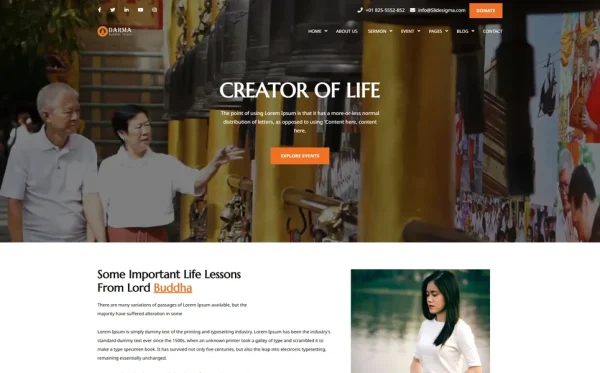
Darma is a 17-page HTML5 template designed for graphic design studios, creative agencies, branding consultancies, and freelance design professionals. Built on Bootstrap 5 with Owl Carousel, Slick carousels, ion.rangeSlider price filtering, Countdown timer, and Magnific Popup lightbox, Darma provides a refined, community-oriented foundation for creative businesses that combine project work with events, education, and product revenue.
The template centres on a case study module with archive and individual detail pages — providing the deep project documentation space that design clients expect. Each case study page accommodates full visual narratives, process documentation, strategic rationale, and outcome metrics. An events module with archive and event detail pages supports exhibitions, workshops, portfolio reviews, and community creative programmes, while a countdown timer builds anticipation for upcoming events.
A three-layout product shop (left sidebar, right sidebar, full-width) with ion.rangeSlider price filtering enables design resource sales — icon packs, font families, UI kits, template packages — creating passive income alongside project revenue. Team profiles present creative directors and designers with their expertise and project histories. A community support page formalises pro bono work, mentorship, and creative sponsorship initiatives.
- 17 HTML pages across case studies, events, shop, team, and community pages
- 2 unique homepage layouts with distinct creative showcase arrangements
- Case study module — archive + individual project detail pages
- Events module — archive + individual event detail pages with countdown timer
- Community support and sponsorship page
- Product shop in 3 layouts: left sidebar, right sidebar, and full-width
- ion.rangeSlider price filtering for design resource browsing
- Creative team profiles with individual expertise presentations
- Blog archive + full article detail page
- Owl Carousel + Slick carousels for project and testimonial sliders
- Magnific Popup lightbox for full-screen project imagery
- Login and sign-up pages for client/community accounts
- Bootstrap 5 responsive mobile-first framework
- Cross-browser compatible: Chrome, Firefox, Safari, Edge, Opera
How Darma Serves Different Creative Practices
Branding and Identity Studios
Branding studios use Darma’s case study module to document complete identity projects — from research and positioning through logo development, brand system creation, and application across touchpoints. The events module announces brand identity workshops and portfolio review sessions. The shop sells brand guideline templates, presentation decks, and social media kits. Team profiles highlight strategists and designers with their branding specialisations and notable client work.
UX/UI Design Agencies
UX/UI agencies use case study detail pages to document user research, journey mapping, wireframing, prototyping, and usability testing processes — the strategic depth that product teams evaluate when selecting design partners. The events module promotes UX workshops, design sprint facilitation services, and usability testing demonstrations. The shop sells UI component kits, wireframe templates, and research documentation frameworks. The blog publishes UX methodology articles and product design thinking pieces.
Illustration and Motion Studios
Illustration studios use the case study archive to organise work by style, client type, or application — editorial illustration, character design, packaging artwork, motion graphics, and animation sequences. The events module promotes exhibition openings, artist talks, and live drawing events. The shop sells illustration print sets, digital wallpaper packs, and custom illustration inquiry packages. The community support page documents pro bono illustration work for nonprofits and cultural organisations.
Freelance Design Professionals
Solo designers use Darma to present a studio-quality online presence that competes with larger agencies. Case study detail pages demonstrate strategic depth that distinguishes freelancers from template-swapping generalists. The blog builds thought leadership in their niche. The shop sells design resources and templates, creating income between client projects. Team profiles can feature collaborative partners, subcontractors, and specialist collaborators who expand the freelancer’s capability positioning.
Frequently Asked Questions
Need Help Launching Your Design Studio Website?
MetropolitanHost provides professional web development services for HTML template deployments. Our team understands creative industry website requirements and delivers visually refined, strategically effective implementations.
- Template Installation — live in under 24 hours
- Full Website Package — complete front-to-back deployment
- Colour Customisation — match your studio brand across all pages
- Website Speed Optimisation — Core Web Vitals improvements
- Accessibility Compliance — WCAG audit and remediation