What Is a Women’s Fashion Website Template?
A women’s fashion website template is a pre-designed, fully coded website built specifically for women’s fashion brands, clothing boutiques, style bloggers, fashion influencers, personal stylists, and women’s apparel e-commerce stores. It includes every page a fashion business needs — homepage with seasonal collection showcases and trend highlights across multiple layout options, editorial fashion archive with individual look detail pages, complete e-commerce shop with product pages, cart, checkout, and wishlist, blog with six content formats for style advice and industry commentary, countdown promotions for flash sales and seasonal launches, and contact page with collaboration inquiry forms — all designed, responsive, and ready for your brand.
For women’s fashion businesses that need a professional web presence without paying $10,000 to $30,000 for a custom build or $30 to $300 per month for an e-commerce platform subscription with transaction fees, a template delivers the most practical path to a brand-defining online presence. But women’s fashion websites carry the highest aesthetic bar of any industry — fashion customers evaluate your brand’s style credibility within milliseconds of landing on your site. Every font choice, colour palette, image treatment, whitespace allocation, and visual hierarchy communicates whether your brand understands contemporary fashion aesthetics. This guide covers what fashion customers expect from your website, what features drive both editorial engagement and product sales, and how to choose the right template for your women’s fashion brand.
Women’s Fashion vs General Fashion E-Commerce: Why Specificity Matters
General fashion e-commerce templates treat clothing as commodity products — grid layouts, filter bars, add-to-cart buttons. Women’s fashion demands something fundamentally different: an editorial experience that combines storytelling with shopping. Women’s fashion customers do not simply buy garments; they seek style inspiration, trend validation, outfit context, and brand alignment. A women’s fashion website must function simultaneously as a magazine, a boutique, and a community — editorial lookbook content showing complete outfits and styling ideas, product pages with fashion photography that communicates how garments look when worn, and blog content covering trends, seasonal style guides, and wardrobe-building advice. General e-commerce templates cannot provide this editorial-commercial hybrid experience.
Template vs Fashion E-Commerce Platform vs Custom Build
| Factor | Fashion Platform (Shopify, BigCommerce) | Women’s Fashion Website Template | Custom Website Build |
|---|---|---|---|
| Upfront Cost | $0–79 | $29–69 | $10,000–30,000 |
| Monthly Cost | $29–299/month | $3–10/month (hosting only) | $100–300/month |
| Transaction Fees | 0.5%–2% per sale | None (own payment processor) | None |
| 3-Year Total Cost (at $5K/mo revenue) | $1,044–10,764 + $900–3,600 in fees | $137–429 | $13,600–40,800 |
| Code Ownership | No — you rent it | Yes — you own it forever | Yes — you own it |
| Editorial Lookbook | Limited blog/page hack | Dedicated fashion archive + detail pages | Custom development |
| Blog Formats | 1–2 layouts | 6 distinct formats | Any format |
| Flash Sale Countdown | Requires apps ($5–30/mo each) | Built-in countdown timer | Custom development |
| Vendor Lock-in | High — platform-dependent themes | None | None |
Fashion e-commerce platforms charge monthly subscriptions plus transaction fees that erode margins on every sale. A women’s fashion brand processing $5,000 monthly loses $300 to $1,200 annually in transaction fees alone — not including app subscriptions for countdown timers, lookbook pages, and advanced blog layouts that platforms charge separately. A template provides the complete fashion website with zero transaction fees and all features built in, while platforms like Shopify can serve as a secondary sales channel if needed.
What Women’s Fashion Customers Expect From Your Website
Women’s fashion customers are among the most visually sophisticated online audiences. They consume fashion content across Instagram, TikTok, Pinterest, fashion magazines, and influencer channels daily. Your website must meet or exceed the visual standard they encounter everywhere else. Here is what fashion customers evaluate:

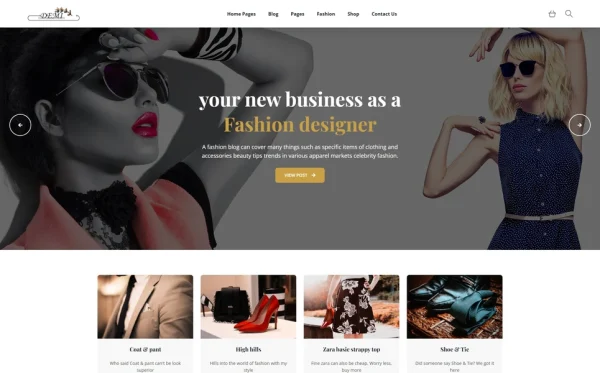
Editorial Fashion Archive and Lookbook
The most distinctive feature of a women’s fashion website — and the element that separates fashion brands from generic clothing stores — is the editorial fashion archive. This is not a product catalogue; it is a curated collection of styled looks, seasonal editorials, trend showcases, and outfit inspirations presented as magazine-quality content with individual detail pages for each editorial look. Visitors browse the fashion archive for style inspiration, discover complete outfits they want to recreate, and naturally click through to shop the individual pieces.
Each fashion detail page should showcase the complete look with multiple angles and styling context — how the garment pairs with accessories, which shoes complete the outfit, how the look transitions from day to evening. This editorial approach transforms passive browsing into active style research, dramatically increasing time on site, page views per session, and ultimately, conversion rates. Fashion customers who arrive through editorial content spend more and return more frequently than customers who arrive through direct product search.
Five Homepage Styles for Seasonal Rotation
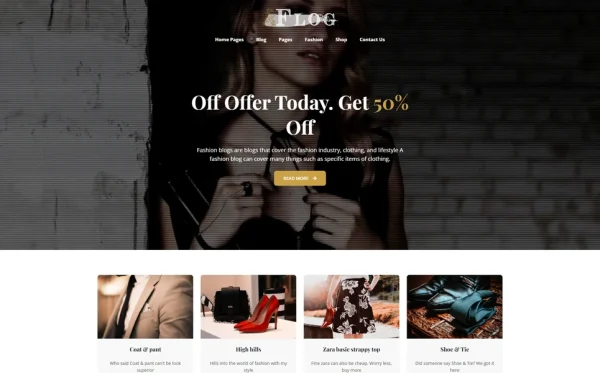
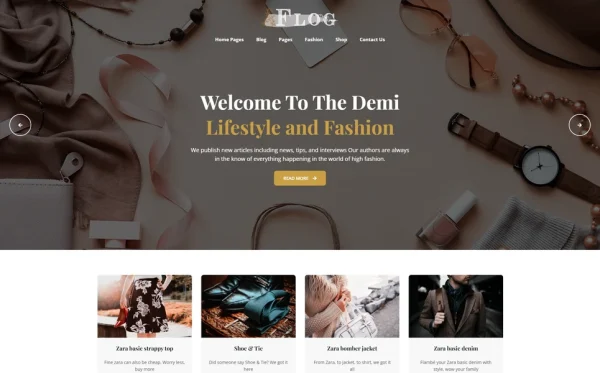
Fashion is inherently seasonal, and your website’s first impression must reflect current collections, seasonal trends, and brand mood. Five distinct homepage layouts provide the variety needed to rotate your presentation through Spring/Summer launches, Autumn/Winter campaigns, holiday gifting seasons, sale periods, and new collection announcements. Rather than rebuilding your homepage for each season, you select the layout variant that best suits your current campaign narrative — one homepage with a hero-focused editorial statement, another with a grid-first product showcase, a third with a blog-forward lifestyle approach.
This seasonal homepage flexibility is something custom builds provide at significant cost (each redesign becomes a new development project) and platforms provide poorly (most Shopify themes offer one or two homepage arrangements). Five homepage variants available on day one represent a significant creative asset for a fashion brand that refreshes its visual presentation multiple times per year.
Complete E-Commerce With Wishlist
Fashion shopping behaviour differs from general retail. Women’s fashion customers browse extensively, save items they love, return days later to evaluate their selections, wait for sales, and often purchase multiple items in a single transaction. A complete e-commerce flow — shop archive with filtering, individual product pages with detailed imagery, shopping cart, checkout, and wishlist — respects this considered purchase journey. The wishlist is especially critical: fashion customers who save items return at three times the rate of customers who only add to cart, and they convert at significantly higher rates because they have already committed emotionally to the items.
Product pages in women’s fashion must accommodate multiple high-quality images showing the garment from various angles, on different body types when possible, and in different styling contexts. The product detail page is where purchase decisions happen — it must present garments with the same visual sophistication as the editorial content that attracted the visitor.
Flash Sale Countdown Timer
Urgency drives fashion purchases. A countdown timer for flash sales, limited collection drops, seasonal clearance events, and exclusive pre-orders creates the psychological pressure that converts browsing into buying. Fashion customers are trained by major retailers to associate countdown timers with genuine scarcity — “48-hour flash sale,” “new collection drops in 3 days,” “last chance: winter clearance ends tonight.” Without a countdown mechanism, your sales and promotions blend into the background noise of perpetual e-commerce discounting.
Six-Format Blog for Fashion Content
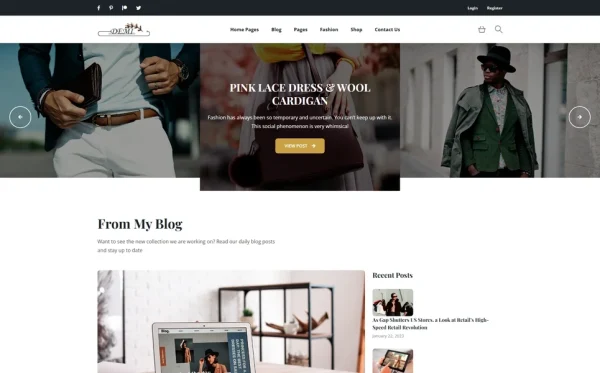
Fashion content demands editorial flexibility that most templates cannot provide. Trend reports require grid layouts with large imagery. Seasonal style guides need left sidebar layouts with table of contents. Street style round-ups suit right sidebar layouts with quick-read formatting. Shopping guides work best as full-width list layouts. Behind-the-scenes brand stories deserve masonry layouts with varied image sizes. In-depth designer profiles require single-post layouts with generous whitespace and typography. Six blog formats — grid, left sidebar, right sidebar, list, masonry, and single post — provide the editorial versatility that a serious fashion content strategy requires.
Fashion blog content also serves critical SEO functions. Articles on seasonal trend forecasts, wardrobe capsule guides, body-type styling tips, occasion dressing guides, and sustainable fashion choices capture organic search traffic from women actively researching fashion decisions. This editorial traffic converts at premium rates because visitors arrive already engaged with your brand’s aesthetic perspective and style authority.
Brand Storytelling Through About Pages
Women’s fashion purchasing is increasingly values-driven. Customers want to know the brand story — the founder’s creative vision, the design philosophy, the sourcing practices, the sustainability commitments, and the community the brand serves. An about page that communicates personal style philosophy, creative inspiration sources, and brand values resonates with fashion customers who choose brands as expressions of their own identity. The about page is not a corporate history — it is a brand manifesto that attracts customers who share your aesthetic perspective.
Social Proof and Community Building
Women’s fashion purchases are heavily influenced by social proof — customer reviews, user-generated content, influencer endorsements, and community engagement. Your website should integrate testimonial sliders, customer styling photo galleries, and social media connections that validate your brand’s style authority. Slick Carousel-powered testimonial sections displaying customer quotes alongside purchase details create authentic social proof that polished marketing copy cannot replicate. Fashion customers trust other customers’ styling opinions more than brand marketing, making social proof integration a direct conversion driver.
Visual Search and Discovery Experience
Fashion browsing should feel like flipping through a magazine, not searching a database. Magnific Popup lightbox galleries that let visitors examine garment details at full-screen resolution satisfy the visual inspection needs that fashion shoppers require — fabric texture, colour accuracy, construction details, and how garments drape on the body. The full-screen fashion photography experience creates the visual immersion that separates premium fashion browsing from generic product browsing. Every image interaction should reinforce the visual sophistication of your brand and the quality of your garments.
Essential Features for a Women’s Fashion Website
Fashion Editorial Module
A dedicated fashion editorial module with archive and individual look detail pages is the feature that separates fashion websites from clothing stores. The archive presents styled looks in a curated, browsable format. Individual detail pages provide the full editorial experience — outfit context, styling notes, and direct product links. This module drives the inspiration-to-purchase flow that defines successful fashion e-commerce.
Isotope-Filtered Product Discovery
Fashion customers filter by category (dresses, tops, trousers, outerwear, accessories), occasion (workwear, casual, evening, wedding guest), season (spring/summer, autumn/winter), and price range. Isotope grid filtering with smooth animated transitions provides this discovery functionality with the visual polish that fashion audiences expect. The filtering experience itself must feel luxurious — no page reloads, no jarring transitions, just smooth visual rearrangement that maintains the browsing pleasure.
Responsive Mobile Shopping Experience
Women’s fashion browsing is overwhelmingly mobile. Instagram-driven discovery, Pinterest-inspired shopping, and social media referrals all deliver traffic to mobile devices. A responsive mobile-first framework ensures that editorial lookbooks, product pages, wishlist management, cart, and checkout function flawlessly on smartphones. Swipeable image galleries, touch-friendly filtering, and mobile-optimised checkout forms are not optional features — they are baseline requirements for any fashion website expecting to convert mobile traffic into sales.
How Much Does a Women’s Fashion Website Cost?
| Cost Component | Template Approach | Custom Build |
|---|---|---|
| Website Template / Design | $29–69 (one-time) | $10,000–30,000 |
| Domain Name (.com) | $10–15/year | $10–15/year |
| Web Hosting | $3–10/month | $20–80/month |
| SSL Certificate | Free (Let’s Encrypt) | Free–$200/year |
| Professional Email | $6/user/month | $6/user/month |
| E-Commerce Integration | $0–29/month (Snipcart, Ecwid) | Custom built into project |
| Product Photography | $200–1,500 per shoot | $500–3,000 per shoot |
| Year 1 Total | $400–3,000 | $12,000–36,000 |
| Annual Maintenance (Year 2+) | $200–600 | $1,500–5,000 |
Common Mistakes in Women’s Fashion Web Design
Treating Fashion as Generic Retail
The biggest mistake women’s fashion brands make is building a website that functions like a general online store — product grid, filter bar, cart, done. Fashion customers expect editorial context, styling inspiration, and brand storytelling alongside the shopping experience. A website without a fashion lookbook, editorial content, or brand narrative reduces fashion garments to commodity products and competes on price rather than style authority. The editorial fashion archive is what transforms a clothing store into a fashion brand online.
Neglecting the Wishlist
Fashion purchases are rarely impulsive in the way fast-fashion giants suggest. Considered fashion shoppers — the audience that values quality brands — browse, save, compare, wait, and return. Without a wishlist, these high-value customers have no mechanism to bookmark items on your site, and they resort to screenshot folders, Pinterest boards, or simply forgetting about your products. A wishlist keeps their interest anchored to your platform and creates a natural return pathway that significantly increases conversion rates.
Limiting Blog to One Format
Fashion content is visually diverse. A single blog layout forces trend reports, style guides, brand stories, designer profiles, and shopping edits into the same visual format — which means some content types are always poorly served. Trend reports need large imagery grids. Style guides need sidebar navigation. Shopping edits need list formats. Behind-the-scenes stories need masonry-style visual storytelling. Six blog formats ensure every content type is presented in its ideal visual container.
Skipping Flash Sale Infrastructure
Fashion brands without built-in countdown functionality rely on banner images or social media announcements for sale urgency — neither of which provides the real-time ticking countdown that creates genuine purchasing pressure. A countdown timer is not a nice-to-have for fashion e-commerce; it is a conversion tool that directly impacts sale event revenue. Brands using countdown timers consistently report higher conversion rates during promotional periods compared to static sale announcements.
How to Evaluate a Women’s Fashion Template
Editorial Module Presence
Does the template include a dedicated fashion editorial or lookbook module with archive and individual detail pages? A template without this module cannot serve women’s fashion brands effectively. The editorial archive is where style inspiration happens — and inspiration is what drives fashion purchases. Without it, you have a clothing store, not a fashion brand.
Homepage Variety
Does the template offer multiple homepage layouts for seasonal rotation? Fashion brands refresh their visual presentation multiple times per year. A template with only one homepage design limits your seasonal marketing flexibility. Five or more homepage variants provide the creative variety that fashion’s seasonal cycle demands.
Blog Format Diversity
Does the template provide four or more blog formats? Fashion content is too visually diverse for a single blog layout. Grid, sidebar, list, and masonry formats are the minimum for a fashion content strategy that covers trend reports, style guides, brand stories, and shopping edits. Six formats represent editorial excellence.
Demi: A Women’s Fashion Website Template Built for Style Brands
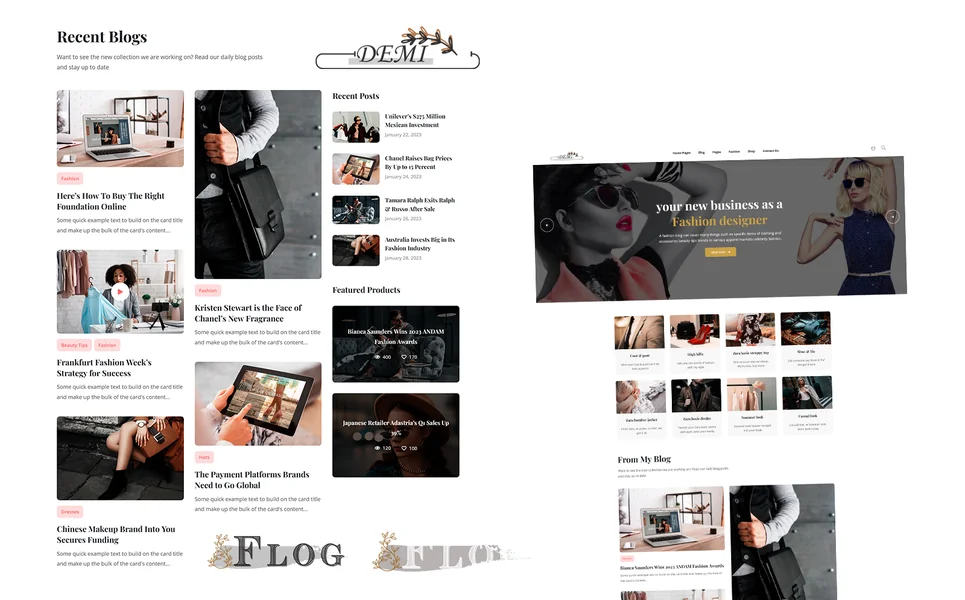
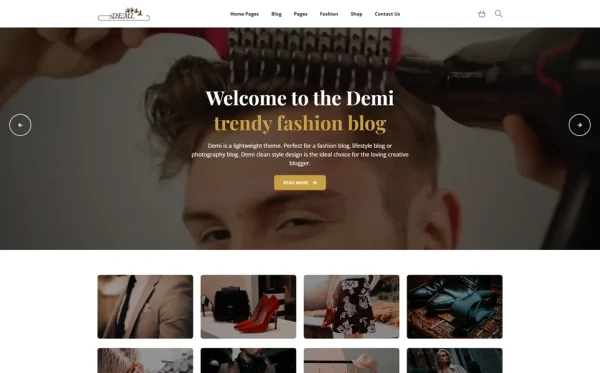
Demi is a 21-page HTML5 template designed for women’s fashion brands, clothing boutiques, style bloggers, fashion influencers, and women’s apparel e-commerce stores. Built on Bootstrap 5 with Slick carousels, Isotope grid filtering, Countdown timer, and Magnific Popup lightbox, Demi provides the editorial-commercial foundation that women’s fashion websites demand.
The template centres on a fashion editorial module — a curated archive of styled looks and seasonal editorials with individual look detail pages that provide the inspiration-to-purchase flow defining successful fashion e-commerce. Visitors browse editorial content, discover outfits they want to recreate, and shop the individual pieces through the integrated e-commerce system.
A complete e-commerce system with product archive, individual product detail pages, shopping cart, checkout, and wishlist supports the considered purchase journey that women’s fashion customers follow. The countdown timer creates urgency for flash sales, seasonal launches, and limited collection drops. Five homepage layouts provide seasonal rotation flexibility — refreshing your brand presentation for spring launches, summer sales, autumn collections, holiday campaigns, and new year resets without rebuilding your site.
- 21 HTML pages across fashion editorial, shop, blog, and utility pages
- 5 unique homepage layouts for seasonal presentation rotation
- Fashion editorial module — archive + individual look detail pages
- Complete e-commerce: product archive, product detail, cart, checkout, wishlist
- Countdown timer for flash sales and seasonal collection launches
- Blog in 6 formats: grid, left sidebar, right sidebar, list, masonry, and single post
- Isotope grid filtering for fashion and product category browsing
- Slick Carousel for featured collections and testimonial sliders
- Magnific Popup lightbox for full-screen fashion photography
- About page for brand storytelling and style philosophy
- Contact page with collaboration and inquiry forms
- Bootstrap 5 responsive mobile-first framework
- Cross-browser compatible: Chrome, Firefox, Safari, Edge, Opera
How Demi Serves Different Fashion Businesses
Independent Women’s Fashion Boutiques
Boutique owners use Demi’s editorial module to create lookbook content showing curated outfits from their current inventory — complete looks styled with accessories, shoes, and layering pieces that encourage multi-item purchases. The shop handles online orders with wishlist for loyal customers who browse regularly. Five homepage layouts rotate through seasonal campaigns. The blog publishes styling tips, trend reports, and new arrival announcements that drive repeat visits and email list growth.
Fashion Bloggers and Style Influencers
Fashion bloggers use the six-format blog as their primary content engine — outfit-of-the-day posts in grid format, seasonal trend analysis in sidebar format, street style round-ups in masonry format, and in-depth brand reviews in single-post format. The editorial fashion archive serves as a curated lookbook portfolio that brands evaluate when considering collaborations. The shop module monetises personal style through curated edits, affiliate product selections, and branded merchandise.
Emerging Fashion Labels
New fashion labels use Demi to establish brand presence with minimal investment. The editorial module presents launch collections with magazine-quality detail pages. The countdown timer builds anticipation for collection drops and pop-up events. Five homepage layouts allow the brand to evolve its visual presentation as collections progress. The about page communicates the founder’s vision, design philosophy, and brand values — the storytelling elements that attract early adopters to emerging fashion brands.
Personal Styling Services
Personal stylists use the editorial archive to showcase client transformations and styled looks as a portfolio of their styling expertise. The blog publishes wardrobe building guides, body type styling tips, and seasonal shopping strategies that position the stylist as an authority. The shop can offer curated style edit boxes, digital wardrobe planning guides, and styling consultation packages. The wishlist feature lets potential clients save items from the stylist’s recommendations for later purchase or discussion during sessions.
Frequently Asked Questions
Need Help Launching Your Women’s Fashion Website?
MetropolitanHost provides professional web development services for HTML template deployments. Our team understands fashion industry website requirements and delivers visually stunning, conversion-optimised implementations.
- Template Installation — live in under 24 hours
- Full Website Package — complete front-to-back deployment
- Colour Customisation — match your fashion brand across all pages
- Website Speed Optimisation — Core Web Vitals improvements
- Accessibility Compliance — WCAG audit and remediation