What Is a Cannabis Delivery Website Template?
A cannabis delivery website template is a pre-designed, fully coded website built specifically for marijuana delivery services, cannabis courier operations, CBD drop-off businesses, and weed delivery startups. It includes every page a delivery-focused cannabis business needs — homepage with product showcases, shop pages with cart functionality, product detail views with strain information, blog system for educational content, user authentication for age-gated accounts, and about pages for brand credibility — all designed, responsive, and ready for your delivery brand.
For cannabis delivery operators who need a professional web presence without paying $5,000 to $10,000 for a custom build or $200 to $500 per month for a cannabis-specific platform like Dutchie or Jane, a template delivers the most practical path to launch. But cannabis delivery websites carry unique requirements that generic e-commerce templates cannot address. Your site must communicate compliance and legitimacy. Your product catalog must be organized by strain type, potency, and product category. Your ordering flow must feel seamless while handling the legal complexities of cannabis commerce. This guide covers what delivery customers expect, what features matter most, and how to choose the right template for your cannabis delivery operation.
Template vs Cannabis Platform vs Custom Build
Cannabis delivery businesses typically face three paths when establishing their online presence:
| Factor | Cannabis Platform (Dutchie, Jane) | Cannabis Delivery Template | Custom Website Build |
|---|---|---|---|
| Upfront Cost | $0–500 | $29–69 | $5,000–10,000 |
| Monthly Cost | $200–500/month | $3–10/month (hosting only) | $100–300/month |
| 3-Year Total Cost | $7,200–18,500 | $137–429 | $8,600–20,800 |
| Code Ownership | No — you rent it | Yes — you own it forever | Yes — you own it |
| Design Uniqueness | Same layout as competitors | Fully customisable | Fully custom |
| Product Catalog | Built-in menu | Shop pages with detail views | Any format |
| POS Integration | Built-in | Integrate via API | Any system |
| Time to Launch | 1–3 days | 3–7 days | 6–16 weeks |
| Vendor Lock-in | High — your brand disappears if you cancel | None | None |
Cannabis platforms handle compliance-heavy integrations like POS and seed-to-sale tracking, but they lock every delivery service into the same visual framework. When every delivery service in your city uses Dutchie, your brand becomes interchangeable. A template gives you complete visual control over how your delivery brand presents itself — distinct from dispensaries, distinct from competitors — while still allowing you to integrate any POS, payment processor, or compliance tool your state requires.
What Cannabis Delivery Customers Expect From Your Website
Cannabis delivery customers are making a purchase that involves legal complexity, product specificity, and personal trust. Unlike ordering food or retail goods, cannabis delivery carries regulatory weight — and your website must reassure customers that your operation is legitimate, your products are quality-tested, and your delivery process is discreet and reliable.
Product Catalog That Educates and Sells
Your product catalog is the core of your delivery website. Cannabis customers do not browse the way traditional retail shoppers do — they search by strain type (indica, sativa, hybrid), product category (flower, edibles, concentrates, topicals), potency level, and price point. A flat product grid with no filtering forces customers to scroll through dozens of items to find what they want, which kills conversion.
An effective cannabis delivery catalog organizes products into clear categories with individual detail pages that provide strain information, THC and CBD percentages, effect descriptions, and pricing. Customers want to know what a product does before they order it for delivery — the product detail page is where that education happens. High-quality product photography with consistent backgrounds and lighting communicates professionalism and builds trust in your delivery brand.
Seamless Cart and Checkout Experience
The checkout process for cannabis delivery carries more friction than standard e-commerce. Customers expect to add items to a cart, review their order, provide delivery address details, and complete the purchase — but they also expect age verification at some point in the flow. The key is making this verification feel like a natural part of the process rather than a barrier. Your cart page must display order totals clearly, show estimated delivery windows, and present payment options in a format that builds confidence.
Cannabis payment processing remains complex. Many delivery services use cashless ATM, debit-based payments, or compliant payment gateways like Aeropay or CanPay. Your website must accommodate whichever payment method your state allows and your processor supports — and present it cleanly within the checkout experience.
Age Verification and Compliance Signals
Every cannabis delivery website requires age verification — this is non-negotiable in every legal market. California, for example, requires online cannabis marketplaces to verify seller licensing and display consumer warning graphics starting July 2026. Your website must include age-gate functionality (a verification page before site access), clear compliance statements, license numbers displayed prominently, and any state-required warnings or disclosures.
Compliance signals serve a dual purpose: they satisfy legal requirements and they build customer trust. A delivery service that prominently displays its license number, compliance certifications, and lab testing information communicates legitimacy in a market where customers remain cautious about unlicensed operators.
Delivery Zone and Service Area Communication
Unlike dispensaries where customers drive to you, delivery services must clearly communicate where you deliver. Your website needs prominent delivery zone information — either a map-based visualization, a zip code checker, or a clearly listed service area. Customers who cannot quickly determine whether you deliver to their address will leave and order from a competitor who makes that information obvious.
Estimated delivery times should also be visible. Cannabis delivery customers have expectations shaped by food delivery apps — they want to know if their order arrives in 30 minutes, one hour, or requires next-day scheduling. Setting clear expectations prevents customer frustration and reduces support inquiries.
Mobile-First Ordering
The majority of cannabis delivery orders originate from mobile devices. Your entire ordering flow — browsing products, adding to cart, checking out, and tracking delivery — must work flawlessly on smartphones. Thumb-friendly navigation, clear product images that load quickly, and a checkout form that does not require pinch-zooming are essential. Any friction in the mobile experience sends customers to a competing delivery service with a smoother mobile flow.
Brand Identity That Differentiates From Dispensaries
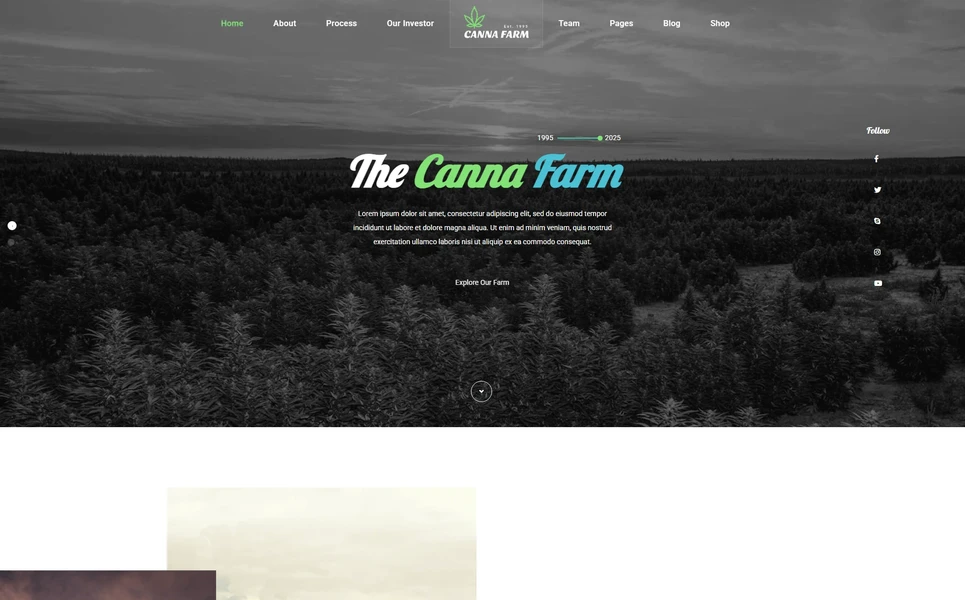
Cannabis delivery services need a distinct brand identity that separates them from brick-and-mortar dispensaries. Your website should communicate convenience, speed, discretion, and curated selection — the value propositions that make delivery preferable to visiting a dispensary in person. This means your homepage hero should lead with delivery-specific messaging, your about page should tell the story of your delivery operation, and your overall design aesthetic should feel modern, sleek, and digitally native.
Technical Features That Elevate Cannabis Delivery Websites
Beyond visual design, several technical features specifically enhance cannabis delivery websites and set professional operations apart from amateur setups.
E-Commerce Product Flow
A complete e-commerce flow — shop page with product grid, individual product detail pages with full descriptions, add-to-cart functionality, and a dedicated cart page with order summary — is the backbone of a delivery website. Each product should have its own detail page with enough space for strain name, category, potency information, pricing, effects description, and multiple product images. The shop-to-cart-to-checkout journey must be intuitive with no dead ends.
User Authentication for Account-Based Ordering
Login and signup pages enable account-based ordering, which is critical for cannabis delivery. Customer accounts store delivery addresses, order history, and verified age status — so returning customers do not need to re-verify with every order. User authentication also enables loyalty programs, reorder functionality, and personalized product recommendations based on purchase history.
Blog System for SEO and Education
Cannabis delivery services operate in a space where paid advertising is severely restricted. Google, Facebook, and Instagram all prohibit cannabis advertising, which means organic search traffic through content marketing is one of your most valuable customer acquisition channels. A blog system with multiple layout options — grid, list, and detail views — gives you the content infrastructure to publish strain guides, delivery area announcements, product spotlights, and educational articles that drive organic traffic.
Advertising Restriction Reality: Major advertising platforms prohibit cannabis promotion. Google Ads, Meta (Facebook/Instagram), and most programmatic ad networks do not allow cannabis delivery advertising. This makes your website and its organic search visibility your primary customer acquisition channel. A blog system that supports regular content publishing is not optional — it is your marketing engine.
How to Evaluate a Cannabis Delivery Template Before You Buy
Inspect the E-Commerce Flow
Open the template demo and walk through the entire purchase journey. Browse the shop page — does it display products in a clean grid with pricing visible? Click into a product detail page — is there enough space for strain information, potency data, and multiple images? Add items to the cart — does the cart page show a clear order summary with quantities and totals? A broken or confusing e-commerce flow will cost you orders every single day.
Check Blog Layout Options
Since paid advertising is restricted, your blog is your primary marketing channel. Review the blog section — does it offer multiple layout options (grid, list, sidebar variations)? Does the blog detail page have a clean reading experience with good typography? Can you envision publishing strain guides, delivery updates, and educational articles in this format? Templates with only a single blog layout limit your content marketing flexibility.
Verify User Authentication Pages
Look at the login and signup pages. Are they professionally designed? Do they feel trustworthy enough for customers to create accounts? Cannabis customers are cautious about sharing personal information with delivery services — your authentication pages must communicate security and professionalism. Ugly or generic login forms undermine trust at a critical conversion point.
Evaluate Homepage Variety
Multiple homepage options matter for cannabis delivery because different delivery models require different presentations. A premium boutique delivery service needs a different visual approach than a fast-delivery value service. Having multiple homepage designs to choose from lets you select the layout that best matches your delivery brand positioning without extensive customization.
Cannabis Delivery Website Cost Breakdown
Understanding the full cost picture helps you make an informed decision:
| Cost Category | Template Approach | Custom Build |
|---|---|---|
| Website Design | $29–69 (one-time) | $5,000–10,000 |
| Hosting | $3–10/month | $20–100/month |
| Domain | $10–15/year | $10–15/year |
| SSL Certificate | Free (Let’s Encrypt) | Free–$200/year |
| Payment Gateway Setup | Varies by state | $500–2,000 |
| POS Integration | API-based (varies) | $1,000–5,000 |
| Compliance Review | $500–1,500 | $500–1,500 |
| Annual Maintenance | $100–500 | $1,200–5,000 |
| First-Year Total | $650–2,200 | $8,200–24,000 |
Cannabis Delivery SEO Strategy
Since paid advertising channels are closed to cannabis businesses, your SEO strategy becomes your primary growth lever. Here is how to approach it:
Target Delivery-Specific Keywords
Focus on keywords that signal delivery intent rather than general cannabis terms. “Cannabis delivery [city name],” “weed delivery near me,” “marijuana delivery [zip code],” and “same-day cannabis delivery” are high-intent searches from people ready to order. Create location-specific landing pages for each delivery zone you serve.
Build Content Around Education
Strain guides, product comparison articles, dosage guides for edibles, and “what to expect from cannabis delivery” content drive organic traffic from people in the research phase. These visitors may not order immediately, but they enter your marketing funnel and build familiarity with your brand. A blog system with multiple layout options makes this content strategy practical.
Local SEO for Delivery Zones
Google Business Profile optimization, local citations, and structured data markup help your delivery service appear in local search results. Schema markup for your business type, service area, hours of operation, and product catalog gives search engines the structured data they need to display your business prominently in local results.
Content Marketing Advantage: Cannabis delivery services with active blogs publishing weekly content see significantly higher organic traffic than those relying solely on product pages. When your competitors cannot advertise on Google or social media either, the delivery service with the strongest organic search presence wins. Your blog system is your competitive advantage.
Budforest — A Template Built for Cannabis Delivery Services
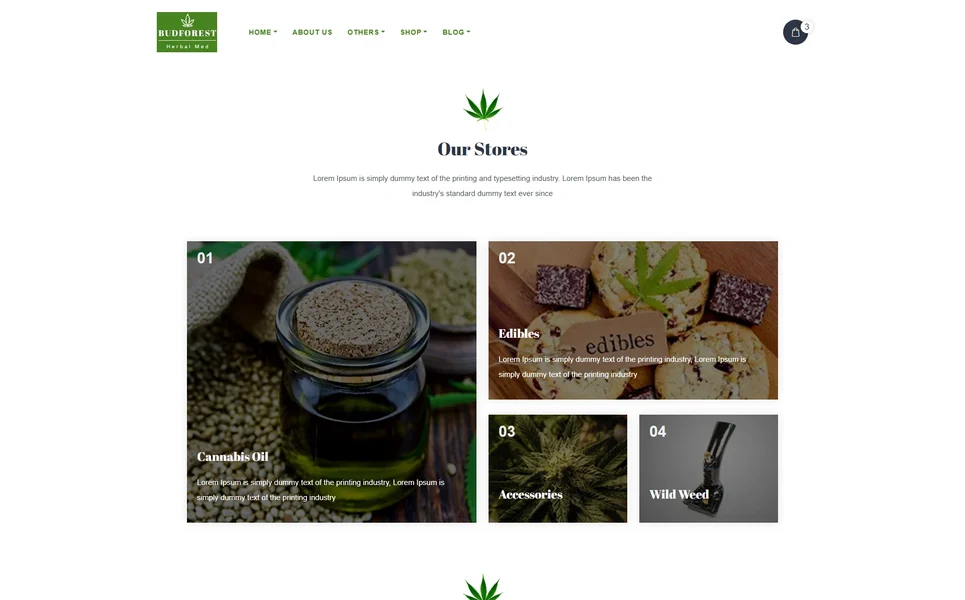
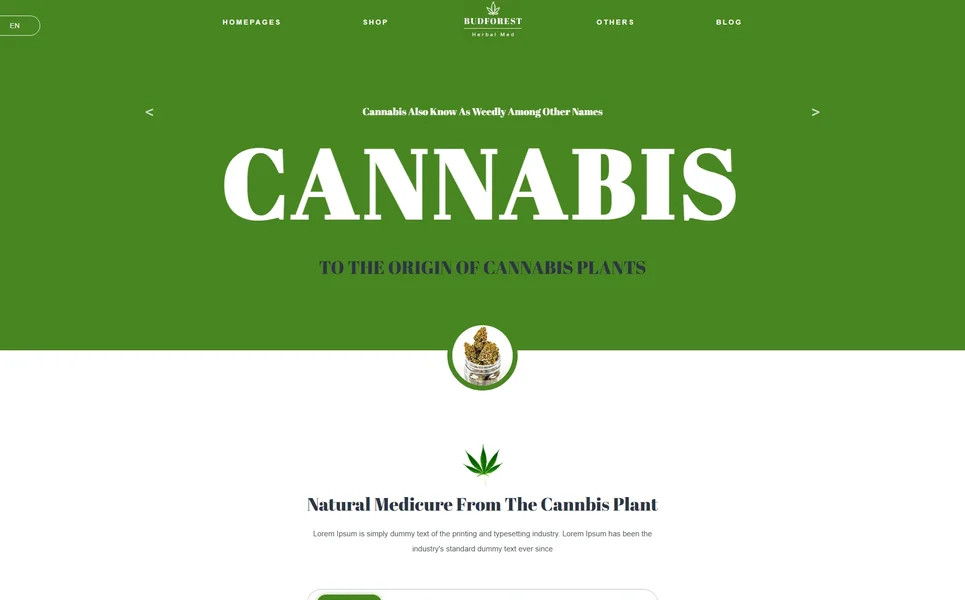
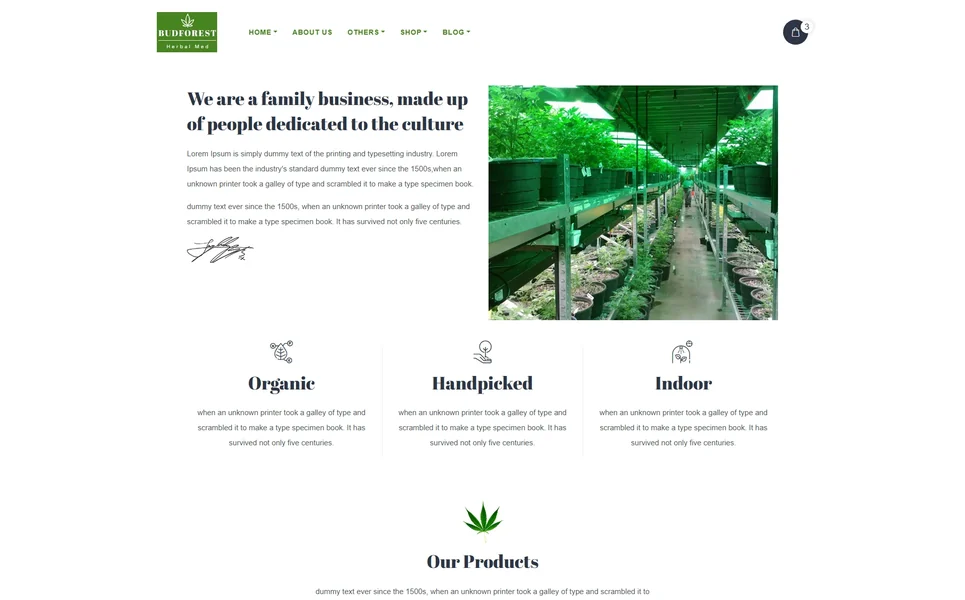
Budforest is a cannabis HTML5 template designed with delivery services in mind. Built for marijuana delivery operations, cannabis courier businesses, and CBD product delivery brands, it delivers the essential components for a professional, conversion-focused delivery website — with a complete e-commerce flow and content marketing infrastructure that cannabis delivery businesses specifically require.
What Budforest Includes
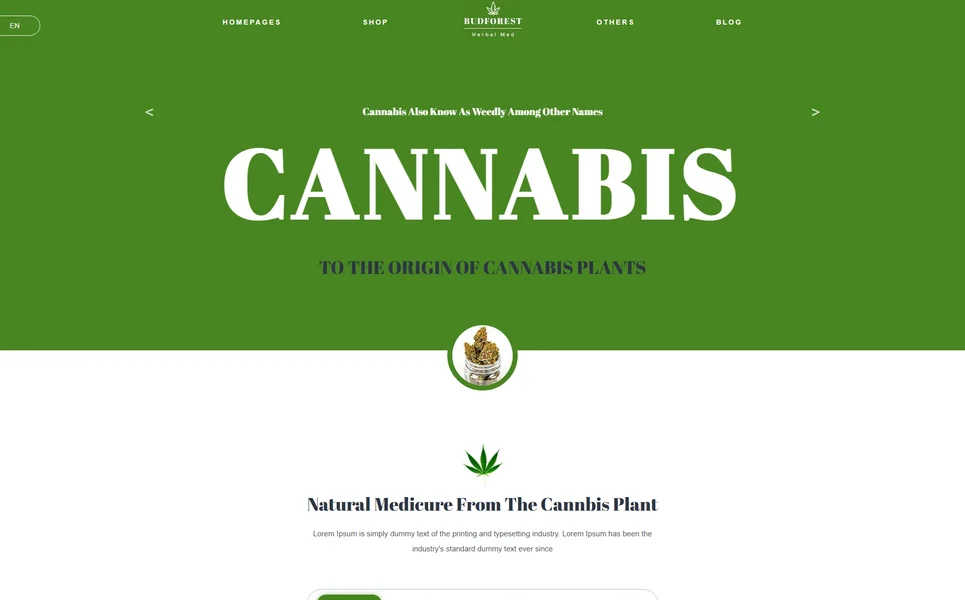
- 4 Homepage Designs — four distinct landing pages to match different delivery brand identities and service models
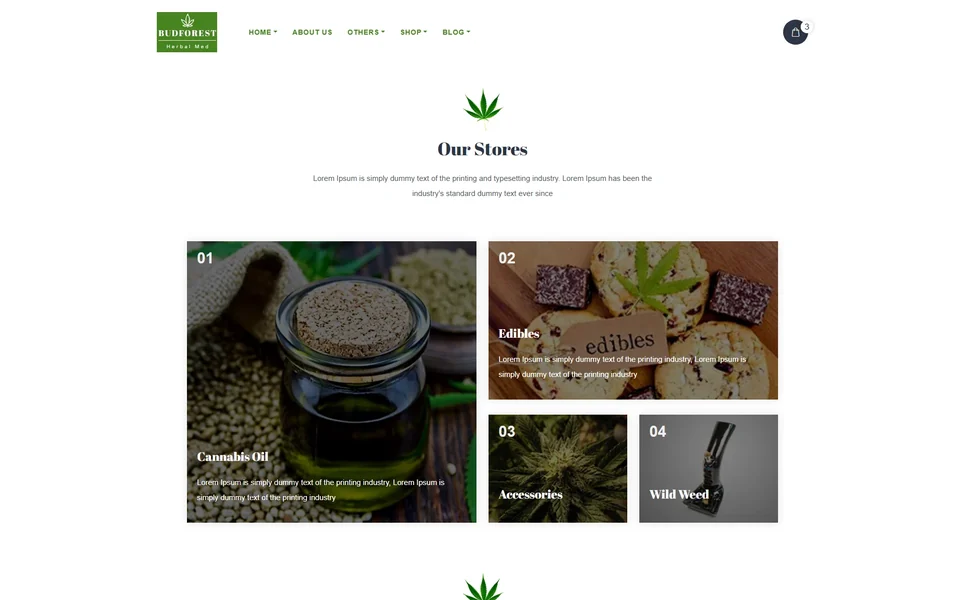
- Complete E-Commerce Flow — shop page, product details page with full strain information space, and shopping cart with order summary
- 9 Blog Variations — grid, list, and detail views each with left sidebar, right sidebar, and standard layouts for maximum content marketing flexibility
- User Authentication — professionally designed login and signup pages for account-based ordering
- 22 Total Pages — comprehensive page set covering every aspect of a cannabis delivery web presence
- SEO-Optimized Markup — semantic HTML5 structure for maximum organic search visibility
- Bootstrap 5 Framework — fully responsive, mobile-first design for thumb-friendly ordering on any device
- Cross-Browser Compatible — tested on Chrome, Firefox, Safari, Edge, and Opera
- Retina Ready — crisp product imagery on high-DPI displays
- Clean, Documented Code — well-organized and commented for easy customization and developer handoff
Why Budforest Works for Delivery
What distinguishes Budforest from dispensary-focused templates is its complete e-commerce and content ecosystem. The shop pages with product detail views handle your product catalog. The cart page manages the ordering flow. The nine blog variations give you the content marketing infrastructure that cannabis delivery businesses desperately need when paid advertising is unavailable. The four homepage designs let you position your delivery brand distinctly — whether you are a premium boutique delivery service, a fast same-day courier, or a broad catalog delivery operation.
The user authentication pages support account-based ordering, which is essential for delivery services that need to store customer addresses and verified age status. Built on Bootstrap 5 with a mobile-first responsive framework, the entire ordering experience works smoothly on the smartphones where most delivery orders originate.
Content Marketing Ready: Budforest includes nine blog layout variations — more than most cannabis templates offer. Grid, list, and detail views each available with left sidebar, right sidebar, or standard layout. This gives your content team the flexibility to publish strain guides, delivery area updates, product spotlights, and educational articles in the format that best suits each piece of content. When organic search is your primary marketing channel, this blog infrastructure is a strategic advantage.
Customisation Roadmap for Delivery Operators
Week One — Brand and Product Setup: Replace all placeholder content with your brand identity — logo, colour palette, brand messaging. Photograph your product catalog with consistent lighting and clean backgrounds. Write product descriptions with strain names, THC/CBD percentages, effect profiles, and pricing. Set up your shop page categories (flower, edibles, concentrates, topicals, accessories). Configure the about page with your delivery story, license information, and compliance statements.
Week Two — Ordering and Compliance: Implement age verification on the homepage or as an entry gate. Integrate your payment processor (Aeropay, CanPay, or your state-compliant option). Set up the login and signup flow for account-based ordering. Add your delivery zone information with clear service area boundaries. Configure contact forms and connect them to your business email. Add license numbers, compliance disclosures, and any state-required warnings to your footer and about page.
Week Three — Content and Launch: Publish your first five blog posts — a delivery area guide, a strain guide, an edibles dosing guide, a new customer FAQ, and a product spotlight. Submit your sitemap to Google Search Console. Set up Google Business Profile for local search visibility. Test the complete ordering flow on desktop and mobile. Deploy to your live domain and begin your content marketing cadence.
Frequently Asked Questions
Need Help Launching Your Cannabis Delivery Website?
MetropolitanHost provides professional web development services for HTML template deployments. Our team understands cannabis industry website requirements and delivers clean, compliant implementations.
- WordPress Theme Installation — live in under 24 hours
- Full Website Package — complete front-to-back deployment
- Colour Customisation — match your delivery brand across all pages
- Website Speed Optimisation — Core Web Vitals improvements
- Accessibility Compliance — WCAG audit and remediation