What Is a CBD Brand Website Template?
A CBD brand website template is a pre-designed, fully coded website built specifically for CBD wellness brands, hemp product companies, cannabinoid supplement businesses, and cannabis consulting firms. It includes every page a CBD brand needs — homepage with wellness-focused branding, strain and product catalog with multiple display formats, service pages for consulting offerings, e-commerce shop with product detail views, team directory for brand credibility, blog and FAQ sections for educational content, and a “Why Choose Us” persuasion page — all designed, responsive, and ready for your CBD brand.
For CBD brand owners who need a professional web presence without paying $5,000 to $10,000 for a custom build or $200 to $500 per month for a cannabis-specific e-commerce platform, a template delivers the most cost-effective path to launch. But CBD brand websites face challenges that generic e-commerce templates cannot address. Your product catalog must educate buyers about cannabinoid content, effects, and dosage. Your brand presentation must communicate wellness authority and regulatory compliance. Your marketing infrastructure must compensate for the advertising restrictions that prevent CBD brands from using Google Ads and social media advertising. This guide covers what CBD consumers expect, what technical features matter, and how to choose the right template for your CBD brand.
Template vs CBD Platform vs Custom Build
CBD brand owners typically face three paths when establishing their online presence:
| Factor | CBD Platform (Shopify+apps) | CBD Brand Template | Custom Website Build |
|---|---|---|---|
| Upfront Cost | $0–200 | $29–69 | $5,000–10,000 |
| Monthly Cost | $39–300/month | $3–10/month (hosting only) | $100–300/month |
| 3-Year Total Cost | $1,404–11,000 | $137–429 | $8,600–20,800 |
| Code Ownership | No — you rent it | Yes — you own it forever | Yes — you own it |
| Design Uniqueness | Theme-based, similar to competitors | Fully customisable | Fully custom |
| Product Catalog | Standard product pages | Strain catalog with grid, masonry, slider, detail views | Any format |
| Payment Processing | Limited CBD-friendly options | Integrate any CBD-compliant processor | Any processor |
| Time to Launch | 1–3 days | 3–7 days | 6–16 weeks |
| Vendor Lock-in | Medium — migration is complex | None | None |
Shopify and similar platforms offer e-commerce functionality, but CBD brands face unique platform challenges — payment processor restrictions, product content limitations, and design templates that look identical to hundreds of other CBD brands. A template gives you complete ownership of your brand presentation, the flexibility to integrate any CBD-compliant payment processor, and cannabis-specific page designs (strain catalogs, educational content) that generic e-commerce platforms do not include.
What CBD Consumers Expect From Your Brand Website
CBD consumers are health-conscious buyers making wellness decisions. Unlike impulse purchases, CBD buying involves research — consumers want to understand what they are putting into their bodies, why your products are trustworthy, and how CBD can address their specific wellness concerns. Your website must serve as both a shopping destination and an educational resource that builds the product confidence CBD purchases require.
Product Catalog That Educates
CBD consumers do not browse products the way traditional retail shoppers do. They research by cannabinoid profile (CBD isolate, broad-spectrum, full-spectrum), product type (tinctures, gummies, topicals, capsules, vapes), potency level, and intended benefit (sleep, pain, anxiety, recovery). Your product catalog must accommodate this research-driven shopping behaviour with multiple viewing formats that let customers explore your product line from different angles.
A strain or product catalog with grid, masonry, slider, and detail views gives CBD consumers four ways to browse your products — a visual grid for quick scanning, a masonry layout for dynamic product photography, a slider for curated collections, and individual detail pages with comprehensive product information. Each detail page should include cannabinoid content (CBD, CBG, CBN percentages), extraction method, third-party lab testing information, dosage guidelines, ingredient list, and benefit descriptions.
Brand Authority and Trust Signals
The CBD market is crowded with brands making unverified wellness claims. Consumers have learned to be skeptical — and your website must overcome that skepticism with verifiable trust signals. Third-party lab test results (Certificates of Analysis), organic and GMP certifications, transparent sourcing information, team profiles with credentials, and a “Why Choose Us” page that articulates your brand’s differentiators are all essential trust-building elements.
A dedicated “Why Choose Us” persuasion page is particularly valuable for CBD brands. This page addresses the comparison-shopping behaviour that defines the CBD market — buyers visiting multiple brand websites before making a purchase decision. A well-structured persuasion page that highlights your extraction quality, testing protocols, sourcing transparency, and customer satisfaction data can be the deciding factor for a buyer choosing between three or four CBD brands.
Consulting and Service Showcase
Many CBD businesses offer consulting services alongside product sales — helping other entrepreneurs enter the cannabis space, advising on compliance and licensing, providing cultivation or extraction consulting, or offering wellness coaching. Service listing and detail pages allow you to present these consulting offerings professionally, with each service getting its own dedicated page explaining scope, process, deliverables, and pricing.
Service pages also serve CBD brands that operate primarily as consultancies — cannabis licensing advisors, hemp industry consultants, compliance specialists, and cannabis testing labs. For these businesses, the service pages are the primary conversion mechanism, while the strain catalog supports their credibility as product experts.
E-Commerce Shop for Direct-to-Consumer Sales
Direct-to-consumer e-commerce is the primary revenue model for most CBD brands. Shop pages with sidebar options and product detail pages create the online retail experience that CBD consumers expect. Each product detail page needs enough space for comprehensive product information — cannabinoid profile, ingredients, dosage instructions, lab results, usage guidelines, and customer reviews. The shopping cart must be clean, professional, and confidence-building at the moment of purchase.
CBD payment processing requires specific merchant account providers that accept CBD transactions — standard processors like Stripe and PayPal have restrictions on CBD products. Integrate a CBD-compliant payment gateway like Square (with CBD approval), PayKickstart, or a high-risk merchant account provider. Your template accommodates any payment processor through its checkout page structure.
Educational Content for SEO and Trust
CBD brands face severe advertising restrictions. Google Ads does not allow CBD advertising. Facebook and Instagram prohibit it. This means organic search traffic through educational content is one of your most valuable customer acquisition channels. Blog and FAQ sections provide the content infrastructure to publish CBD education — dosage guides, cannabinoid comparison articles, wellness use case studies, and industry news — that ranks in search results and brings potential customers to your brand.
A comprehensive FAQ section also reduces customer support volume by answering the questions CBD buyers ask repeatedly: How much CBD should I take? What is the difference between isolate and full-spectrum? Will CBD show up on a drug test? Is CBD legal in my state? These FAQ entries also serve as rich snippet opportunities in Google search results.
Team Directory for Brand Credibility
CBD consumers trust brands with visible human teams. A team directory with listing and individual profile pages lets you introduce your founders, extraction specialists, quality assurance team, wellness advisors, and customer service staff. Individual profile pages provide space for professional backgrounds, certifications, and personal statements that humanize your brand and build consumer confidence.
Mobile Experience for Wellness Shoppers
CBD consumers research products across devices — browsing product information on their phone, reading educational content on tablets, and completing purchases on desktop or mobile. Your entire website must deliver a consistent, professional experience across all screen sizes. Product photography must look crisp on mobile. Strain catalog views must scroll smoothly on touchscreens. The checkout process must complete without friction on any device.
Technical Features That Elevate CBD Brand Websites
Beyond visual branding, specific technical features differentiate professional CBD brand websites from amateur operations.
Multi-Format Strain and Product Catalog
A strain catalog system with four display formats — grid, masonry, slider, and detail views — gives CBD brands unmatched flexibility in product presentation. The grid view provides clean, organized product browsing. The masonry layout creates visual interest with varied product image sizes. The slider view enables curated product collections and featured items. Individual detail pages deliver the comprehensive product information that CBD buyers demand before purchasing. This multi-format approach is a feature unique to cannabis-specific templates that generic e-commerce platforms do not offer.
Why Choose Us Persuasion Page
A dedicated “Why Choose Us” page is a conversion optimization tool specifically designed for comparison-shopping markets like CBD. This page consolidates your brand differentiators — quality control, lab testing transparency, sourcing ethics, extraction methods, customer satisfaction data — into a single persuasion-focused page that addresses the buyer’s decision criteria. In a market where consumers visit multiple brand websites before purchasing, this page can be the deciding factor.
Service Showcase for Consulting Revenue
Service listing and detail pages support the consulting revenue stream that many CBD brands maintain alongside product sales. Whether you offer cannabis licensing advisory, cultivation consulting, extraction optimization, or wellness coaching, dedicated service pages present these offerings with the professional depth that B2B and B2C consulting clients expect.
Blog and FAQ for Content Marketing
Blog pages with grid, standard, and detail views plus a dedicated FAQ section create the content marketing infrastructure that CBD brands need when paid advertising is unavailable. The blog handles long-form educational content, industry news, and product spotlights. The FAQ handles common customer questions in a format that Google can display as rich snippets. Together, they drive the organic search traffic that replaces the paid advertising channels closed to CBD businesses.
Owned Channel Strategy: In 2026, advertising is restricted on major platforms for most CBD companies. This makes brand clarity and owned channels — your website, email list, and content library — your critical growth engines. A CBD brand website with robust educational content, a multi-format product catalog, and a compelling “Why Choose Us” page creates the owned-media foundation that replaces the paid advertising channels unavailable to your industry. Your website is not just a storefront — it is your primary marketing channel.
How to Evaluate a CBD Brand Template Before You Buy
Inspect the Product Catalog System
Open the template demo and explore the product or strain catalog. Does it offer multiple display formats — grid, masonry, slider, detail views? Can you envision your CBD tinctures, gummies, topicals, and capsules displayed in these formats? Does the detail page provide enough space for cannabinoid profiles, lab results, dosage information, and ingredients? A CBD template with only a standard product grid lacks the presentation depth that educated CBD consumers expect.
Check the Why Choose Us Page
Look for a dedicated persuasion page. Does it provide structure for presenting your brand differentiators? Can you envision your quality controls, lab testing protocols, sourcing transparency, and customer satisfaction data displayed in this format? CBD brands without a “Why Choose Us” page lose the comparison-shopping battle to competitors who present their differentiators clearly.
Evaluate Content Marketing Infrastructure
Review the blog and FAQ sections. Does the blog offer multiple layout options for different content types? Is the FAQ section comprehensive enough to handle the volume of questions CBD buyers typically have? Since paid advertising is restricted, your content infrastructure directly determines your customer acquisition capability. A template with minimal blog and FAQ options limits your organic growth potential.
CBD Brand Website Cost Breakdown
Here is the realistic cost comparison for CBD brand website approaches:
| Cost Category | Template Approach | Custom Build |
|---|---|---|
| Website Design | $29–69 (one-time) | $5,000–10,000 |
| Hosting | $3–10/month | $20–100/month |
| Domain | $10–15/year | $10–15/year |
| SSL Certificate | Free (Let’s Encrypt) | Free–$200/year |
| CBD Payment Gateway | $0–50/month + per-transaction | $500–2,000 setup |
| Product Photography | $300–1,500 (per session) | $300–1,500 |
| Lab Testing Display | PDF hosting (minimal cost) | $500–2,000 (custom integration) |
| Annual Maintenance | $100–500 | $1,200–5,000 |
| First-Year Total | $550–2,500 | $8,000–22,000 |
CBD Brand SEO and Content Strategy
With advertising channels closed, your SEO and content strategy is your primary customer acquisition engine.
Target Educational Keywords
Focus on the questions CBD consumers ask during their research phase. “CBD oil for sleep,” “full-spectrum vs isolate CBD,” “CBD dosage guide,” “best CBD for anxiety” — these informational searches represent potential customers in the consideration phase. Create comprehensive blog posts answering each question with expert-level depth, then link to your relevant products within the educational content. The blog converts research traffic into product page visitors and eventually into purchasers.
Product-Specific SEO
Optimize each product detail page for product-type searches: “CBD gummies 25mg,” “full-spectrum CBD tincture,” “CBD topical cream for joint pain.” These searches carry purchase intent — the person searching has already decided to buy CBD and is now looking for the right product. Detailed, well-optimized product pages with unique descriptions, lab results, and customer reviews rank for these product-specific searches and capture high-intent buyers.
Email and SMS for Retention
CBD products are consumable — customers need to reorder regularly. Email and SMS marketing for CBD brands often outperform acquisition-focused tactics, especially when messaging is consistent and compliant. Your website should capture email addresses through educational content downloads, first-order discounts, and account creation. Build automated replenishment reminders, educational drip sequences, and loyalty programs that drive repeat purchases without relying on the advertising channels unavailable to your industry.
Retention vs Acquisition: CBD brands that invest in email and SMS retention flows — replenishment reminders, education sequences, loyalty programs — see higher lifetime value per customer than those focused solely on acquisition. When acquisition through paid advertising is restricted, increasing the lifetime value of each customer through retention marketing becomes your most powerful growth lever. Your website captures the initial customer; your email and SMS program keeps them buying.
Cannabical — A Template Built for CBD Brands and Cannabis Consulting
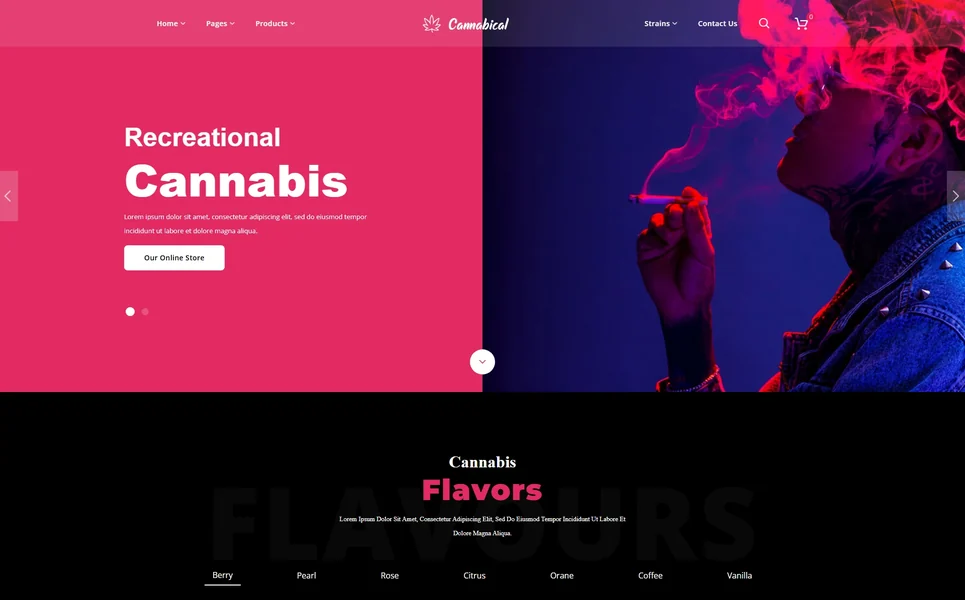
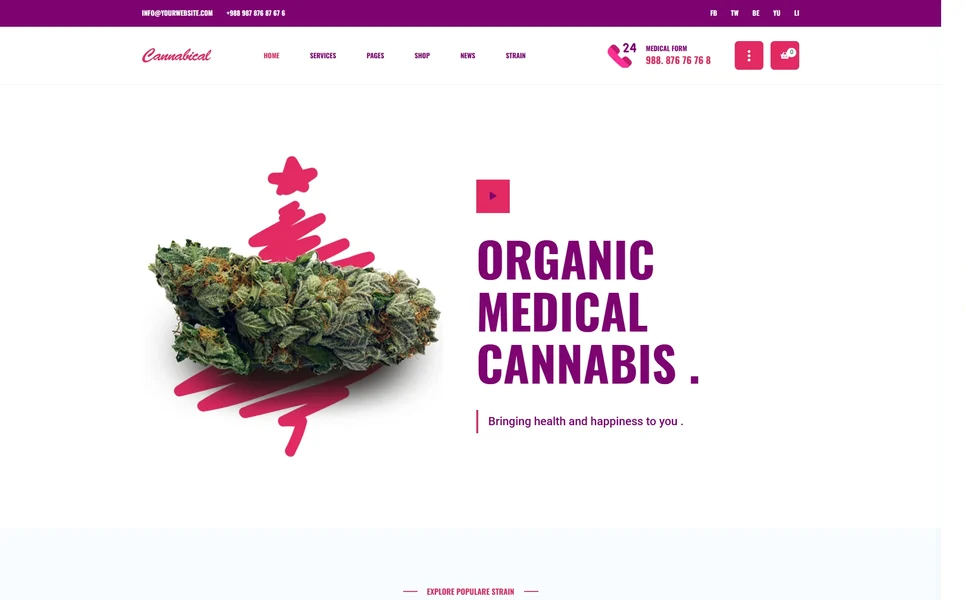
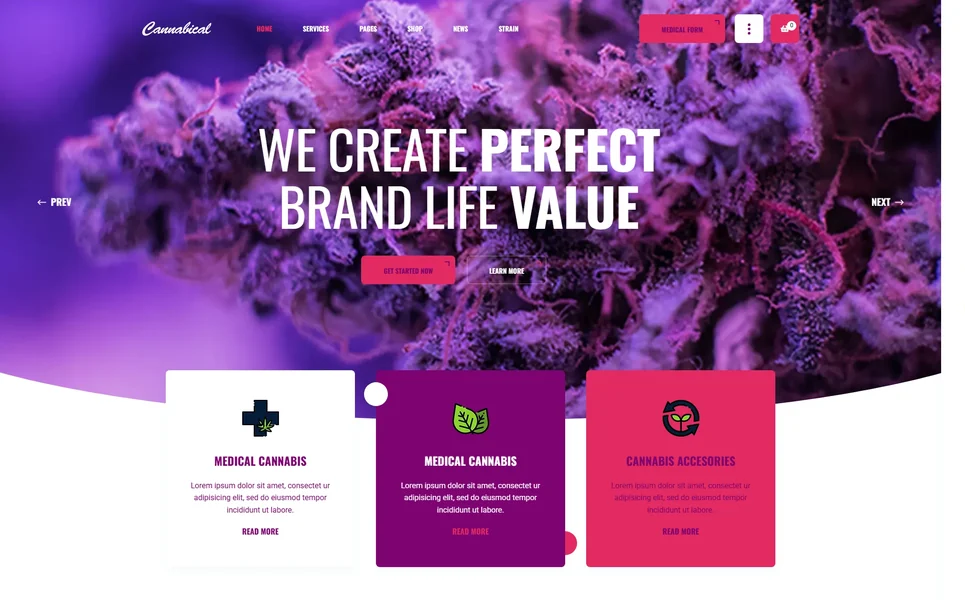
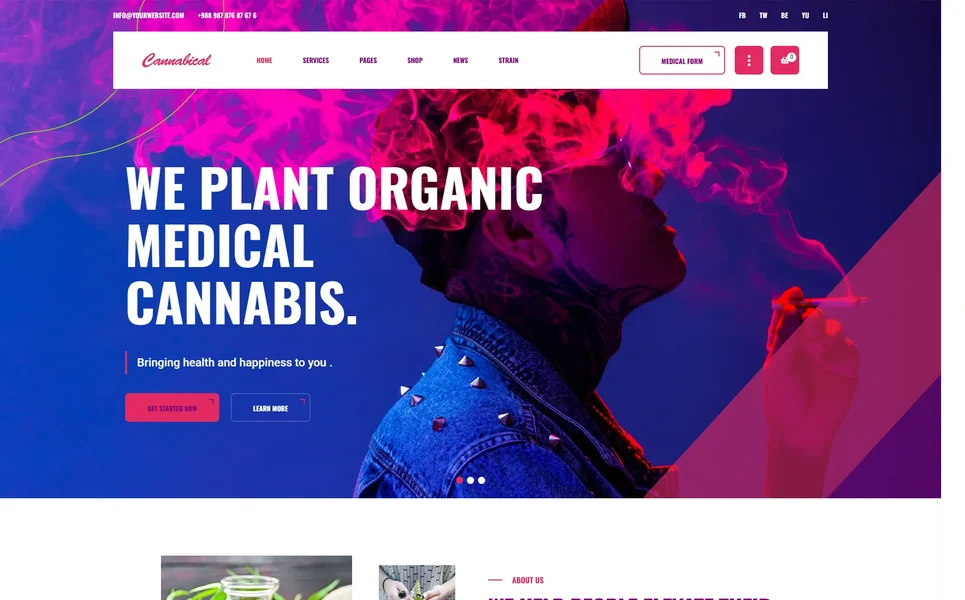
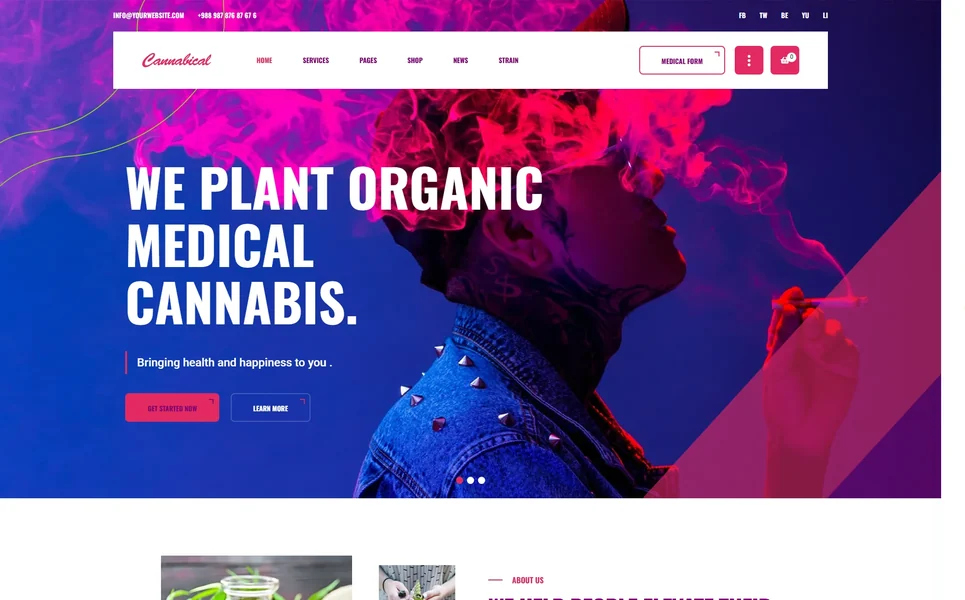
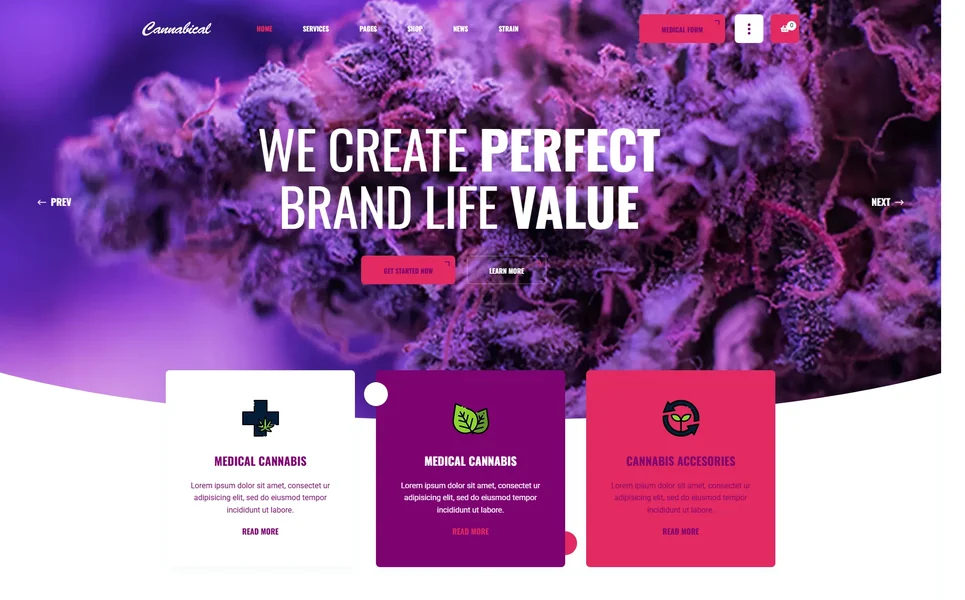
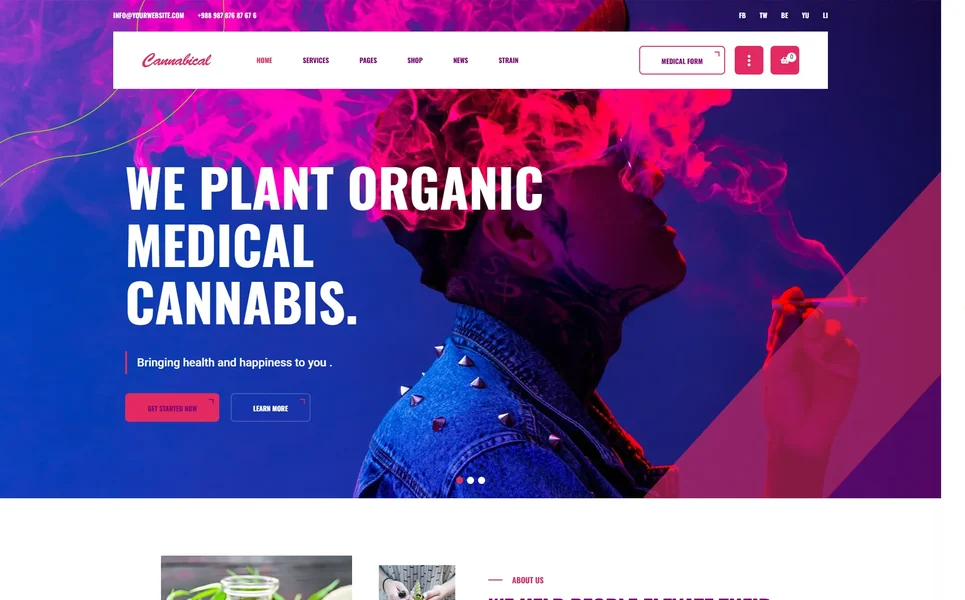
Cannabical is a cannabis HTML5 template designed for CBD wellness brands, hemp product companies, cannabis consulting agencies, and cannabinoid industry service providers. With 22 carefully crafted pages, a multi-format strain catalog, dedicated service pages, e-commerce shop, team directory, “Why Choose Us” persuasion page, and comprehensive blog and FAQ sections — Cannabical delivers the complete digital foundation that CBD brands need to compete in a market where advertising is restricted and owned channels are everything.
What Cannabical Includes
- 3 Homepage Variations — three consulting and brand-focused landing pages with distinct visual approaches
- Strain Catalog System — grid, masonry, slider, and detail views for comprehensive product and strain presentation
- Service Showcase — services listing and individual detail pages for consulting offerings and brand services
- Team Directory — team listing and individual profile pages for brand credibility and human connection
- E-Commerce Shop — shop with left sidebar, product detail, and shopping cart pages for direct-to-consumer sales
- Why Choose Us Page — dedicated persuasion page for converting comparison-shopping visitors
- Blog System — blog grid, standard, and detail views for educational content marketing
- FAQ Section — comprehensive frequently asked questions for customer education and rich snippets
- Contact Page — professional contact form with map integration for inquiries and consultations
- Bootstrap 5 Framework — fully responsive, mobile-first design for wellness shoppers on any device
- 22 Total Pages — comprehensive page set covering every CBD brand website requirement
Why Cannabical Works for CBD Brands
What sets Cannabical apart for CBD brands is its cannabis-specific design ecosystem. The strain catalog with four display formats (grid, masonry, slider, detail) provides the product presentation depth that educated CBD consumers demand — no generic e-commerce template offers this variety of product catalog views. The “Why Choose Us” persuasion page is a conversion tool specifically designed for the comparison-shopping behaviour that defines the CBD market.
The service pages support the consulting revenue stream that many CBD brands maintain alongside product sales. The team directory with individual profile pages builds the human connection and brand credibility that CBD consumers require from wellness brands. The blog system with three layout options and dedicated FAQ section create the content marketing infrastructure that compensates for restricted advertising channels. Three homepage variations let you position your CBD brand distinctly — whether as a premium wellness brand, an accessible everyday CBD line, or a cannabis industry consultancy.
Multi-Format Product Display: Cannabical’s strain catalog offers four distinct display formats — grid, masonry, slider, and detail views. This is a cannabis-specific feature that generic e-commerce templates do not provide. Display your CBD tincture line in a clean grid. Showcase your topicals collection in a masonry layout with varied image sizes. Feature your best sellers in a curated slider. Provide comprehensive product information with lab results and dosage guides on individual detail pages. This multi-format approach lets you match the display style to each product category and browsing context.
Customisation Roadmap for CBD Brands
Week One — Brand Identity and Product Content: Replace all placeholder content with your CBD brand identity — logo, colour palette, typography, and brand messaging. Photograph your product line with consistent, professional lighting and clean backgrounds. Write product descriptions with cannabinoid profiles, extraction methods, dosage guidelines, and ingredient lists. Prepare lab test certificates (COAs) for display or download. Set up your strain catalog with product categories.
Week Two — E-Commerce and Content: Integrate your CBD-compliant payment processor (Square with CBD approval, PayKickstart, or high-risk merchant account). Configure the shop pages with your product catalog. Set up the “Why Choose Us” page with your brand differentiators — quality controls, lab testing protocols, sourcing transparency, certifications. Build your team directory with founder and team member profiles. Write your FAQ section addressing the questions CBD buyers ask most frequently.
Week Three — Content Marketing and Launch: Publish your first five blog posts — a CBD dosage guide, an isolate vs. full-spectrum comparison, a wellness use case article, a sourcing transparency story, and a product spotlight. Submit your sitemap to Google Search Console. Set up email capture forms for newsletter signups and first-order discounts. Configure your email marketing platform for welcome sequences and replenishment reminders. Test the complete shopping flow on desktop and mobile, then deploy.
Frequently Asked Questions
Need Help Launching Your CBD Brand Website?
MetropolitanHost provides professional web development services for HTML template deployments. Our team understands CBD and cannabis industry website requirements and delivers clean, compliant implementations.
- WordPress Theme Installation — live in under 24 hours
- Full Website Package — complete front-to-back deployment
- Colour Customisation — match your CBD brand across all pages
- Website Speed Optimisation — Core Web Vitals improvements
- Accessibility Compliance — WCAG audit and remediation