What Is a Financial Advisor Website Template?
A financial advisor website template is a pre-designed, fully coded website built specifically for independent financial advisors, wealth management firms, financial planning practices, investment advisory firms, and corporate financial consultancies. It includes every page an advisory firm needs — multiple homepage layouts for different firm positioning strategies, detailed service pages for each advisory speciality, portfolio showcasing successful client outcomes, individual team member profile pages with credentials and certifications, client testimonials with animated statistics, a comprehensive blog system with multiple post formats for thought leadership content, and contact page with consultation scheduling — all designed, responsive, and ready for your firm brand.
For financial advisors who need a professional web presence without paying $15,000 to $40,000 for a custom build or $300 to $800 per month for a managed advisor marketing platform, a template delivers the most practical path to a client-acquiring online presence. But financial advisor websites face a trust challenge that exceeds most industries: prospective clients are considering entrusting their life savings, retirement security, and family financial future to your firm based substantially on their impression of your online presence. The stakes for projecting credibility, competence, and professionalism are extraordinarily high. This guide covers what affluent clients expect from your website, what technical features drive consultation bookings, and how to choose the right template for your financial advisory practice.
Template vs Advisor Platform vs Custom Build
Financial advisory firms typically face three options when establishing their online presence:
| Factor | Advisor Platform (FMG Suite, Advisor Websites) | Financial Advisor Website Template | Custom Website Build |
|---|---|---|---|
| Upfront Cost | $0–1,000 | $29–69 | $15,000–40,000 |
| Monthly Cost | $300–800/month | $3–10/month (hosting only) | $150–400/month |
| 3-Year Total Cost | $10,800–29,800 | $137–429 | $20,400–54,400 |
| Code Ownership | No — you rent it | Yes — you own it forever | Yes — you own it |
| Design Uniqueness | Same as every competitor firm | Fully customisable source code | Fully custom |
| Blog Depth | Basic blog | 7 post formats + sidebar variants + masonry | Any format |
| Team Detail Pages | Basic profiles | Individual team member detail pages | Any format |
| Homepage Flexibility | 1–3 layouts | 10 distinct layouts | Unlimited |
| Vendor Lock-in | High — content at risk | None | None |
Advisor marketing platforms like FMG Suite and Advisor Websites offer compliance-vetted content libraries and lead generation tools but charge monthly fees that compound substantially. A $500/month platform costs $18,000 over three years — fees that represent a significant percentage of an independent advisor’s marketing budget. A template provides the client-facing website that establishes credibility and generates consultation requests, while allowing integration with any CRM, scheduling, or compliance tool through embedded forms or links.
What Affluent Clients Expect From an Advisor Website
The global financial advisory market grew to $134.81 billion in 2025, with approximately 326,000 personal financial advisors competing in the United States alone. Employment in the sector is projected to grow 10 percent through 2034, reflecting increasing demand for professional financial guidance. With SEC-registered investment advisers now overseeing $144.6 trillion in assets, the stakes for individual advisors to differentiate their practice online have never been higher. Here is what prospective clients evaluate when choosing a financial advisor:
Professional Design That Reflects Financial Competence
Financial advisory is a trust-based profession where first impressions carry extraordinary weight. Prospective clients evaluating your website are unconsciously asking: “If this person cannot present a professional website, how will they manage my financial future?” Clean, sophisticated design with balanced layouts, professional typography, and thoughtful colour palettes signals the attention to detail and strategic thinking that clients expect from their financial advisor. Cluttered designs, outdated aesthetics, or visually busy pages create subconscious doubt about professional competence — a perception that is nearly impossible to reverse once formed.

Individual Advisor Profile Pages
Financial advisory is inherently personal. Clients are not hiring a firm — they are hiring a person. Individual advisor profile pages with professional credentials (CFP, CFA, ChFC, CPWA), educational background, areas of specialisation, years of experience, professional philosophy, and community involvement give prospective clients the information they need to evaluate fit before scheduling a consultation. A team overview page is helpful for firm positioning, but individual detail pages with depth are what convert browsers into booked consultations. Prospective clients want to understand not just what you do, but how you think and what principles guide your advisory approach.
Thought Leadership Blog Content
Financial advisors sell expertise. The most effective way to demonstrate expertise online is through thoughtful, authoritative content that addresses the financial concerns of your target client demographic. A comprehensive blog system with multiple post formats — standard articles, video commentaries, audio market updates, gallery-style infographic posts, link roundups of curated financial news, and quote-style market insights — provides the editorial flexibility to create the type of content that resonates with your audience. Affluent clients evaluating advisors specifically look for evidence of financial knowledge, market awareness, and clear communication skills in blog content.
Service Descriptions With Strategic Depth
Prospective clients want to understand exactly what advisory services you provide and how your approach differs from competitors. Individual service pages for each advisory speciality — comprehensive financial planning, retirement planning, investment management, estate planning, tax planning, insurance analysis, college planning, corporate benefits advisory — with descriptions of your methodology, typical engagement process, and client outcomes demonstrate the depth of expertise that justifies advisory fees. Services pages should address the problems you solve, the client types you serve best, and what the advisory relationship looks like from initial consultation through ongoing management.


Portfolio Showcasing Firm Capabilities
While financial advisors cannot share specific client portfolio performance, a portfolio section can showcase the firm’s work in other ways — published articles, speaking engagements, media appearances, community involvement, professional awards, white papers, and financial planning case studies with anonymised details. This portfolio of professional activity demonstrates that the advisor is active, engaged, and respected in the financial community. Isotope-filtered portfolios organised by category — Media, Publications, Events, Awards — let visitors quickly find the type of professional evidence that matters most to them.
Client Testimonials With Credibility Metrics
Animated statistics — clients served, assets under advisement, years of practice, client retention rate — provide quantitative credibility that complements qualitative testimonials. CountTo animated counters that trigger on scroll make these numbers visually engaging, communicating scale and stability. For financial advisors, client retention rate is a particularly powerful metric — a high retention rate signals client satisfaction more convincingly than any testimonial. Combined with testimonials that describe specific planning outcomes, these metrics build the confidence that prospective clients need to schedule a consultation.
Mobile Experience for Research-Phase Visitors
While financial advisory searches may be less mobile-dominant than service trades, a growing percentage of affluent prospects begin their advisor research on mobile devices — during commutes, between meetings, or during evening planning conversations with spouses. Your website must deliver a flawless experience on phones and tablets. Swiper touch-enabled carousels, responsive service layouts, and mobile-optimised team profiles ensure that the first mobile impression matches the desktop experience in professionalism and functionality.

Technical Features That Drive Advisory Consultations
Beyond visual design, certain technical features specifically enhance financial advisor websites and improve client acquisition.
Seven Blog Post Formats
Financial thought leadership requires editorial flexibility. Standard text articles serve traditional market commentary. Video post format supports recorded market updates, planning tutorials, and webinar replays. Audio format enables podcast-style market briefings for clients who prefer listening. Gallery format works for infographic series and data visualisation posts. Link format curates external financial news with advisor commentary. Quote format highlights key market insights or planning principles. This variety allows advisors to create content in the format that best matches both the topic and the advisor’s communication strengths.
Blog Sidebar Variants and Masonry Layout
Blog layout flexibility — left sidebar, right sidebar, no sidebar, masonry grid — allows advisors to present their content archive in the format that best serves their audience. Left sidebar with category navigation helps visitors find specific financial topics. No sidebar provides immersive reading for long-form planning guides. Masonry grid creates a visually dynamic blog home page that showcases multiple post types simultaneously. This layout flexibility ensures that the blog section looks polished regardless of content volume or post format mix.
Swiper Touch-Enabled Carousels
Swiper provides modern, performant carousels for testimonials, service highlights, and team showcases. Unlike older carousel libraries, Swiper supports fluid touch gestures, responsive breakpoints, and smooth transitions that create a premium browsing experience. For financial advisors, carousel quality matters — choppy animations or unresponsive touch interactions undermine the professional polish that affluent clients expect.
Fancybox Media Lightbox
Fancybox provides full-screen lightbox viewing for images, videos, and iframes. Financial advisors can use Fancybox to showcase portfolio items, display event photography, play video content, or embed interactive financial tools in a distraction-free overlay. The clean, modern popup experience aligns with the professional aesthetic that advisory firm websites require.
EasyPieChart for Firm Capabilities
EasyPieChart creates animated circular progress indicators ideal for showcasing firm capabilities and service distribution. Display asset allocation expertise, client demographic distribution, planning specialty breakdowns, or satisfaction survey results as visual skill rings. These data visualisations make firm capabilities immediately understandable and visually engaging — particularly important for a profession built on data-driven decision-making.
Cost Breakdown: Financial Advisor Website Options
Independent financial advisors must balance client acquisition investment against the fiduciary responsibility to manage their own business efficiently. Understanding the true cost of each website approach supports sound business planning:
| Cost Component | HTML Template | Advisor Platform (FMG Suite) | Custom Build |
|---|---|---|---|
| Template / License | $29–69 (one-time) | $0 | N/A |
| Hosting | $36–120/year | Included | $120–600/year |
| Platform Fee | None | $3,600–9,600/year | None |
| Blog System | 7 formats built-in | Basic blog | $2,000–5,000 custom |
| Team Detail Pages | Built-in | Basic profiles | $1,500–3,000 custom |
| Design Customisation | $0–500 | $0–200 | $8,000–25,000 |
| Total Year One | $65–689 | $3,600–10,800 | $11,620–33,600 |
| 3-Year Total | $137–929 | $10,800–29,800 | $11,860–34,800 |
Revenue Per Dollar Invested: An independent advisor spending $500/month on a website platform spends $6,000 per year. At a typical minimum account size of $250,000 and a 1% advisory fee, that platform cost equals 2.4 new client relationships worth of annual revenue — relationships that generate recurring fees for years. An HTML template at $29–69 preserves that budget for client events, seminar marketing, or professional development that directly drives client acquisition. With 38+ pages including 10 homepage layouts, 7 blog post formats, and individual team detail pages, the template delivers more professional positioning capability than most platforms at a fraction of the cost.
How to Choose the Right Financial Advisor Template
Not all templates serve the financial advisory industry effectively. Here is what to evaluate specifically for advisory firm use:
Check Blog Format Depth
This is the single most important differentiator for financial advisors. Your blog is your primary thought leadership platform — it demonstrates the expertise that justifies advisory fees. A template with multiple blog post formats (standard, video, audio, gallery, link, quote) and layout variants (sidebar positions, masonry grid) provides the editorial flexibility that serious content marketing requires. Templates with a basic single-format blog force all your content into one presentation style, limiting your ability to create engaging, format-appropriate thought leadership.
Evaluate Team Page Depth
Navigate to the team section. Does the template include individual team member detail pages beyond a basic grid? Financial advisory is a personal service — clients want to research individual advisors, not just skim a team photo grid. Detail pages with space for credentials, specialisations, philosophy statements, and professional history are essential for advisory firm websites. Templates with only a team overview grid miss the depth that drives consultation scheduling.
Count the Homepage Layouts
Financial advisory firms serve different client demographics — high-net-worth individuals, business owners, retirees, young professionals, corporate clients. Different homepage layouts allow you to position your firm for different audience segments or seasonal campaigns. A template with multiple homepage options gives you the flexibility to test different positioning strategies without redesigning the site. Templates with only one or two homepage layouts limit your ability to adapt your online presence as your firm evolves.
Assess Design Sophistication
Financial advisory websites must project sophisticated professionalism. Evaluate the template’s typography, colour palettes, spacing, and overall visual polish. Does the design feel appropriate for a firm managing significant wealth? Templates designed primarily for aggressive sales or casual industries may not project the gravitas that affluent clients associate with competent financial management.
Common Mistakes When Building a Financial Advisor Website
No Thought Leadership Content
A financial advisor website without blog content is a digital business card, not a client acquisition tool. Prospective clients evaluating advisors specifically look for evidence of financial knowledge, market awareness, and clear communication. Blog content — market commentary, planning guides, retirement strategy articles, tax planning insights — demonstrates the expertise that justifies advisory fees. Every competitor advisor with a content strategy is capturing organic search traffic and building credibility that a content-free website cannot match.
Generic Team Profiles
A team page with headshots and job titles communicates almost nothing. Affluent clients evaluating advisors want to understand credentials (CFP, CFA, ChFC), years of experience, areas of specialisation (retirement planning, estate planning, business exit strategy), educational background, professional philosophy, and community involvement. Individual detail pages with this depth build the personal connection that drives consultation scheduling. A team grid with names and one-line bios does not provide enough information for a prospective client to decide whether to contact your firm.
Missing Service Specialisation
“We provide financial planning services” is not a value proposition. Prospective clients want to know: what specific planning services do you offer, what client demographics do you serve best, what is your investment philosophy, and how does your advisory process work? Individual service pages for each speciality — with descriptions of your approach, typical engagement structure, and expected outcomes — differentiate your firm from the thousands of advisors who claim to do everything for everyone.
Design That Does Not Match the Profession
Using a template designed for a restaurant or fitness studio and repurposing it for a financial advisory firm rarely works. The visual language of financial services — clean layouts, sophisticated typography, restrained colour palettes, professional imagery — is distinctly different from casual consumer industries. A template built for corporate and professional services provides the design foundation that affluent clients subconsciously expect from a firm they will trust with their financial future.
Convi — A Corporate Template Built for Financial Advisory Excellence
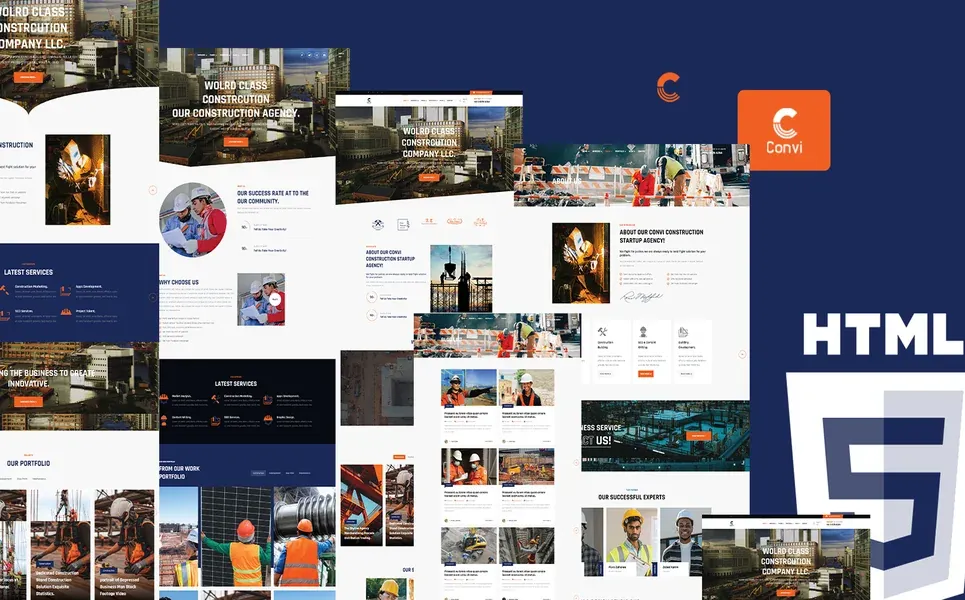
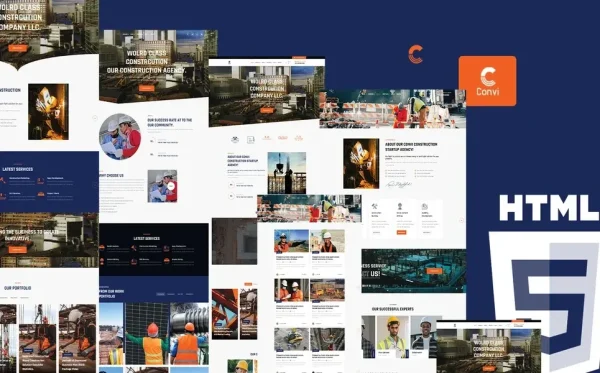
Convi is a corporate and multi-purpose business HTML5 template designed to meet every financial advisory practice requirement outlined in this guide. Built for financial advisors, wealth management firms, consulting practices, and corporate advisory businesses, it delivers the most comprehensive corporate web presence available — with 38+ pages, 10 homepage layouts, seven blog post formats with sidebar variants and masonry layout, individual team detail pages, portfolio showcasing, and services module with detail pages.
What Convi Includes
- 38+ Fully Designed HTML5 Pages — the most comprehensive corporate template available for advisory firms
- 10 Unique Home Layouts — position your firm for different client demographics and market segments
- 7 Blog Post Formats — standard, audio, video, gallery, link, and quote post types for thought leadership
- Blog Sidebar Variants — left sidebar, right sidebar, and no sidebar configurations for editorial flexibility
- Blog Masonry Layout — visually dynamic blog archive with sidebar for multi-format content showcasing
- Portfolio Module — archive and detail pages for firm accomplishments, publications, and media features
- Services Module — services overview plus individual service detail pages for each advisory speciality
- Team Pages — team overview plus individual team member detail pages with full credential display
- Testimonials Page — dedicated client testimonials and endorsements section
- CountTo Animated Statistics — clients served, assets under advisement, years of practice
- EasyPieChart Skill Rings — animated capability indicators for firm expertise areas
- Swiper Carousel — modern touch-enabled carousels for testimonials and service highlights
- Fancybox Lightbox — full-screen media viewing for video content and portfolio items
- Coming Soon and 404 Pages — branded utility pages for firm launches and error handling
- Typography Page — complete typography reference for consistent firm branding
Technical Foundation
Convi is built on Bootstrap 5 with Swiper for modern touch-enabled carousels, Fancybox for full-screen media lightbox viewing, Isotope for animated portfolio filtering by category, CountTo for animated business statistics, EasyPieChart for circular capability indicators, Mean Menu for clean mobile navigation, Magnific Popup for additional lightbox functionality, and Chart.js for data visualisation. The seven-format blog system with sidebar variants and masonry layout provides the editorial platform that financial thought leadership demands, while 10 homepage layouts give advisory firms the positioning flexibility to target different client segments effectively.
The Thought Leadership Advantage: Convi is one of the most content-rich corporate templates available, featuring a seven-format blog system with masonry layout and sidebar variants. Financial advisors can publish standard market commentary, video analysis, audio briefings, infographic galleries, curated news roundups, and quotation insights — each in the format that best serves the content. Combined with 10 homepage layouts for audience targeting, individual team detail pages for credential showcasing, and a portfolio module for firm accomplishments, Convi provides the professional positioning tools that convert affluent prospects into advisory clients. At 38+ pages with dedicated testimonials, typography reference, and branded utility pages, it is the most complete corporate template available — while competing advisor platforms charge $300–800/month for less editorial flexibility.
Customisation Roadmap for Financial Advisors
Week One — Branding and Professional Content: Select the homepage layout that best positions your firm for your target client demographic. Replace all placeholder content, adjust brand colours and typography to match your firm identity, and write individual service pages for each advisory speciality with descriptions of your methodology, engagement process, and client outcomes. Populate team detail pages with full credentials, professional philosophy, and specialisation areas.
Week Two — Blog Foundation and Portfolio: Create your first five blog posts across multiple formats — a market commentary article, a retirement planning guide, a video market update, a financial planning infographic post, and a curated news roundup with advisor commentary. Build your portfolio section with professional accomplishments, publications, media features, and speaking engagements. Add client testimonials with specific planning outcomes and populate animated statistics with accurate firm metrics.
Week Three — Professional Launch: Configure Google Analytics 4 and conversion tracking on consultation request forms. Set up Google Business Profile with firm information, advisor credentials, and client reviews. Test across all devices with emphasis on the sophisticated browsing experience that affluent clients expect. Review all content for compliance considerations. Deploy and submit to Google Search Console. Plan your ongoing content calendar with at least two blog posts per month across different formats.
Frequently Asked Questions
Need Help Launching Your Financial Advisor Website?
MetropolitanHost provides professional web development services for HTML template deployments. Our team understands financial services website requirements and delivers clean, conversion-optimised implementations that project the sophistication your clients expect.
- WordPress Theme Installation — live in under 24 hours
- Full Website Package — complete front-to-back deployment
- Colour Customisation — match your firm brand across all pages
- Website Speed Optimisation — Core Web Vitals improvements
- Accessibility Compliance — WCAG audit and remediation