What Is a Bakery Website Template?
A bakery website template is a pre-designed, fully coded website built specifically for bakeries, patisseries, bread shops, cake studios, and artisan baking businesses. It includes every page a modern bakery needs — homepage with appetite-driven visuals, restaurant and vendor listing pages, online ordering with checkout flow, geo-location based discovery, blog for recipe content and marketing, user authentication for customer accounts, and about pages for brand storytelling — all designed, responsive, and ready for your bakery brand.
For bakery owners who need a professional online presence without paying $5,000 to $10,000 for a custom build or $24 to $100 per month for a bakery-specific platform like Square Online or Toast, a template delivers the most practical path to getting online. But bakery websites have unique requirements that generic business templates miss entirely. Your product photography must make visitors hungry. Your menu must be organized by category with clear pricing. Your ordering flow must handle custom cake orders, scheduled pickups, and delivery windows. This guide covers what bakery customers expect from your website, what features make the real difference, and how to choose the right template for your baking business.
Template vs Bakery Platform vs Custom Build
Bakery owners typically face three paths when establishing their online presence:
| Factor | Bakery Platform (Square, Toast) | Bakery Website Template | Custom Website Build |
|---|---|---|---|
| Upfront Cost | $0–100 | $29–69 | $5,000–10,000 |
| Monthly Cost | $26–100/month | $3–10/month (hosting only) | $50–200/month |
| 3-Year Total Cost | $936–3,700 | $137–429 | $6,800–17,200 |
| Code Ownership | No — you rent it | Yes — you own it forever | Yes — you own it |
| Design Uniqueness | Limited templates, same as competitors | Fully customisable | Fully custom |
| Menu Display | Basic product grid | Multi-layout restaurant listings | Any format |
| Online Ordering | Built-in | Integrate any ordering tool | Any system |
| Time to Launch | 1–2 days | 3–7 days | 4–12 weeks |
| Vendor Lock-in | High — your store disappears if you cancel | None | None |
Bakery platforms offer ordering convenience but limit your creative expression. Every bakery on Square Online shares the same visual DNA — and in an industry where brand personality and visual appeal are everything, looking identical to your competition undermines the artisan quality that defines your bakery. A template gives you complete creative control over your brand presentation while allowing you to integrate any ordering, payment, or scheduling tool you prefer.
What Bakery Customers Expect From Your Website
Bakery customers are driven by visual appetite. Unlike most service businesses where logic drives the purchase decision, bakery purchases are triggered by cravings — and your website must create those cravings. The moment a visitor lands on your site, they should see images that make their mouth water, prices that feel fair, and an ordering process that takes them from craving to confirmation in minutes.
Photography That Creates Cravings
Your product photography is the single most important element on your bakery website. A mediocre photo of a spectacular croissant will lose to a stunning photo of an average croissant every time — because online, customers eat with their eyes first. Professional bakery photography requires natural lighting or softbox setups to avoid harsh shadows. Overhead shots work for cookies, pastries, and bread loaves. 45-degree angles showcase layer cakes, stacked macarons, and bread texture. Lifestyle shots with coffee, table settings, and hands reaching for pastries add emotional warmth.
Image format matters for performance. WebP reduces file sizes significantly compared to JPEG without visible quality loss. Large, unoptimized images slow your page load speed — and a slow bakery website loses impatient customers to the competitor with faster-loading product photos. Every hero image and product photo should be optimized for web delivery without sacrificing the visual quality that drives bakery purchases.
Menu Organization by Category
Your product menu must be organized the way customers think about bakery products — not the way you organize your production kitchen. Logical categories include breads and rolls, cakes and layer cakes, pastries and viennoiserie, cookies and bars, seasonal specials, custom cake orders, and catering platters. Each category should display items with name, brief description, pricing (or “starting from” pricing for custom items), and a photo.
Customers should be able to browse your entire menu without confusion. A bakery with 50 products displayed in a single unorganized grid overwhelms visitors. Category-based navigation — either through separate listing pages or filterable grids — lets customers jump directly to the product type they want. The menu is also a major SEO opportunity: individual product category pages optimized for searches like “custom birthday cakes [city]” or “artisan sourdough bread [neighbourhood]” drive high-intent local traffic.
Online Ordering With Pickup and Delivery Options
Modern bakery customers expect to order online — especially for custom cakes, catering orders, and advance pickup of daily items. Your ordering flow must handle three scenarios: immediate items available for same-day pickup, custom orders requiring lead time and specifications, and delivery orders requiring address and scheduling. The checkout process should present order totals clearly, offer pickup time selection, and confirm the order with an email or on-screen confirmation.
For custom cake orders specifically, your website needs a way to capture specifications — cake size, flavor, frosting type, decoration requirements, event date, and reference images. This can be a structured order form or a dedicated custom order page that collects all details before a bakery team member confirms pricing and availability.
Location Discovery for Multi-Location Bakeries
Bakeries with multiple locations or bakery marketplace platforms need location-based discovery. A geo-locator feature lets customers find the nearest bakery location, view its specific menu and hours, and place an order for that location. Even single-location bakeries benefit from prominent map integration, clear address display, parking information, and hours of operation — reducing the “where are you?” inquiries that consume staff time.

Social Proof That Converts Browsers to Buyers
Bakery purchases are emotionally driven, and social proof amplifies that emotion. Customer reviews, Instagram-worthy customer photos, exclusive deals and promotion sections, and partner bakery features all contribute to the perception that your bakery is loved, busy, and worth visiting. A dedicated deals section drives urgency — “This Week’s Special: Buy 6 Croissants, Get 2 Free” — and gives returning visitors a reason to check back regularly.
Mobile Experience for On-the-Go Ordering
Bakery customers often order from their phones — while commuting, during lunch breaks, or while planning events. Your entire website must work flawlessly on mobile, with product photos that load quickly, menus that scroll smoothly, and an ordering process that completes in a few taps. Bakeries lose significant revenue when their mobile experience is clunky — a customer craving a morning pastry will order from whichever bakery lets them place that order fastest.
Technical Features That Elevate Bakery Websites
Beyond visual appeal, specific technical features make bakery websites more effective at converting visitors into customers.

Restaurant and Vendor Listing System
A multi-layout listing system allows you to present your bakery (or multiple bakery vendors for marketplace models) in different visual formats — grid layouts, list views, and detailed profile pages. For a single bakery, this system can be repurposed to showcase different departments, product lines, or seasonal collections as individual “listings” with their own detail pages and imagery.
Geo-Location Discovery Page
A geo-locator page with map integration lets customers discover your bakery based on their location. For multi-location operations, this is essential. For single-location bakeries, the map integration combined with clear address, hours, and parking information eliminates friction for first-time visitors trying to find you.
Checkout and Order Management Flow
A complete ordering flow — product browsing, cart management, checkout with order details, and order confirmation — creates a seamless purchase experience. The checkout page should display order summaries clearly, offer pickup or delivery selection, and handle special instructions (custom cake messages, allergy notes, delivery timing). An exclusive deals section creates promotional urgency that drives repeat orders.
Blog System for Recipe Content and SEO
Bakery websites have a unique content marketing advantage: recipes. Recipe blog posts drive massive organic search traffic — people searching for “sourdough bread recipe” or “chocolate ganache cake recipe” are exactly the audience likely to order from your bakery. A blog system with multiple layout options lets you publish recipe content, baking tips, behind-the-scenes features, and seasonal announcements that drive organic traffic and build your bakery’s authority.
Recipe Content Advantage: Bakeries have a built-in content marketing goldmine that most businesses envy — recipes. A bakery blog publishing weekly recipes, baking tips, and ingredient spotlights can drive substantial organic search traffic from people who love baking. These visitors are your ideal customers — people passionate about baked goods who will order from you when they want professional results without the effort. Your blog turns content readers into paying customers.
How to Evaluate a Bakery Template Before You Buy
Inspect the Menu and Listing Pages
Open the template demo and browse the restaurant listing pages. Do they present products in appetizing, well-organized layouts? Can you envision your croissants, cakes, and breads displayed in this format? Does each listing have a detail page with enough space for product descriptions, pricing, and multiple images? A bakery template with only a single listing layout limits your product presentation flexibility.
Walk Through the Ordering Flow
Follow the complete ordering path from product browsing to checkout. Is the cart page clear and professional? Does the checkout page handle order details effectively? Can you see your customers completing an order without confusion? Test the flow on mobile — tap through the entire process with your thumb. Any point where you have to pinch, zoom, or guess what to tap next is a conversion killer.
Evaluate Visual Impact
Bakery websites live and die by visual impact. Does the homepage hero section give your best photography the space it deserves? Are product images displayed at sizes large enough to trigger cravings? Does the color palette complement food imagery rather than compete with it? Warm tones — browns, golds, creams — work best for bakery brands because they stimulate appetite and convey freshness.
Bakery Website Cost Breakdown
Here is the realistic cost comparison for bakery website approaches:
| Cost Category | Template Approach | Custom Build |
|---|---|---|
| Website Design | $29–69 (one-time) | $5,000–10,000 |
| Hosting | $3–10/month | $20–80/month |
| Domain | $10–15/year | $10–15/year |
| SSL Certificate | Free (Let’s Encrypt) | Free–$200/year |
| Ordering System | Free–$50/month (plugin) | $1,000–3,000 |
| Payment Processing | 2.6–3.5% per transaction | 2.6–3.5% per transaction |
| Product Photography | $200–800 (one session) | $200–800 |
| Annual Maintenance | $100–500 | $1,000–5,000 |
| First-Year Total | $450–1,800 | $7,000–19,500 |
Bakery SEO Strategy for Local Dominance
Bakeries are inherently local businesses — and local SEO is where your website investment pays off most dramatically.
Target Product-Specific Local Keywords
Focus on keywords that combine your products with your location. “Best sourdough bread in [city],” “custom birthday cakes [neighbourhood],” “artisan bakery [zip code],” and “French pastry shop near me” are high-intent searches from people ready to visit or order. Create dedicated product category pages optimized for these searches.
Leverage Recipe Content for Organic Traffic
Recipe blog posts are your secret weapon. People searching for baking recipes are food enthusiasts — your ideal customer demographic. Publish recipes with professional photos, detailed instructions, and links to order the finished product from your bakery for those who want the result without the effort. This content strategy drives organic traffic, builds brand authority, and creates a natural sales funnel.
Google Business Profile Optimization
Your Google Business Profile is your most valuable local SEO asset. Post weekly updates with product photos, seasonal specials, and event announcements. Respond to every review. Keep hours accurate — especially holiday hours. Add product photos regularly. A well-maintained Google Business Profile drives foot traffic and phone calls that directly translate to revenue.
Local SEO Impact: Bakeries ranking in the Google Local Pack (the map results) for searches like “bakery near me” see dramatically more foot traffic than those ranking only in organic results. Your Google Business Profile, local citations (Yelp, Apple Maps, TripAdvisor), and location-optimized website pages work together to dominate local search results for bakery-related queries in your service area.
Bunlicious — A Template Built for Bakery and Food Delivery Businesses
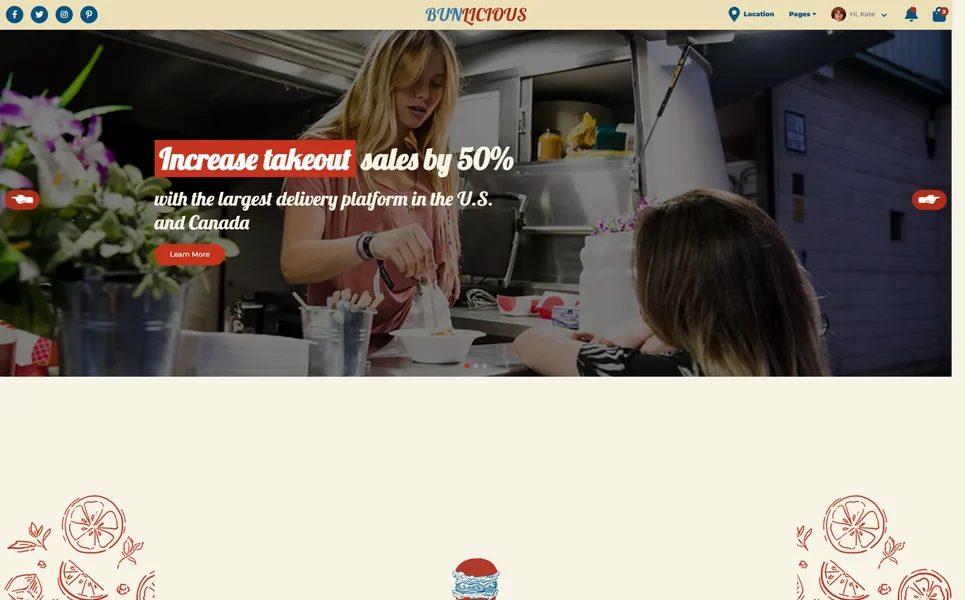
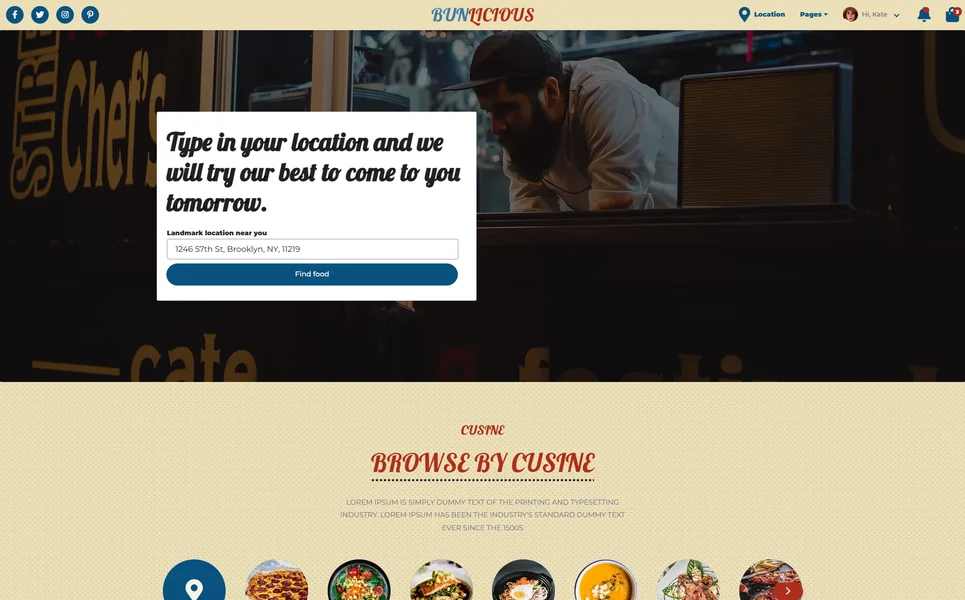
Bunlicious is a food delivery and restaurant HTML5 template designed for bakeries, patisseries, food delivery services, and artisan food businesses. With 20 expertly designed pages, it delivers every component a modern bakery needs for a professional online presence — from multi-layout product listings to a complete ordering flow with checkout and order management.
What Bunlicious Includes
- 4 Homepage Layouts — four distinct designs for different bakery brand identities and business models
- Restaurant and Product Listings — grid styles, list view, and detailed profile pages for showcasing your bakery products and vendor partners
- Geo-Locator Page — location-based discovery with map integration for multi-location bakeries
- Complete Order Flow — checkout, order details, and cart pages for seamless online ordering
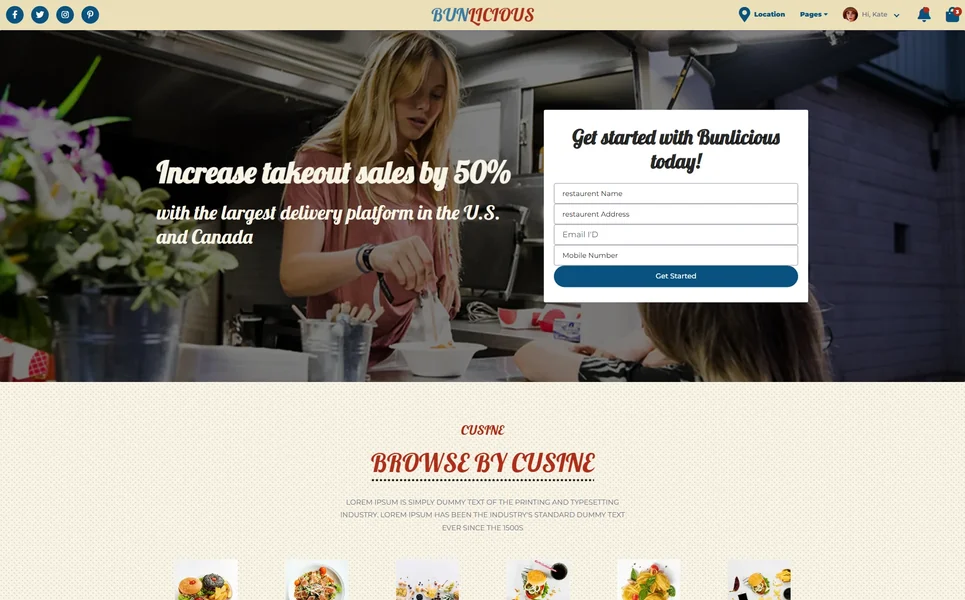
- Add Restaurant Portal — partner onboarding page for bakery marketplace or vendor models
- Exclusive Deals Section — promote seasonal specials, bundle offers, and loyalty discounts
- Blog System — blog listing and detail pages for recipe content marketing and SEO
- User Authentication — login and registration pages for customer accounts and order history
- Bootstrap 5 Framework — fully responsive, mobile-first design for ordering on any device
- 20 Total Pages — comprehensive page set covering every bakery website requirement
Why Bunlicious Works for Bakeries
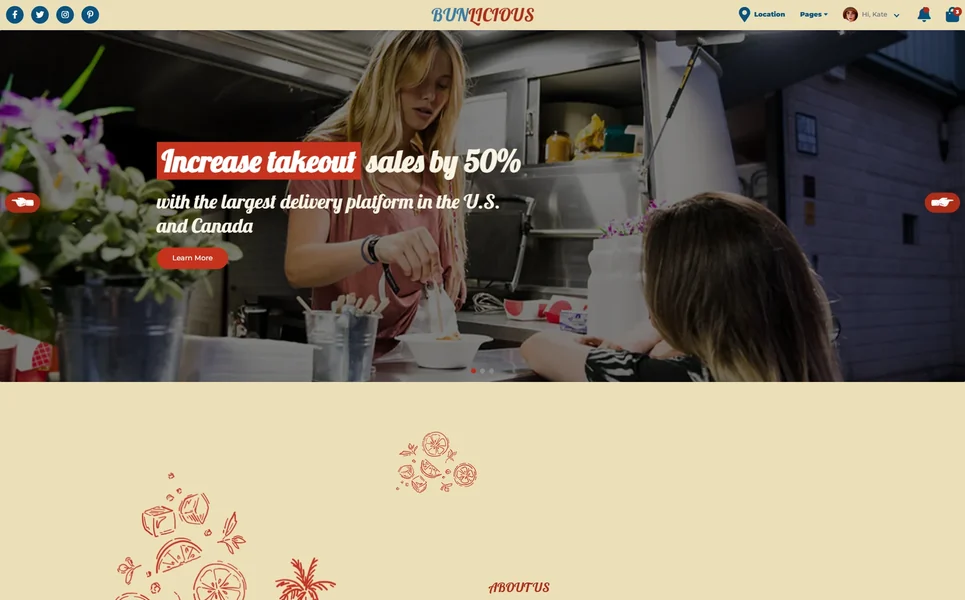
What sets Bunlicious apart for bakery businesses is its food-specific design ecosystem. The restaurant listing pages with multiple layout options showcase your product categories with the visual richness that food businesses require. The geo-locator page helps customers find your bakery location. The complete checkout and order details flow handles everything from quick pastry pickups to complex custom cake orders. The exclusive deals section gives you built-in promotional tools for seasonal specials, holiday bundles, and loyalty offers that drive repeat business.
The add restaurant portal page is particularly valuable for bakeries expanding into marketplace models — where local artisan bakers or specialty vendors can be featured alongside your core product line. Built on Bootstrap 5, every element is designed mobile-first for the customers ordering from their phones during commutes and lunch breaks.
Multi-Layout Product Display: Bunlicious offers restaurant listings in grid styles, list view, and detailed profile pages — giving you multiple ways to showcase your bakery products. Display your cake collection in a visual grid, your daily bread menu in a scannable list view, and your custom cake service on a dedicated detail page. This layout flexibility lets you match the presentation format to each product category rather than forcing everything into a single layout.
Customisation Roadmap for Bakery Owners
Week One — Photography and Brand Setup: Schedule a product photography session — capture your best sellers, signature items, and seasonal specials with consistent lighting and backgrounds. Write product descriptions with ingredients, pricing, and ordering details. Replace all placeholder content with your bakery’s brand identity — logo, colour palette, typography, and brand story. Set up your product categories on the listing pages.
Week Two — Ordering and Launch: Configure the checkout flow with your preferred payment processor (Stripe, Square, or PayPal). Set up the geo-locator page with your bakery location, hours, and parking information. Create your exclusive deals section with launch specials. Integrate contact forms with your business email. Add your first blog posts — a signature recipe, a “meet the baker” story, and a seasonal product announcement. Test the complete ordering flow on desktop and mobile, then deploy.
Frequently Asked Questions
Need Help Launching Your Bakery Website?
MetropolitanHost provides professional web development services for HTML template deployments. Our team understands food industry website requirements and delivers clean, conversion-focused implementations.
- WordPress Theme Installation — live in under 24 hours
- Full Website Package — complete front-to-back deployment
- Colour Customisation — match your bakery branding across all pages
- Website Speed Optimisation — Core Web Vitals improvements
- Accessibility Compliance — WCAG audit and remediation