A restaurant without a website is a restaurant that potential diners will never find. Over 80% of customers research restaurants online before deciding where to eat, and a dated or missing website sends them straight to a competitor. The right restaurant website template gives you a professional online presence in days, not months, with built-in menu pages, reservation forms, and mobile-friendly layouts designed specifically for the food industry.
In this guide, we review 7 restaurant website templates that cover bakeries, pizzerias, seafood houses, sushi bars, hotel dining, and general fine dining. Each template ships with 18 pages, multiple homepage layouts, and the features that actually drive reservations.
Why Restaurant Website Design Matters More Than Ever
The restaurant industry has changed permanently. Diners no longer flip through phone books or drive around looking for somewhere to eat. They search on their phones, scan a menu, check reviews, and make a decision within 60 seconds. Your website is now your front door, your host, and your first impression rolled into one.
A well-designed restaurant website template handles the three things every hungry visitor wants: a clear menu with prices, an easy way to book a table, and photos that make the food look as good as it tastes. Templates built for restaurants solve all three problems out of the box, saving you thousands compared to a custom build.
There is also the local SEO factor. Google prioritizes restaurants with structured, fast-loading websites that include location data, hours, and menu information. A purpose-built restaurant website template includes all of these elements by default, giving you an advantage over competitors still relying on a Facebook page or a basic listing on a delivery app.
Cost is another consideration. Hiring a web designer to build a custom restaurant website typically runs $3,000 to $10,000, with a timeline of 4 to 8 weeks. A professionally designed restaurant website template costs a fraction of that and can be customized and launched in a single weekend. The saved budget goes further when spent on food photography, marketing, or kitchen equipment.
What Makes a Restaurant Website Convert Visitors to Diners
Not every website template works for restaurants. Generic business templates lack the specific components that food-service websites require. Here are the four features that separate effective restaurant website templates from everything else.
Menu Presentation
Your menu is the single most viewed page on your restaurant website. A good restaurant website template presents dishes with clear pricing, appetizing photography, and organized categories. The best templates also include allergen indicators, ingredient details, and pairing suggestions. Tabbed layouts that separate appetizers, mains, desserts, and kids’ menus let visitors find what they want without scrolling through pages of items.
Reservation System
Every restaurant website template worth considering includes a dedicated reservation page. The booking form should capture date, time, party size, and contact information at minimum. Some templates go further with calendar widgets, guest selectors, and confirmation messaging. A visible reservation button in the header navigation ensures visitors can book a table from any page on the site.
Food Photography and Gallery
Restaurants sell with their eyes. A template with a strong gallery section, lightbox functionality, and full-width image areas gives your food photography the space it deserves. Look for templates that include dedicated gallery pages as well as inline image sections throughout the homepage. Video integration is another valuable feature, letting you showcase kitchen behind-the-scenes footage or chef interviews.
Mobile Experience
More than 70% of restaurant searches happen on mobile devices. Your template must look flawless on every screen size, with tap-friendly navigation, readable menu text, and a reservation button that stays accessible. Bootstrap 5 templates handle responsive design automatically, adjusting layouts from desktop to tablet to phone without any extra work on your part.
Pay close attention to how menu items display on smaller screens. Dish names, prices, descriptions, and allergen icons all need to remain legible without pinching or zooming. A well-built restaurant website template stacks these elements vertically on mobile while keeping the horizontal card layout on desktop, so the experience feels intentional on every device rather than simply shrunk down.
7 Best Restaurant Website Templates (2026)
Each of the following templates has been reviewed for design quality, feature set, code structure, and overall value. All are built on HTML5 with Bootstrap 5 and ship with clean, well-documented source code. We have organized them by cuisine type so you can jump directly to the template that fits your restaurant concept.
1. Fattcupcake: Best for Bakeries and Dessert Shops
Fattcupcake is an 18-page bakery and cupcake shop template with 6 distinct homepage layouts. The warm color palette and rounded design elements perfectly match the inviting atmosphere a bakery needs to project online. The homepage opens with a testimonial-driven hero section featuring 5-star ratings, immediately building social proof.
What sets Fattcupcake apart is its menu presentation. The tabbed menu system organizes items across appetizers, desserts, main dishes, and kids’ options, with each dish card showing the price, allergen icons for eggs, milk, and fish, and recommended pairings. This level of detail is unusual for an HTML template and saves significant development time.
The template includes dedicated pages for About Us, History, Team, Chef profiles, Gallery, Blog (with sidebar variants), Reservation, and Contact. The four category cards on the homepage (Eat, Drinks, Snacks, Events) provide clear navigation paths for different visitor intentions. A promotional banner section lets you highlight seasonal offers or discount codes, and the multi-location footer displays addresses, phone numbers, and operating hours for each branch.
2. Fattpizza: Best for Pizzerias and Casual Dining
Fattpizza takes the same robust 18-page structure and adapts it for pizza restaurants and casual dining. The design language shifts to match the energy of a pizzeria, with bolder imagery and a layout that puts the food front and center. You get the same 6 homepage variations, giving you flexibility to test different approaches or use different layouts for different locations.
The menu system mirrors the tabbed approach from Fattcupcake, with pizza-specific items and pricing displayed alongside allergen indicators. The quick-view and add-to-cart functionality built into each menu item card means you can expand this template into an online ordering system with minimal additional development. Every page, from the Chef profile to the Blog section, maintains visual consistency while feeling distinctly pizza-themed.
The testimonials carousel, recipe features section, and blog area round out the content strategy. The recipe features section is a smart touch for pizzerias that want to showcase signature creations or limited-time specialty pies. For a pizzeria owner who needs a professional website quickly, Fattpizza delivers everything you need across 18 pages without requiring a designer to customize the look. It works equally well for a single neighborhood pizza shop or a growing chain with multiple locations.

3. Fattsailor: Best for Seafood Restaurants
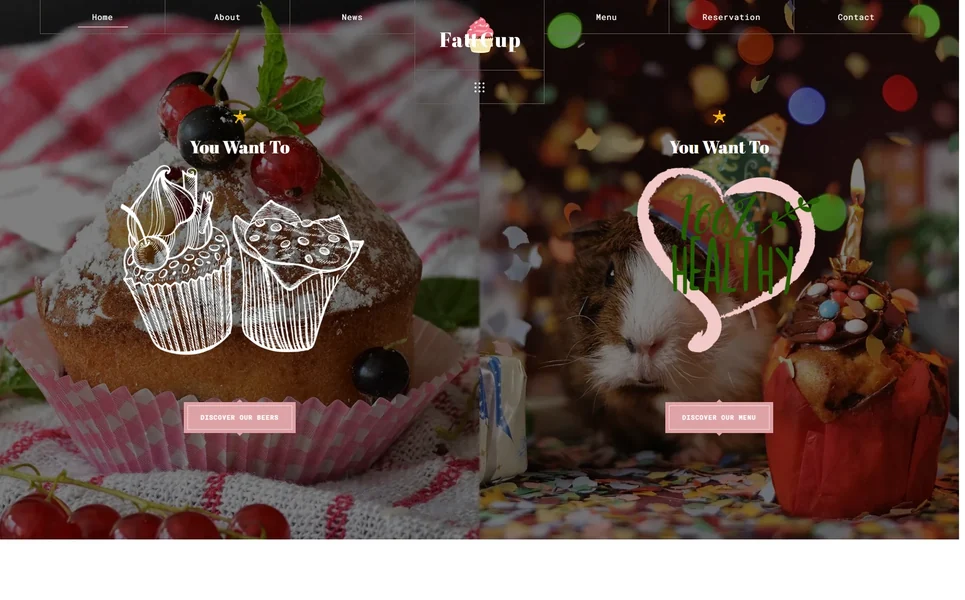
Fattsailor brings a nautical aesthetic to the restaurant template format. The darker color palette with gold accents creates an upscale seafood dining atmosphere that works for everything from a waterfront fish house to a fine-dining oyster bar. Like the other templates in this series, Fattsailor ships with 18 pages and 6 homepage layouts.
The template’s strongest feature is its atmosphere. The design choices, from the color tones to the image framing, convey the feel of a premium seafood establishment. The same powerful menu system is in place, with tabbed categories and allergen indicators on every dish card. The video section is particularly effective for seafood restaurants that want to showcase their sourcing story or waterfront location.
Fattsailor includes every page a seafood restaurant needs: About, History, Team, Chef, Gallery, Blog, Reservation, and Contact. The History page is a particularly smart inclusion for seafood restaurants with a story to tell about their origins, family traditions, or connection to local fishing communities. The multi-location footer with individual hours and addresses supports restaurant groups with multiple branches, and the promotional banner section works well for seasonal catches, daily specials, or early-bird pricing.
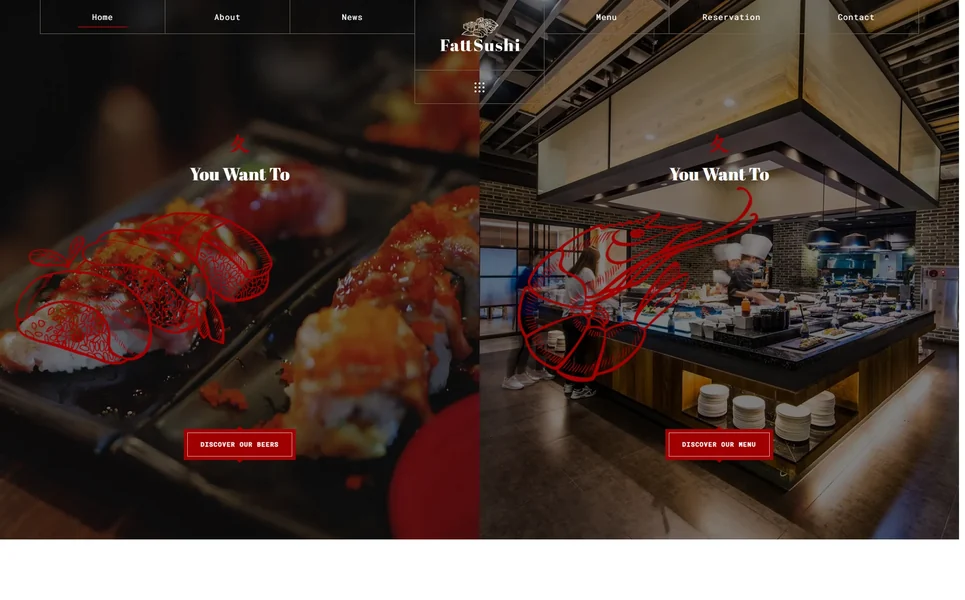
4. Fattsushi: Best for Japanese and Sushi Restaurants
Fattsushi adapts the 18-page template framework for Japanese cuisine and sushi bars. The design incorporates visual elements that feel authentic to Japanese dining culture while maintaining the modern, professional layout that works across all devices. Six homepage variations let you choose the presentation style that best fits your brand.
The menu presentation is where Fattsushi excels for its niche. Sushi and Japanese dishes require a different visual approach than Western cuisine. The dish cards display items with ingredient-level allergen indicators for common sushi allergens like fish and eggs, plus pairing recommendations. The tabbed category system keeps the menu organized even if you serve dozens of rolls, nigiri, appetizers, and desserts.
The full page roster includes Team and Chef profile pages, which are especially valuable for sushi restaurants where the chef’s credentials directly influence customer trust. The Gallery page provides space for those meticulously plated sashimi shots that drive social media engagement. With blog, reservation, and multi-location support, Fattsushi covers every online need a Japanese restaurant has.
5. Tufatt: Best General-Purpose Restaurant Template
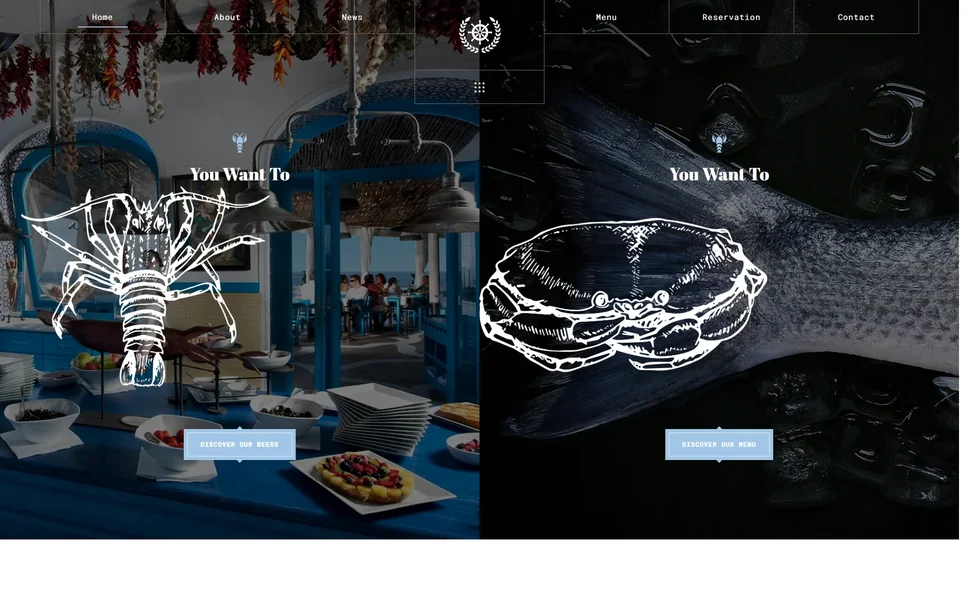
Tufatt is the most versatile option in this roundup. While the other templates lean into specific cuisine niches, Tufatt provides a neutral, upscale dining aesthetic that works for Italian trattorias, American grills, farm-to-table concepts, or any restaurant that does not fit neatly into a single cuisine category. The 18-page template with 6 homepage layouts gives you a flexible foundation.
The homepage structure follows the proven layout: hero section with social proof, four service category cards (Eat, Drinks, Snacks, Events), tabbed menu with pricing and allergen icons, video showcase, promotional banner, testimonials carousel, recipe features, and blog section. What makes Tufatt stand out is its adaptability. The design elements are cuisine-neutral, so you can drop in your own photography and branding without fighting against a template that was designed for a specific food style.
The add-to-cart and quick-view features on menu items give Tufatt e-commerce readiness, and the responsive image optimization with WebP support ensures fast load times. The typography and spacing work equally well whether you are presenting rustic comfort food or refined tasting menus.
For restaurant owners who want one template that can serve any concept, Tufatt is the strongest all-around choice in this list. It is also a practical option for restaurant groups that operate multiple concepts under one brand, since the neutral design language translates across cuisines without a full redesign.
6. Miranda: Best for Hotels with Restaurant Dining
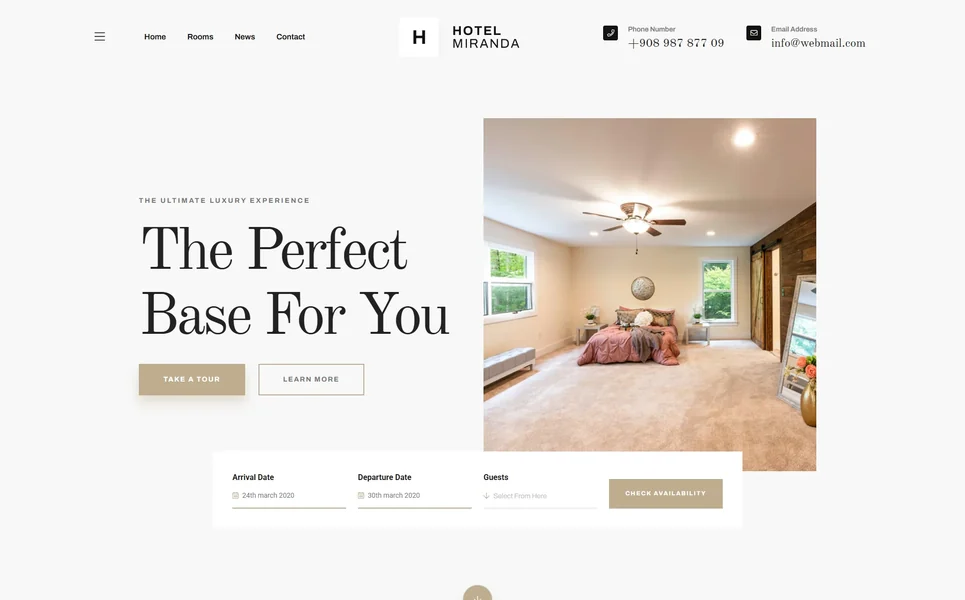
Miranda takes a different approach. It is built for hotels and resorts that feature on-site restaurants, making it the ideal choice for businesses that need to showcase both accommodation and dining in one website. The template ships with 18 pages covering room bookings, restaurant menus, a gallery, a places/attractions guide, and special offers.
The homepage opens with a booking widget that captures arrival and departure dates plus guest count, followed by room category showcases (Luxury, Family, Double Bed, Relax) and a services section highlighting transport, dining, and amenities. The dedicated Restaurant and Food Menu pages give the dining experience its own space within the broader hotel website, complete with the visual presentation food photography demands.
Miranda offers 3 homepage variants and includes pages for About Us, Gallery, Places, Offers, Blog, and Contact. The Places page is a standout feature for hospitality businesses, providing a section to highlight nearby attractions, landmarks, and points of interest that give guests a reason to choose your location. The Offers page lets you promote package deals that combine accommodation with dining experiences.
The testimonials section features guest reviews, and the footer provides phone, email, and social media links. If you run a boutique hotel, a bed-and-breakfast with a restaurant, or a resort with multiple dining venues, Miranda is the only template on this list that handles both hospitality and food service in one package.

7. Cookshow: Best for Cooking Studios and Culinary Brands
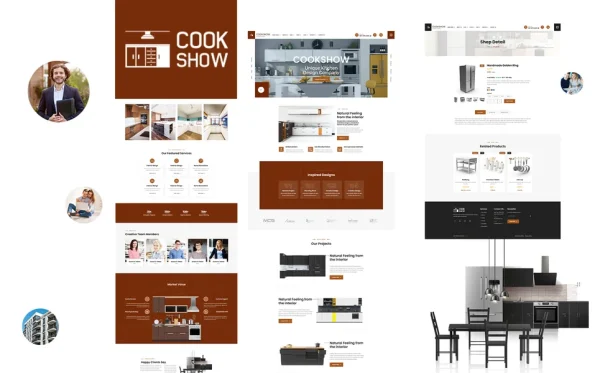
Cookshow is designed for culinary businesses that go beyond the traditional restaurant model. If you run a cooking studio, a kitchen design firm, a catering company, or a culinary brand that focuses on education and experience rather than table service, this template speaks your language. The design emphasizes expertise and craftsmanship over menus and reservations.
The homepage features a four-step working process section that walks visitors through your service model, a project portfolio with detailed descriptions, a team showcase with social media links, and a statistics section highlighting years of experience, completed projects, happy clients, and awards. The shop section includes grid and sidebar layouts, product details, cart, checkout, and wishlist pages, making Cookshow a strong choice if you sell cookware, ingredients, or cooking classes online.
With 3 homepage versions, dedicated service pages, case studies, FAQ, team profiles, blog, and a newsletter signup, Cookshow offers a complete content framework for culinary businesses that need to establish authority. The client logo carousel and testimonial section provide social proof, while the gallery and Instagram feed integration keep the visual content fresh. The case studies page is particularly valuable for kitchen design firms and catering companies that need to showcase completed projects with before-and-after context.
Must-Have Features for Restaurant Websites
When evaluating any restaurant website template, check for these essential features before making your decision:
- Online menu with pricing. Visitors expect to see your full menu with current prices. Tabbed layouts that organize items by category keep long menus manageable.
- Reservation or booking form. A dedicated reservation page with date, time, and party size fields. The booking link should be accessible from every page.
- High-quality image gallery. Lightbox-enabled galleries that showcase your food, interior, and team. Video support is a bonus for behind-the-scenes content.
- Mobile-responsive design. Bootstrap 5 ensures your site adjusts automatically to phones, tablets, and desktops without a separate mobile version.
- Location and hours. Your address, phone number, and operating hours should appear in the footer of every page. Multi-location support matters if you have more than one branch.
- Allergen indicators. Icons or labels that flag common allergens like dairy, eggs, nuts, and shellfish on each menu item. This is increasingly a legal requirement in many jurisdictions.
- Blog section. Regular content about seasonal menus, chef features, and food stories improves your search rankings and gives visitors a reason to return.
- Social media integration. Links to your Instagram, Facebook, and TikTok profiles. Some templates include Instagram feed widgets that pull in your latest posts automatically.
- Fast load times. Templates optimized with WebP images and clean code load faster, which improves both user experience and Google rankings.
- Testimonials section. Customer reviews with star ratings and photos build trust and help undecided visitors commit to a reservation.
Choosing the Right Restaurant Template
The best restaurant website template is the one that matches your specific type of business. A sushi bar has different visual needs than a pizza chain, and a hotel restaurant requires a completely different page structure than a standalone bakery. Here is a quick decision framework based on what you serve:
If you run a bakery or dessert shop, start with Fattcupcake. Its warm design and dessert-oriented menu presentation are purpose-built for your niche. For pizzerias and casual dining, Fattpizza provides the right energy and visual tone. Seafood restaurants benefit from Fattsailor’s nautical atmosphere and dark, sophisticated color palette. Japanese and sushi restaurants should look at Fattsushi for its cuisine-appropriate design elements and allergen handling.
For general restaurants that do not fit a single cuisine category, Tufatt gives you maximum flexibility with a neutral design that adapts to any brand. Hotels with dining need Miranda’s dual-purpose structure that handles both room bookings and food menus. And culinary brands, cooking studios, or catering companies will find Cookshow’s portfolio-driven layout a better fit than a traditional restaurant template.
All seven templates are built on Bootstrap 5, use clean HTML5 markup, and include well-documented source code. They are designed for customization, so you can adjust colors, fonts, and layouts to match your brand without starting from scratch.
Beyond cuisine type, consider your content needs. If you plan to blog regularly about seasonal menus or chef features, prioritize templates with robust blog layouts and sidebar options. If online ordering is part of your roadmap, choose a template with add-to-cart and quick-view functionality already built into the menu cards. And if you operate multiple locations, make sure the footer supports separate addresses, phone numbers, and operating hours for each branch.
Start Building Your Restaurant Website
Every day without a professional website is a day your restaurant loses potential customers to competitors who already have one. These templates give you a head start with proven layouts, restaurant-specific features, and responsive design that works on every device.
Pick the template that matches your cuisine, customize the colors and photography to fit your brand, and go live. The setup process takes a weekend, not a month. Your future diners are already searching for a place to eat tonight. Make sure they find you.