Luxury brands operate by different rules online. A generic website template will undermine a premium brand faster than no website at all. Visitors landing on a luxury fashion or jewelry site expect refined typography, generous white space, seamless product browsing, and a visual experience that matches the quality of what you sell. The wrong template cheapens your brand. The right one elevates it.
This guide reviews 8 luxury website templates built for fashion houses, jewelry brands, premium hotels and high-end e-commerce businesses. Each delivers the sophistication your brand demands, with the technical foundation to back it up.
Why Luxury Brands Need Exceptional Website Design
In the luxury market, perception is everything. A customer willing to spend $700 on a dress or $2,000 on a necklace makes purchasing decisions based on trust, exclusivity, and emotional connection. Your website is where that connection begins. If the design feels mass-market, the visitor leaves. If it feels premium, they stay and explore.
Luxury shoppers judge a brand’s credibility within seconds of landing on its website. They notice font choices, image quality, page speed, and layout balance before they read a single word of copy. A purpose-built luxury website template handles these details by default, giving you a foundation that communicates quality from the first pixel.
There is also a practical advantage. Building a custom luxury e-commerce site from scratch takes months of design and development. A well-designed luxury template gives you a finished design system and clean source code to start from, so your budget goes into photography, copy and the details that make your brand yours, instead of rebuilding a storefront.
What Defines a Luxury Website Experience
Luxury web design follows principles that are fundamentally different from standard e-commerce. Where a mass-market store optimizes for volume and speed, a luxury site optimizes for atmosphere and desire. Here are the four pillars that separate a premium website from an ordinary online store.
Typography and White Space
Luxury brands communicate through restraint. Clean serif or refined sans-serif typography paired with generous margins and padding creates a sense of exclusivity. Every element on the page needs room to breathe. Crowded layouts with competing visual elements signal a discount retailer, not a premium brand. The best luxury templates use typographic hierarchy to guide the eye naturally from headline to product to call-to-action without visual clutter.
Product Photography Presentation
Product images drive sales in luxury e-commerce. Your template must give photography the space and framing it deserves. Full-width hero banners, large product cards, zoom functionality, and gallery lightboxes are essential. The product detail pages need room for multiple angles, lifestyle shots, and close-up details that let customers examine craftsmanship before purchasing. Video integration adds another dimension for lookbooks, runway footage, or artisan process stories.
Seamless E-Commerce Flow
Luxury shoppers expect a frictionless path from browsing to checkout. The shopping experience should include intuitive product filtering, variant selection (size, color, material), wishlist functionality, and a streamlined cart and checkout flow. Trust signals such as secure checkout badges, money-back guarantees, and customer service availability reassure buyers making high-value purchases. A luxury template with these elements pre-built saves weeks of development work.
Brand Storytelling
Luxury purchases are emotional. Customers buy the story behind the product as much as the product itself. Your website template should include dedicated pages for brand history, craftsmanship details, designer profiles, and collection narratives. Sections that highlight heritage, founding year, and brand values create the emotional context that justifies premium pricing and builds long-term loyalty.
8 Best Luxury Website Templates (2026)
Each template below comes from our own catalog. All are Bootstrap 5 HTML5 templates with the source code included, and most are also available as React, Vue, Angular, WordPress and PHP versions. The card under each template shows today’s price for that format. We picked templates that cover different segments of the luxury market so you can find the right fit for your brand.
| Template | Best for | Pages | Formats |
|---|---|---|---|
| Laramiss | Multi-niche luxury brands | 200+ | HTML5, React, Angular, WordPress (+ PSD) |
| Huma | Fashion e-commerce | 35 | HTML5, React, Vue, Angular, WordPress, PHP, AI Smart Website |
| Milarossa | Jewelry brands | 30 | HTML5, React, Vue, Angular, WordPress, PHP, AI Smart Website |
| Miranda | Luxury hotels and resorts | 18 | HTML5, React, Vue, Angular, WordPress, PHP, AI Smart Website |
| Saje | Multi-category fashion retail | 40 | HTML5, React, Vue, Angular, WordPress, PHP, AI Smart Website |
| Ringstone | Designer jewelry stores | 18 | HTML5, React, Vue, Angular, WordPress, PHP, AI Smart Website |
| Letam | Fine jewelry and diamond boutiques | 22 | HTML5, React, Vue, Angular, WordPress, PHP, AI Smart Website |
| Verna | Premium fashion marketplaces | 37 | HTML5, React, Vue, Angular, WordPress, PHP, AI Smart Website |
1. Laramiss: Best for Multi-Niche Luxury Brands
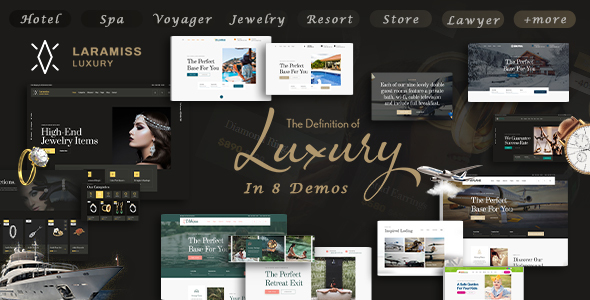
Laramiss is the most complete luxury template in our catalog and one of our best sellers. It ships 200+ production-ready pages across 8 complete niche demos, 4 home layouts and a full e-commerce system, so a fine jewelry boutique, a luxury law firm, a bespoke travel agency and a premium real estate portal each get a demo built for their industry.
The look is editorial and dark, with warm gold accents and Prata serif typography. It is built on Bootstrap 5.3.8, validated to W3C standards, and includes a complete ARIA accessibility implementation. Laramiss comes as HTML5, React, Angular and a WordPress theme, with the PSD design files available separately.
Best for: Luxury brands that want one design language across several services or product lines. View Live Demo
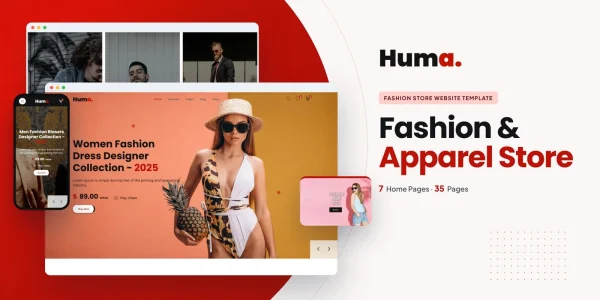
2. Huma: Best for Fashion E-Commerce
Huma is the most comprehensive luxury fashion template in this collection. With 35 pages and multiple shop layouts, it provides everything a fashion brand needs to sell online with authority. The template is built around the shopping experience, with product showcases, collection pages, and a full e-commerce flow from browsing through checkout.
The homepage opens with a hero banner featuring collection imagery and video integration, followed by product grids displaying items with SKU numbers, review counts, pricing, and quantity selectors. Promotional banners for featured collections (priced in the $699 to $799 range) demonstrate how the template handles premium price points with the visual weight they deserve. Sections for trending collections, Fashion Week features, and seasonal lookbooks keep the content fresh and editorially driven.
The navigation architecture is where Huma truly stands apart. A mega-menu system organizes product categories across suits, jeans, scarves, jewelry, watches, and underwear, with brand sub-pages for individual labels. Supporting pages include About Us, FAQ, Login, Register, Cart, Checkout, and a Contact page. The footer reinforces trust with free shipping notices, 24/7 support availability, money-back guarantees, and secure checkout badges. A newsletter signup offering 30% off for new subscribers provides a built-in lead capture mechanism.
The testimonials section features customer reviews with 5-star ratings, and an Instagram feed integration keeps social proof visible on every visit. Client logo carousels add partnership credibility. The exclusive offer banner highlighting up to 80% off on select items demonstrates how the template handles sale events without compromising the premium aesthetic. For any fashion brand selling directly online, Huma delivers a complete, polished storefront across its 35 pages. It is the template to choose when your priority is a fully functional online store that can launch with minimal customization.
3. Milarossa: Best for Jewelry Brands
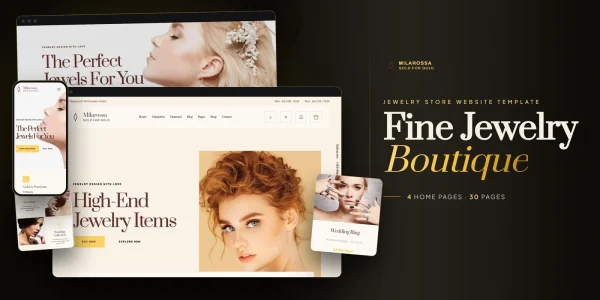
Milarossa is purpose-built for jewelry and fine accessories. The design uses a cream and gold color palette that immediately communicates luxury, with every layout decision reinforcing the premium positioning a jewelry brand requires. The homepage structure leads with a hero banner promoting high-end collections, followed by four elegant category cards for Golden Pendants, Diamond Rings, Gold Necklaces, and Designer Earrings.
The template tells a brand story through its “Crafting Jewellery Since 1990” about section, establishing heritage and craftsmanship credentials that jewelry buyers actively look for. Multiple product showcase sections highlight Trending Collections, Bestselling Products, and Rare Collections, with product badges for Sale items, New arrivals, and discount percentages. The statistics display (84,000+ items, 10 million+ feedbacks) provides social proof at scale.
Navigation is organized by jewelry type: Rings, Earrings, Bracelets, Pendants, and Necklaces, with shop pages, blog, and contact sections rounding out the structure. The multi-currency selector (USD, GBP, INR) and multi-language support (English, Spanish) make Milarossa ready for international jewelry brands selling to a global audience. Breadcrumb navigation, shopping cart preview, and wishlist functionality complete the e-commerce experience. The blog section gives jewelry brands a platform for content about gemstone education, styling guides, and collection launches, which is valuable for both customer engagement and search engine visibility. For any jewelry business, from a boutique artisan studio to an established fine jewelry house, Milarossa provides the right visual language.
4. Miranda: Best for Luxury Hotels and Premium Hospitality
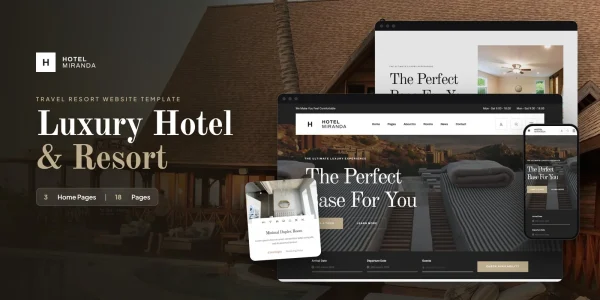
Miranda brings luxury hospitality to life online. Built specifically for premium hotels, boutique resorts, and fine dining establishments, this 18-page template delivers the visual elegance that high-end guests expect before they book. Three distinct homepage layouts let you lead with room showcases, restaurant menus, or destination photography depending on your property’s strongest selling point.
The homepage features a hero section with strong headline typography, a product showcase grid, team member profiles with social links, and a services section that works well for fashion brands offering styling consultations, custom tailoring, or personal shopping. The four-step process section is ideal for brands that want to walk potential clients through how they work, from initial consultation through final delivery.
The room booking system is the centerpiece. Dedicated room grid and list views with detailed room pages, a booking form, and a search results page create a complete reservation experience. The restaurant section includes a full menu page, and the places section highlights nearby attractions with detail pages. A news section with article detail views supports content marketing and local SEO for the property.
Miranda is the right choice for boutique hotels, luxury resorts, bed and breakfasts, and fine dining restaurants that want a standalone web presence. The gallery page showcases property photography in a grid layout, and the offers page highlights seasonal packages and promotions. For hospitality businesses where the experience is the product, Miranda delivers the visual standard guests expect. View Live Demo
5. Saje: Best for Multi-Category Fashion Retail
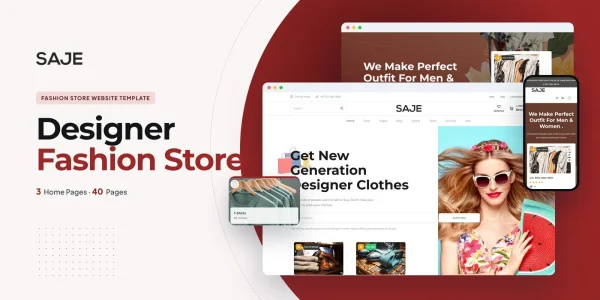
Saje is built for fashion retailers with broad product catalogs. The template handles large inventories gracefully, with category browsing tiles that display item counts (T-Shirts: 90 items, Jeans: 433 items, Casual Trousers: 221, Cargos: 185, Track Pants: 230, Blazers: 365) so shoppers can see the depth of your selection at a glance. This transparency builds confidence that your store has what they are looking for.
The homepage leads with a hero banner and flows into multiple product sections: Featured Products, Fresh Arrivals with tabbed filtering (Jeans, Suits, Shirts), Best for Party recommendations, and Top Categories with subcategories. This layered merchandising approach mirrors the browsing experience of a well-organized physical retail store, guiding visitors from broad interest to specific product discovery.
Saje includes 3 homepage versions, a comprehensive shop with advanced filtering (by location, status, price range, type), quick-view functionality with wishlist and share options, and full account management with login and register pages. Multi-language support (English, German, Russian, Spanish) positions the template for international fashion retailers. The promotional banner system supports cashback offers and seasonal campaigns, while the blog, testimonials, and FAQ sections provide the supporting content structure every serious fashion retailer needs. The FAQ page is a practical inclusion that reduces customer service inquiries about sizing, shipping, and returns.
6. Ringstone: Best for Designer Jewelry Stores
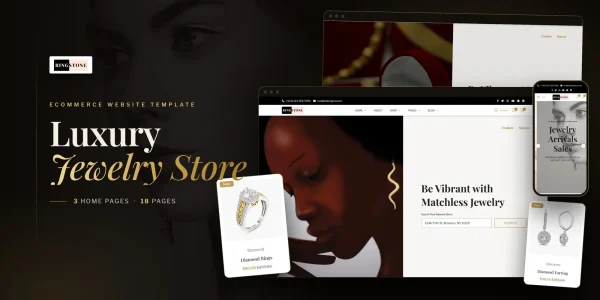
Ringstone is an elegant jewelry store template with 18 pages and 3 home layouts. The shop archive and product detail pages are built for browsing collections, with price-range filtering, enhanced category filters, a sticky sidebar for persistent navigation, carousels and a lightbox for close-up product images.
Best for: Jewelry and accessories brands selling collections online. View Live Demo
7. Letam: Best for Fine Jewelry and Diamond Boutiques
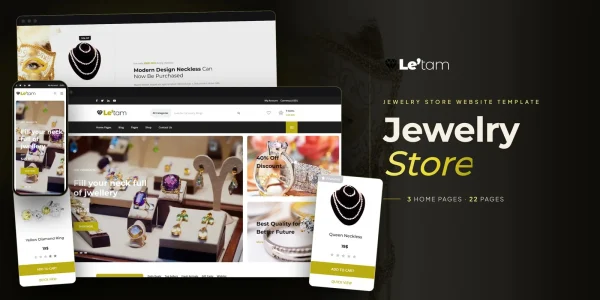
Letam has 22 pages with 3 home layouts, four shop archive styles and two product detail styles with zoom magnification, so customers can inspect a stone before they buy. It adds a multi-step checkout, countdown timers for promotions, price and category filtering, a masonry blog in three formats and a legal page.
Best for: Diamond, gemstone and precious-metal boutiques with high-value products. View Live Demo
8. Verna: Best for Premium Fashion Marketplaces
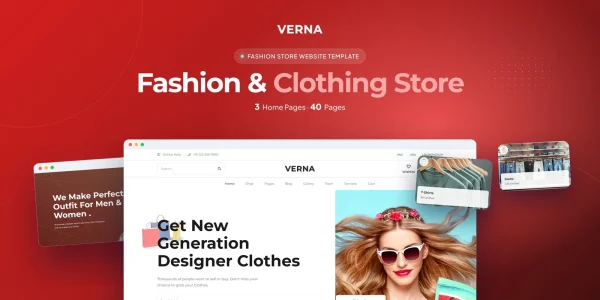
Verna packs 37 pages built around selling for several brands at once: 3 home layouts, shop grid, list and map views, two product detail styles, product comparison, a user profile with orders and saved products, a submit-product page for vendors, wishlist, cart and checkout.
Best for: Multi-brand fashion marketplaces and premium boutiques that work with several vendors. View Live Demo
Essential Features for Luxury Websites
Before selecting a luxury website template, verify that it includes these features that premium brands require:
- High-resolution image support. Full-width banners, product zoom, and lightbox galleries that display your photography at its best. No compression artifacts, no cropping limitations.
- Mega-menu navigation. Large product catalogs need organized, multi-column dropdown menus that let visitors browse by category, brand, or collection without leaving the page.
- Wishlist and favorites. Luxury shoppers often browse multiple times before purchasing. Wishlist functionality lets them save items and return when they are ready to buy.
- Multi-currency and multi-language. Premium brands sell internationally. Templates with built-in currency and language selectors eliminate the need for third-party plugins.
- Trust indicators. Secure checkout badges, return policy highlights, customer service hours, and shipping guarantees. These elements reduce purchase anxiety on high-value transactions.
- Brand heritage section. A dedicated space for your founding story, craftsmanship process, or designer biography. This emotional context justifies premium pricing.
- Newsletter with incentive. A signup form offering exclusive access or a first-purchase discount converts browsers into subscribers and future customers.
- Social media integration. Instagram feed widgets, social sharing buttons, and links to all brand channels. Luxury consumers expect a cohesive presence across platforms.
- Clean, fast-loading code. Bootstrap 5 framework with optimized assets. Page speed matters for both user experience and search engine rankings.
- Responsive design. Flawless presentation on desktop, tablet, and mobile. Luxury shoppers use all devices, and the premium feel must translate across every screen size.
Luxury Website Templates FAQ
What makes a website look luxury?
Restraint. Generous white space, a refined serif or minimal sans-serif typeface, a limited colour palette, large photography and slow, deliberate motion. Fewer elements per screen, each given room, reads as premium; crowded grids and loud badges read as discount.
Which luxury template is best for jewelry?
Milarossa, Ringstone and Letam are built for jewelry. Letam suits high-value pieces thanks to product zoom and a multi-step checkout, Ringstone suits collection-led stores, and Laramiss covers jewelry as one of its 8 niche demos alongside other luxury services.
Can I use these templates for a luxury hotel or service business?
Yes. Miranda is built for hotels and resorts, and Laramiss includes demos for law, travel and real estate. You can see every option on the luxury templates page.
Which format and license do I need?
Each format is a separate product with its own price on the card above. A standard license covers one website; Multi-site and Extended licenses are on every product page, and the developer bundle includes all six code formats at 20% off.
Build Your Premium Brand Online
Your brand’s website should reflect the same standard of quality as your products. These luxury website templates give you a professional, polished starting point with the e-commerce features, visual sophistication, and brand storytelling pages that premium businesses need.
For fashion e-commerce with deep catalog support, Huma’s 35 pages and mega-menu navigation set the standard. Jewelry brands will find Milarossa’s gold-toned aesthetic and heritage storytelling sections purpose-built for the industry. Miranda serves luxury hotels and fine dining establishments with room booking and restaurant menu pages. And Saje handles the complexity of multi-category retail with item counts, advanced filtering, and international language support.
Whether you sell fashion, jewelry, or premium lifestyle products, the right template transforms your online presence from adequate to aspirational. Start with a foundation designed for luxury, customize it with your own photography and brand colors, and launch a website that matches the quality your customers already expect from everything else you do.
More Retail & E-Commerce buyer's guides
- Laramiss — Luxury Jewelry Website Template | Bootstrap 5 (200+ Pages, 8 Demos)
- eCommerce Website Template: Product Pages, Comparison & Checkout Guide (2026)
- Fashion eCommerce Website Template: The Complete Guide to Building an Online Fashion Store That Converts
- Online Marketplace Website Template: Complete Buyer’s Guide (2026)