Gift shops occupy a peculiar position in the retail landscape. They are among the most emotionally driven businesses in existence — people walk in looking for something that will make another person smile, cry, or feel remembered — yet the vast majority of gift shop websites look like they were assembled from the same generic ecommerce template used by hardware stores and supplement companies. The disconnect between the warmth of the product and the coldness of the online experience is costing gift shop owners real money.
The numbers tell a clear story. The global gift market generates hundreds of billions in annual revenue, with online gift purchases growing substantially year over year. Consumers increasingly expect the ability to browse, select, and purchase gifts online — not just from major retailers, but from the independent boutiques and specialty shops they trust for unique, curated selections. A gift shop without a professional website in 2026 is not just missing sales. It is invisible to an entire generation of buyers who start every gift-buying occasion with a search engine.
This guide covers everything gift shop owners need to know about building a professional online presence: the features that gift buyers expect, the costs at every budget level, the design principles that turn browsers into buyers, and how to choose a template that captures the personality of your shop without requiring a custom development budget.
Why Gift Shops Need a Dedicated Website Strategy
Gift buying is fundamentally different from routine purchasing. When someone buys laundry detergent, they want speed and efficiency. When someone buys a birthday gift for their mother, a retirement present for a colleague, or a thank-you gift for a client, they want an experience that feels personal, curated, and thoughtful. Your website needs to deliver that experience.
The browsing behavior of gift shoppers is also distinct. They tend to spend more time on product pages, viewing multiple images and reading descriptions carefully. They use wishlists more frequently than average shoppers because gift buying often involves consideration periods — checking with family members, comparing options, or waiting for an occasion. They respond strongly to urgency elements like countdown timers for seasonal promotions and sale events.
Gift shoppers also have higher expectations for visual presentation. A product photo that would be perfectly acceptable for selling industrial parts will not work for a handcrafted ceramic vase or an artisan candle set. Gift products need to be displayed with the same care and attention that a physical store would give to its window display — because your website is your window display for online customers.
Perhaps most importantly, gift shops benefit enormously from building a repeat customer base. Someone who finds a great gift source tends to return for every subsequent occasion — birthdays, holidays, anniversaries, corporate gifts, thank-you presents. A professional website with account management, wishlists, and a blog that shares gift-giving ideas creates the foundation for this long-term relationship.
The 10 Essential Features for Gift Shop Websites
Not every ecommerce template is suited for gift retail. Gift shops have specific needs that generic templates often miss entirely. Here are the features that separate a gift-ready website from a generic online store.
1. Multiple Shop Layout Options
Gift shops sell visually diverse products — from delicate jewelry to oversized home decor, from packaged food items to handmade textiles. A single shop layout cannot optimally display this range. Templates that offer multiple shop archive layouts let you present different product categories in the format that best showcases each type. Grid layouts work brilliantly for jewelry and small items. List layouts suit products that need more description. Masonry layouts create the browsable, discovery-driven experience that gift shoppers enjoy.
2. Price Range Filtering
Gift budgets vary enormously. A corporate buyer selecting client gifts might have a budget of fifty to one hundred dollars per item. A student buying a friend’s birthday present might have fifteen dollars. Price range sliders let every customer quickly find gifts within their budget, reducing frustration and increasing the likelihood of purchase. This feature is particularly important for gift shops because buyers often have a specific price range in mind before they even know what they want to buy.
3. Wishlist Functionality
Wishlists serve a dual purpose in gift retail. First, they let shoppers save items they are considering for a future purchase — essential for gift buying, which often involves planning ahead for upcoming occasions. Second, wishlists can be shared with family and friends, effectively turning your customers into marketing channels. A gift shop without wishlist functionality is leaving one of its most powerful conversion tools unused.
4. Countdown Promotions and Seasonal Timers
Gift buying is inherently seasonal and occasion-driven. Valentine’s Day, Mother’s Day, Christmas, graduation season, wedding season — each creates a surge of buying activity with a hard deadline. Countdown timers create urgency that drives conversions during these peak periods. A timer showing that your Valentine’s Day collection ships until February 10th, or that Christmas orders must be placed by December 15th for guaranteed delivery, turns browsers into buyers.
5. Multiple Product Detail Page Styles
Different gift products require different presentation approaches. A luxury watch needs a product page that emphasizes high-resolution imagery and specifications. A gift basket needs a page that showcases included items and customization options. Templates offering multiple product detail page styles let you tailor the presentation to the product, creating a more premium buying experience.
6. Blog and Content Module
Gift shops have a natural content advantage that most fail to exploit. Gift guides, occasion-based recommendations, trending gift ideas, seasonal collections, and gifting etiquette articles all drive organic traffic and position your shop as a gifting authority. A blog module with multiple layout options lets you publish this content in formats that suit different types of articles — grid for quick gift lists, full-width for detailed guides.
7. Visual-First Homepage Design
Gift shop homepages need to create immediate emotional impact. The hero section should showcase your best, most visually striking products in an arrangement that communicates curation and quality. Multiple homepage layout options let you test different approaches — a full-screen hero image for a luxury gift boutique, a grid of curated collections for a general gift shop, or a seasonal theme for holiday-focused retailers.
8. Cart and Checkout Flow
Gift purchases often involve shipping to a different address than the billing address, gift wrapping options, and personal messages. While these features require backend integration, the template’s cart and checkout pages need to be designed with enough space and flexibility to accommodate gift-specific fields. A clean, trustworthy checkout flow is especially important for gift purchases because buyers are often spending more than they would on themselves.
9. Isotope Grid Filtering
Gift shoppers frequently browse by category — gifts for her, gifts for him, gifts for kids, gifts by occasion, gifts by price range. Isotope grid filtering lets visitors dynamically filter products without page reloads, creating a smooth, app-like browsing experience that encourages exploration and discovery. This feature is particularly valuable for gift shops with large, diverse product catalogs.
10. Responsive Mobile Design
A significant portion of gift shopping happens on mobile devices — often in moments of inspiration or mild panic when someone realizes an occasion is approaching. Your gift shop website must look and function flawlessly on phones and tablets. Product images must be zoomable, the cart must be easy to use with thumbs, and the checkout must be streamlined enough to complete on a small screen.
How Much Does a Gift Shop Website Cost?
The cost of building a gift shop website spans a wide range, and the right choice depends on your business stage, technical resources, and growth plans. Here is what to expect at each investment level.
Free Platforms and Basic Builders: $0 to $30 Per Month
Platforms like Wix, Squarespace, and basic Shopify plans offer starter ecommerce functionality with gift-appropriate templates. The tradeoff is limited customization, platform branding, transaction fees, and monthly subscription costs that accumulate over time. A store paying $30 per month spends $360 per year and $1,800 over five years — with nothing to show if you leave the platform.
Mid-Range Custom Design: $5,000 to $25,000
Hiring a designer or agency to build a custom gift shop website delivers a unique result but at significant cost. This range typically includes custom homepage design, product page templates, basic shop functionality, and a blog. Professional product photography — essential for gift shops — adds another $1,000 to $5,000. Ongoing maintenance and updates typically run $500 to $2,000 annually.
Enterprise eCommerce: $25,000 to $100,000+
Full-scale gift ecommerce platforms with custom gift registry integration, advanced recommendation engines, corporate gifting portals, and multi-location inventory management. These solutions serve established gift retailers with high transaction volumes and complex operational needs. Annual maintenance typically runs 15 to 20 percent of the build cost.
Premium HTML Templates: $14 to $59 One-Time
A single purchase delivers a complete multi-page gift shop website with multiple homepage layouts, shop archive styles, product detail pages, cart, checkout, wishlist, blog, and all supporting pages. No recurring fees. Full code ownership. The most cost-effective path for gift shop owners who want professional design without enterprise budgets. Combined with product photography and basic hosting, you can launch a professional gift shop website for under $200 total.
Design Principles That Sell Gifts Online
Gift shop website design requires a specific aesthetic approach that differs fundamentally from other ecommerce categories. The goal is to create an online environment that evokes the same feeling as walking into a beautifully curated gift boutique.
Prioritize Visual Warmth Over Corporate Polish
Gift shopping is emotional. Your website should feel warm, inviting, and personal — not corporate and clinical. Warm color palettes, generous white space, elegant typography, and lifestyle photography that shows products in context all contribute to the browsing atmosphere that encourages gift purchases. The best gift shop websites feel like a curated experience, not a transaction platform.
Curate, Do Not Overwhelm
Physical gift shops succeed through careful curation — displaying select items rather than cramming every product onto every shelf. Your homepage should follow the same principle. Feature your best sellers, seasonal highlights, and curated collections rather than dumping your entire inventory on the front page. Let category pages and filtering handle the full catalog.
Make Occasion Browsing Effortless
Most gift shoppers arrive with an occasion in mind but no specific product in mind. Your navigation and filtering should make it easy to browse by occasion — birthday, anniversary, wedding, thank you, holiday — as well as by recipient type, price range, and product category. The faster a visitor can narrow the selection to relevant options, the higher the conversion rate.
Invest in Product Photography
This cannot be overstated for gift shops. The product images are the single most important element on your website. Gift buyers cannot touch, smell, or hold the product — they are buying based entirely on what they see and read. High-quality photography with consistent lighting, styling, and backgrounds transforms a mediocre gift shop website into a compelling one. Budget for photography before you budget for web development.
Gift Shop Website Content Strategy
A gift shop website should not just sell products — it should be a destination for gift-giving inspiration. Content marketing is uniquely powerful for gift retail because the content directly drives purchase intent.
Gift guides by occasion. “Best Birthday Gifts for Mom,” “Unique Anniversary Gifts,” “Corporate Holiday Gift Ideas” — these articles rank in search engines and bring targeted traffic directly to your shop. Every gift guide should link to specific products in your store, creating a natural path from inspiration to purchase.
Seasonal collection spotlights. Publish content around seasonal collections four to six weeks before each major gifting occasion. This gives search engines time to index the content and gives shoppers time to browse and plan. Valentine’s Day content should go live in early January. Christmas gift guides should publish in October.
Gifting etiquette and advice. Articles about how much to spend on wedding gifts, business gifting etiquette, or choosing age-appropriate gifts for children establish your shop as a gifting authority. This type of content attracts visitors at the top of the purchase funnel and builds trust that converts to sales.
Behind-the-scenes stories. If you sell handmade or artisan products, sharing the stories of the makers, the materials, and the process adds emotional value that justifies premium pricing and differentiates your shop from mass-market alternatives.
Common Mistakes Gift Shop Owners Make Online
Understanding what not to do is as important as knowing what to do. These mistakes consistently undermine gift shop websites.
Using a generic business template. A template designed for a law firm or a SaaS company will not sell gifts. Gift shops need specific ecommerce features — wishlists, price filtering, countdown promotions, multiple product display styles — that generic business templates simply do not include. Choosing a template without these features means either accepting a subpar customer experience or paying a developer to add functionality that should have been included from the start.
Neglecting mobile optimization. Gift shopping happens in idle moments — waiting rooms, lunch breaks, commutes. If your product images load slowly, your navigation is clunky, or your checkout requires pinching and zooming, you are losing the impulse purchases that drive gift retail.
Ignoring seasonal marketing. Gift shops that maintain the same homepage and promotions year-round miss the urgency that drives gift purchases. Your website should reflect current and upcoming gifting occasions with updated hero images, countdown timers, and featured collections.
Weak product descriptions. “Beautiful handmade ceramic mug” tells the buyer nothing. “Hand-thrown stoneware mug in midnight blue glaze, holds 12 ounces, microwave and dishwasher safe, made by a Vermont artisan” tells them everything they need to justify the purchase and feel confident about the gift.
No wishlist or save feature. Gift buying involves planning. Shoppers who find something perfect for a birthday that is three weeks away need a way to save it. Without a wishlist, they leave your site intending to come back — and most never do. A wishlist captures that intent and creates a reason to return.
Building Trust With Gift Shop Customers
Trust is especially important in gift retail because buyers are purchasing something that represents them. A gift that arrives late, damaged, or looking nothing like the website photo does not just lose a customer — it embarrasses them in front of the recipient. Here is how your website builds the trust that gift buyers need.
Clear shipping timelines. Gift buyers need to know exactly when their purchase will arrive. Display shipping estimates prominently on product pages and in the checkout flow. For time-sensitive occasions, make last-order dates impossible to miss.
Return and exchange policies. A generous, clearly stated return policy reduces purchase hesitation. Gift buyers worry about choosing the wrong item — knowing they can exchange reduces this anxiety and increases order values.
Customer reviews and testimonials. Social proof is powerful in gift retail. Reviews that specifically mention gifts — “bought this for my sister and she loved it” — are more persuasive than generic product reviews because they validate both the product and the gifting decision.
Professional packaging imagery. Show how products are packaged for gift giving. If you offer gift wrapping, display photos of wrapped products. The unboxing experience matters enormously for gifts, and showing that you take packaging seriously builds confidence.
Why Dicora Fits the Gift Shop Niche
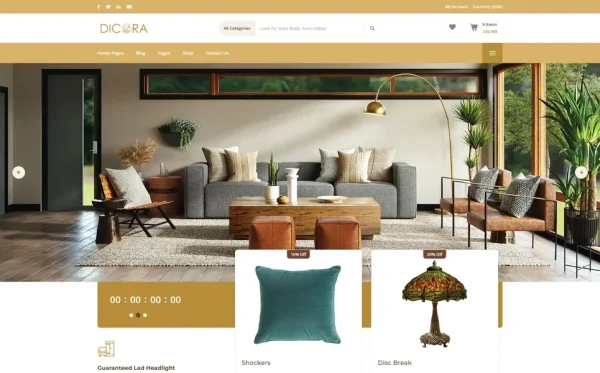
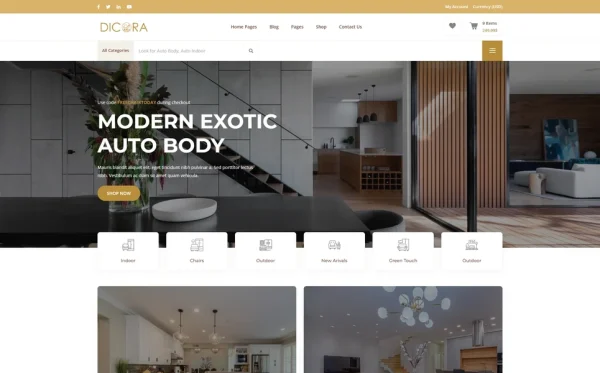
Dicora is a professionally designed HTML5 template that ships with 23 fully crafted HTML pages covering every essential need of a gift shop website. The template includes three unique home layouts that let gift shop owners test different visual approaches — a curated hero for luxury boutiques, a collection grid for diverse gift shops, or a seasonal showcase for occasion-focused retailers.
The four distinct shop archive layouts are particularly valuable for gift retail. Different product categories can be displayed in the format that best showcases each type — grid views for browsable gift collections, list views for products that need more description, and alternative layouts for seasonal or featured selections. Two product detail page styles provide presentation flexibility for different product types within the same store.
The price range slider powered by ion.rangeSlider is essential for gift shops where customers shop by budget. Whether someone is looking for stocking stuffers under ten dollars or premium gifts over one hundred, they can immediately filter to their range. The countdown timer drives urgency during seasonal promotions — Valentine’s Day sales, holiday shipping deadlines, and clearance events.
The wishlist page captures future purchase intent, letting customers save items for upcoming occasions. The blog module in grid, list, and masonry formats supports the gift guide content strategy that drives organic traffic. And the complete cart and checkout flow provides a professional purchase experience that builds buyer confidence.
Built on Bootstrap 5 with Slick carousels for featured product slideshows, Isotope grid filtering for category browsing, and Magnific Popup lightbox for full-screen product image viewing, Dicora delivers a production-ready gift shop website at a price point that makes sense for independent retailers and boutique gift shops.
Frequently Asked Questions
What features should a gift shop website include?
A gift shop website should include multiple shop layouts for different product categories, a price range slider for budget-based browsing, wishlist functionality for occasion planning, countdown timers for seasonal promotions, high-quality product image display with lightbox, a complete cart and checkout flow, a blog for gift guides and content marketing, and responsive mobile design for on-the-go gift shopping.
How much does a gift shop website cost to build?
Costs vary widely. Free platforms and basic builders cost $0 to $30 per month but include limitations and recurring fees. Custom-designed gift shop websites run $5,000 to $25,000. Enterprise ecommerce solutions exceed $25,000. Premium HTML templates offer the most cost-effective option at $14 to $59 one-time, delivering 20+ page professional designs with shop, wishlist, cart, checkout, blog, and all supporting pages with no recurring costs.
Why is a wishlist important for gift shop websites?
Wishlists are critical for gift retail because gift buying involves planning ahead for upcoming occasions. Shoppers who find a perfect item three weeks before a birthday need to save it. Without a wishlist, they leave intending to return but usually do not. Wishlists also enable social sharing — customers can share their saved items with family and friends, turning your buyers into marketing channels and driving additional traffic to your store.
How do I drive traffic to my gift shop website?
The most effective strategy for gift shops is content marketing through gift guides and occasion-based recommendations. Publish articles like “Best Birthday Gifts for Mom” or “Unique Anniversary Gift Ideas” that rank in search engines and bring targeted buyers to your shop. Seasonal content should go live four to six weeks before major gifting occasions. Combine this with social media marketing, email campaigns for repeat customers, and Google Shopping listings for product visibility.
What makes gift shop website design different from regular ecommerce?
Gift shop design requires visual warmth and emotional appeal rather than corporate efficiency. Product photography must be significantly higher quality because buyers cannot physically examine items. Navigation should support browsing by occasion and recipient, not just by product category. Countdown timers for seasonal deadlines drive urgency. And the overall aesthetic should feel like a curated boutique experience rather than a warehouse catalog.
Can I use an HTML template for a gift shop with online payments?
HTML templates provide the complete front-end design — homepage, shop pages, product detail pages, cart, checkout, and all visual elements. To process actual payments, you need to integrate a payment gateway like Stripe, PayPal, or Square through backend development or by converting the template to a CMS platform like WordPress with WooCommerce. The template gives you the professional design foundation; payment processing requires additional integration.
How important is mobile design for gift shop websites?
Mobile design is critical for gift shops. A large percentage of gift shopping happens on mobile devices during idle moments — commutes, lunch breaks, waiting rooms — when someone suddenly remembers an upcoming occasion. If your product images load slowly, your navigation is difficult on small screens, or your checkout requires excessive scrolling and zooming, you lose these impulse and convenience purchases that represent a significant revenue stream for gift retailers.
The gift retail market rewards businesses that combine product quality with presentation quality. Physical gift shops have always understood this — the store layout, the display cases, the wrapping station, the browsing atmosphere all contribute to the buying experience. Your website needs to deliver the same level of care and curation in digital form. The right template provides the foundation for that experience, letting you focus on what matters most: choosing and presenting the gifts that make your customers look thoughtful, generous, and inspired.
Final Verdict
Gift shops that invest in a purpose-built ecommerce template with multiple shop layouts, price filtering, wishlists, seasonal countdown timers, and content marketing capability position themselves to capture the growing online gift market. The alternative — a generic website that fails to create the emotional, curated experience gift buyers expect — leaves revenue on the table and customers in the arms of competitors who understood the assignment. The investment is minimal. The cost of inaction is not.