
What Is a Pet Care Website Template?
A pet care website template is a pre-designed, fully coded website built specifically for pet stores, veterinary clinics, animal shelters, grooming businesses, and pet adoption agencies. It includes every page an animal-focused business needs — homepage with engaging pet imagery, product shop with quick-view and filtering, service pages for veterinary or grooming offerings, adoption and event pages, donation system for shelters, team profiles, blog, and contact page — all designed, responsive, and ready for your content.
For pet business owners who need a professional online presence without spending $5,000 to $10,000 on a custom website, a template is the most practical path to a site that connects with animal lovers and drives revenue from day one. But pet businesses come in many forms — retail shops selling food and accessories, veterinary clinics building patient trust, animal shelters running adoption drives and fundraising campaigns, and grooming studios showcasing services. This guide covers what each type of pet business needs from its website, what features separate a serious pet template from a generic design, and how to evaluate your options before purchasing.
Template vs Custom Build vs Pet Platform
Pet business owners typically face three website options. Each carries distinct trade-offs:
| Factor | Pet Industry Platform | Pet Care Website Template | Custom Website Build |
|---|---|---|---|
| Upfront Cost | $0–300 | $29–69 | $3,000–10,000 |
| Monthly Cost | $30–100/month | $3–10/month (hosting only) | $50–200/month |
| 3-Year Total Cost | $1,080–3,900 | $137–429 | $4,800–17,200 |
| Code Ownership | No — you rent it | Yes — you own it forever | Yes — you own it |
| E-Commerce | Platform-limited | Full shop with quick-view + filters | Any system |
| Donation Pages | Varies | Built-in fundraising pages | Custom built |
| Design Flexibility | Limited to platform | Full HTML/CSS/JS control | Unlimited |
| Time to Launch | 1–2 weeks | 3–7 days | 6–12 weeks |
| Vendor Lock-in | High | None | None |
The template gives pet business owners full control over branding and functionality at a fraction of the cost. Whether you run a pet retail store, a veterinary practice, or an animal shelter, the template path delivers the best value for businesses that want a distinctive, professional website without ongoing platform fees.
What Pet Owners Expect From Your Website
People searching for pet products, veterinary care, or adoption opportunities are often emotionally invested. They are caring for a beloved family member, looking to add a new companion to their household, or trying to support animal welfare. Your website must connect on both an emotional and practical level. Here is what pet owners look for:
Warm, Trust-Building Visual Design
Pet websites must feel warm, approachable, and genuine. Stock photos of generic puppies do not build trust — real photos of animals in your care, your facility, and your team do. The hero section should immediately communicate what your business does and show real animals. Colour palettes that combine warm, friendly tones with clean layouts project both compassion and professionalism. A website that feels clinical and corporate fails for pet businesses; one that feels chaotic and cluttered fails equally. The balance is warmth with organisation.

Product Shopping Experience for Pet Retail
Pet store customers shop with specific needs — a particular food brand, the right-sized harness, allergy-friendly treats. Your e-commerce section must let shoppers find products quickly through category filtering, price range sliders, and size or type selectors. A product quick-view modal is essential for pet retail: shoppers browsing a grid of products should be able to preview details, pricing, and variations without leaving the archive page. This single feature reduces friction and increases the number of products a customer evaluates per session.
Beyond quick-view, your shop needs a star rating and review system. Pet owners trust the experiences of other pet parents. A product with twenty positive reviews converts at dramatically higher rates than the same product with no reviews. Wishlist functionality allows customers to save products for later — especially useful for pet owners who research food or supplements before committing to a purchase.
Service Pages for Veterinary and Grooming Businesses
If you operate a veterinary clinic, grooming studio, or pet care service, each service needs its own dedicated page. Pet owners searching for “dog teeth cleaning near me” or “cat grooming services” need to land on a page that specifically addresses that service — not a generic services list. Each service page should include a description of the procedure or service, what pet owners can expect, pricing if applicable, and a call to action to book an appointment.
Adoption Listings and Event Pages for Shelters
Animal shelters and rescue organisations have unique website requirements. Adoptable animal listings with photos, descriptions, age, breed, and temperament notes help potential adopters find the right match. Event pages promote adoption drives, fundraising galas, volunteer orientations, and community events that keep the shelter visible and engaged with its supporter base. These are not nice-to-have features — they are the core functionality that drives an animal shelter’s mission.
Donation System for Animal Welfare Organisations
Shelters and rescues depend on donations. Your website must include dedicated donation and fundraising campaign pages that make giving easy and transparent. A well-designed donation page shows how contributions are used — medical care, food, shelter improvements — and offers multiple giving options. Campaign pages with progress indicators create urgency and social proof that encourages additional contributions. The donation experience must be simple: three clicks from homepage to completed donation.
Team Pages That Introduce Caregivers
Pet owners want to know who will be caring for their animals. Veterinary clinic pages should feature vet profiles with credentials, specialisations, and photos. Grooming studio pages should highlight stylist expertise and certifications. Shelter pages should introduce the staff and volunteers who care for the animals daily. These team pages build the personal connection that pet owners need before trusting your business with their companion.
Technical Requirements for Pet Business Websites
Beyond design and content, pet business websites must meet specific technical standards that affect customer experience and operational efficiency.
E-Commerce That Handles Product Complexity
Pet products often come in multiple sizes, flavours, and formulations. A small-breed dog food comes in 5-pound, 15-pound, and 30-pound bags. A harness comes in XS through XL. Your shop must support product variations with size, type, and option selectors that let customers choose the exact product they need. Price range filtering via a slider interface helps budget-conscious pet owners find products within their range. These are not premium features — they are baseline requirements for pet retail e-commerce.
Mobile-First Design for On-the-Go Pet Parents
Pet owners shop and research on their phones — at the vet’s office, at the pet park, or while commuting. Your website must work flawlessly on mobile devices. Product grids must be browsable with one hand. Quick-view modals must open and close smoothly on touchscreens. Forms must be thumb-friendly. Navigation must be clear and accessible. A template built on Bootstrap with a mobile-first approach ensures that every interaction works as well on a phone as it does on a desktop.
Fast Loading for Image-Heavy Pages
Pet websites are inherently image-heavy — product photos, animal portraits, facility shots, event galleries. Your template must handle this image density without sacrificing page speed. Lazy loading for below-the-fold images, optimised image formats, and efficient use of JavaScript libraries keep the site fast despite the visual richness that pet businesses require.
E-Commerce Tip: Product quick-view is the single most impactful feature for pet retail conversion. Shoppers browsing a grid of 20+ pet products should be able to preview details, choose size options, and check pricing without navigating away from the shop page. Templates without quick-view force customers through extra page loads for every product they consider — and every extra click loses potential sales.
Online Marketing for Pet Businesses
The pet industry generates over $150 billion annually in the United States alone, and online spending on pet products and services grows year over year. Whether you run a pet store, veterinary clinic, or animal shelter, your website is the foundation of your digital marketing strategy. Understanding how pet owners find and evaluate businesses online determines whether your website generates revenue or simply exists.
Local SEO for Veterinary Clinics and Pet Stores
Pet owners search locally. “Vet near me,” “pet store [neighbourhood],” and “dog groomer [city]” are the queries that drive foot traffic and appointments. Your website must be optimised for local search with consistent business name, address, and phone number on every page. Google Business Profile optimisation is critical — add photos of your facility, respond to every review, and keep your hours and services up to date. Each service page on your website should include your location in headings and content naturally, targeting queries like “cat grooming in [city]” or “puppy vaccinations [neighbourhood].”
E-Commerce SEO for Pet Product Retail
If you sell pet products online, every product page is a potential search landing page. Optimise product titles with specific, searchable terms — “grain-free salmon dog food 30lb” rather than “premium kibble.” Write unique product descriptions that include breed-specific recommendations, ingredient highlights, and use cases. Category pages should target broader terms like “natural dog treats” or “interactive cat toys.” Your template’s shop architecture — clean URLs, proper heading hierarchy, and product schema markup support — determines how effectively search engines can index and rank your product pages.
Content Marketing for Pet Audiences
Pet owners are voracious content consumers. Articles about pet health, nutrition, training, and care drive enormous search traffic. A veterinary clinic publishing “signs your dog needs dental cleaning” or “how often should cats visit the vet” attracts pet owners who are already thinking about their pet’s health. A pet store publishing “best toys for high-energy dogs” or “setting up a fish tank for beginners” attracts owners who are ready to purchase. Each blog post should relate to your products or services and include natural pathways to your shop or appointment booking.
Building an Adoption-Focused Shelter Website
Animal shelters and rescue organisations face unique website challenges. Your primary goal is not revenue — it is placing animals in loving homes and raising funds to continue operations. This requires a different content strategy than retail or clinical websites.
Adoptable Animal Listings That Connect
Each adoptable animal deserves a listing that tells their story. A photo, breed, age, and gender are the basics — but the listings that drive adoption include personality descriptions, good-with-kids notes, energy level assessments, and a brief backstory. “Max is a three-year-old Lab mix who loves fetch and belly rubs. He’s great with children over six and gets along well with other dogs. Max came to us when his family relocated overseas.” This narrative listing creates emotional connection that drives applications. Your website must support individual animal pages with space for photos, descriptions, and an adoption application link or form.
Donation Page Psychology
The most effective shelter donation pages share three characteristics: transparency about how funds are used, specific impact statements at each donation tier, and urgency without manipulation. Show donors exactly what their money accomplishes — “$25 covers vaccinations for one puppy,” “$50 provides a month of food for a senior dog,” “$100 funds a spay/neuter surgery.” Multiple giving tiers with specific impact descriptions convert at higher rates than a single open-ended donation box. Campaign pages with progress bars showing how close you are to a fundraising goal create social proof and encourage additional donations.
Volunteer and Community Engagement Pages
Shelters thrive on community support. Your website should make volunteering easy to understand and sign up for. A volunteer page listing specific roles — dog walker, cat socialiser, adoption event helper, transport driver — with descriptions and time commitments helps potential volunteers self-select into roles that match their availability and interests. Event pages promoting adoption days, fundraising galas, and community education events keep your shelter visible and engaged with its support base.
Adoption Success Stories: Nothing drives future adoptions like success stories from past adopters. A blog section featuring “Happy Tails” stories with photos of animals thriving in their new homes provides powerful social proof. These stories make potential adopters confident in the shelter’s matching process and demonstrate the joy of rescue adoption. Publish one success story per week and share it across social media for maximum impact.
Product Photography for Pet Retail
Pet product photography requires a different approach than most retail categories. Pet owners make emotional purchasing decisions — they want to see products in context with animals, not isolated on white backgrounds. The most effective pet product photos show a dog actually wearing the harness, a cat playing with the toy, or a puppy eating from the bowl.
Lifestyle Photography That Sells
For each product category, create lifestyle shots that show the product in use. A dog bed photographed in a cosy living room corner with a sleeping dog creates more desire than the same bed photographed on a white sweep. Treats shown alongside a happy dog with bright eyes sell better than a bag of treats shot in isolation. Your template must support these lifestyle images at full width on product pages without cropping or layout issues. The product detail page image gallery should accommodate multiple angles — the product alone for specification reference, and the product in use for emotional connection.
Category and Breed-Specific Organisation
Pet owners shop by their specific animal’s needs. A Great Dane owner buying a harness has completely different requirements from a Chihuahua owner. Organise your shop by pet type first — dogs, cats, small animals, fish, reptiles — then by product category within each type. The Isotope filtering in your template lets shoppers narrow results by category without page reloads. Pair this with the price range slider, and a customer can quickly find “dog toys under $15” or “premium cat food $30-50” without scrolling through irrelevant products. This layered filtering dramatically improves the shopping experience and increases conversion rates.
Review-Driven Purchase Confidence
Pet owners rely heavily on reviews from other pet parents. A dog food with 50 positive reviews from owners who describe improved coat quality, increased energy, and happier mealtimes converts far better than the same product without reviews. Your product pages must prominently display the star rating and review system. Encourage customers to leave reviews by following up after purchases. Feature photos in reviews when possible — a customer photo of their dog enjoying a chew toy is the most powerful selling tool you can place on a product page. The review system in your template provides the structure; your post-purchase engagement strategy fills it with authentic content.
Email Marketing for Pet Businesses
Pet product purchases are highly repeatable — food runs out monthly, toys wear out, seasonal gear changes, and health products need restocking. An email marketing strategy connected to your website captures this repeat purchase potential. Collect email addresses through your account registration pages, blog newsletter subscription, and checkout process. Send targeted campaigns based on purchase history — a customer who bought large-breed puppy food six months ago is ready for adult food recommendations. Seasonal campaigns promoting winter gear, holiday pet gifts, or flea and tick season products drive timely repeat purchases. Your template’s account management pages provide the customer relationship foundation that email marketing builds upon.
How to Evaluate a Pet Care Template Before You Buy
Check the E-Commerce Depth
Navigate to the shop section of the template demo. Does it include a product quick-view modal? Can you filter by price range with a slider? Does each product page support size and variation selectors? Is there a star rating and review section? Does the template include a wishlist? A shop section that only shows a basic product grid without these features is insufficient for pet retail.
Look for Donation and Event Pages
If you run a shelter or rescue, the template must include purpose-built donation campaign pages and event listing pages. A generic contact form repurposed for donations does not create the giving experience that maximises contributions. Check for campaign progress displays, multiple giving tier options, and event detail pages with dates, locations, and registration information.
Verify Service Page Structure
For veterinary clinics and grooming businesses, check that the template offers individual service detail pages — not just a single page with icon boxes. Each service should get its own page with space for descriptions, what to expect, pricing, and booking calls to action.
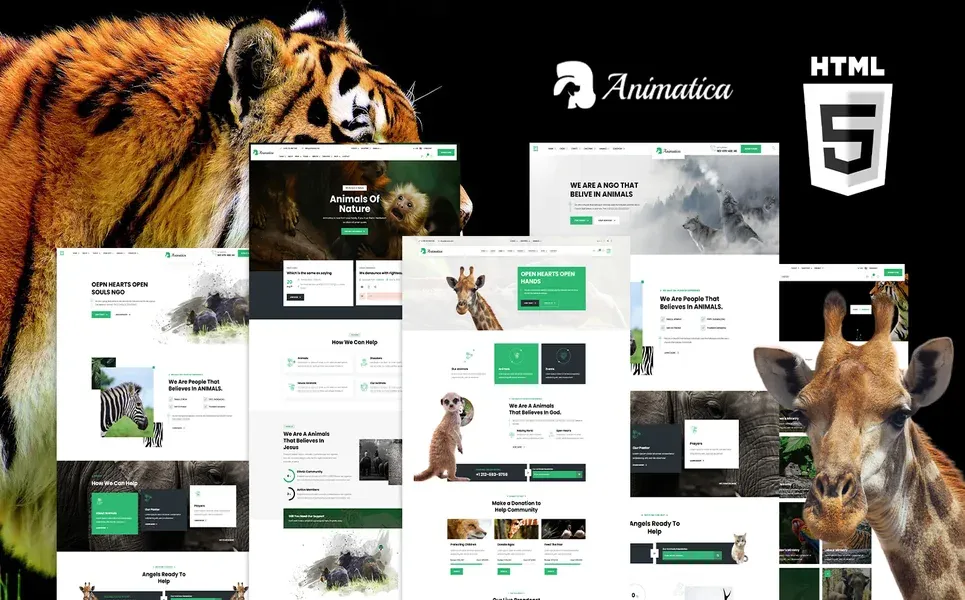
Animatica — A Pet Care Template Built for Animal Businesses
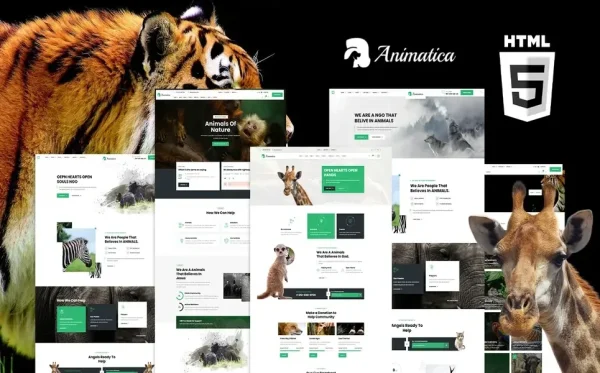
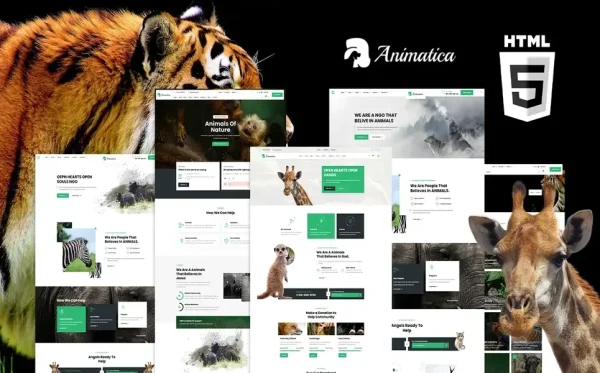
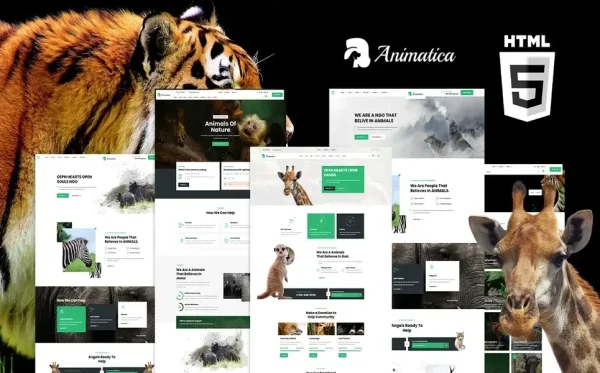
Animatica is a vibrant, feature-rich HTML5 template designed to serve the full spectrum of animal-focused businesses. Built for pet stores, animal shelters, veterinary clinics, pet adoption agencies, and wildlife organisations, it delivers every page and feature outlined in this guide — from full e-commerce with product quick-view to donation campaigns and event listings.
What Animatica Includes
- Full E-Commerce Shop — shop archive, product single pages, cart, checkout, and wishlist
- Product Quick-View Modal — preview products without leaving the shop grid
- Price Range Slider — ion.rangeSlider filtering for products by price
- Product Variations — size, type, and option selectors per product
- Star Rating and Review System — customer reviews and product ratings
- Donation System — fundraising campaign pages for animal welfare initiatives
- Events Module — adoption event and community event pages
- Services Module — veterinary services, grooming, and care program pages
- Team Pages — vet profiles and animal care staff showcase
- Blog Archive — pet care tips, adoption stories, and news
- Gallery Pages — animal photos and facility showcase
- Contact Page — comprehensive contact form with location details
Technical Foundation
Animatica is built on Bootstrap with jQuery 3.6.0, Slick carousels for featured products and testimonials, Isotope filtering for shop and gallery archives, ion.rangeSlider for price filtering, Counterup animated statistics for credibility metrics, and WOW.js scroll animations. Every page is fully responsive and built for fast loading across devices.
One Template, Every Pet Business: Animatica uniquely serves pet stores (full e-commerce with quick-view), veterinary clinics (service pages with team profiles), and animal shelters (donation campaigns with event listings) — all in a single template package. No other pet template covers all three business types this comprehensively.
Customisation Roadmap for Pet Businesses
Week One — Content and Branding: Gather your logo, brand colours, pet and facility photos, product catalogue, service descriptions, and team bios. Replace all placeholder content across every page. For shelters, prepare adoption listings and donation campaign copy. Customise the colour scheme to match your brand personality.
Week Two — Commerce and Launch: Configure the shop section with your product catalogue including sizes, pricing, and descriptions. Set up donation pages with your campaign goals. Connect contact and inquiry forms to your email system. Integrate with your payment processor. Test across all devices and browsers, then deploy.
Frequently Asked Questions
Need Help Launching Your Pet Business Website?
MetropolitanHost provides professional web development services for HTML template deployments. Our team understands pet industry website requirements and delivers clean, well-structured implementations.
- WordPress Theme Installation — live in under 24 hours
- Full Website Package — complete front-to-back deployment
- Colour Customisation — match your pet brand across all pages
- Website Speed Optimisation — Core Web Vitals improvements
- Accessibility Compliance — WCAG audit and remediation