The Cigar Customer: A High-Value Buyer Profile
Cigar customers are among the most valuable customer segments in specialty retail. Understanding their online behavior and expectations is the foundation for building a website that converts. The typical premium cigar buyer is affluent, discerning, and highly informed about the products they purchase. They know the difference between Connecticut and Habano wrappers, they have preferences for specific vitolas, and they follow cigar ratings and reviews from industry publications. When they visit your website, they are evaluating not just your product selection but your knowledge, your curation, and your brand’s alignment with the cigar lifestyle.Cigar businesses cannot advertise on Google Ads, Facebook, Instagram, TikTok, Amazon, eBay, or any major online advertising or marketplace platform. Your website and its organic search presence are your primary customer acquisition channels. Every dollar invested in your site’s design and SEO delivers compounding returns that paid advertisers in other industries take for granted.
Essential Pages for a Cigar Shop Website
A cigar shop website requires a specific set of pages that address the unique needs of tobacco retail and the luxury lifestyle positioning that premium cigar brands demand. Homepage with Atmospheric Branding Your homepage sets the tone for the entire brand experience. Three distinct hero variations are ideal: one focused on your flagship product collections, one highlighting your physical lounge or shop atmosphere, and one emphasizing your brand story and heritage. Animated statistics, testimonial carousels, and featured product showcases complete the premium experience. Product Shop with Multiple Layouts Your shop needs to accommodate different browsing behaviors. A full-width grid layout works for customers who want to scan your entire collection quickly. A sidebar layout lets shoppers filter by brand, wrapper type, strength, size, price range, and origin while browsing. Individual product detail pages must include multiple photos, tasting notes, ring gauge, length, wrapper and filler details, strength rating, and pricing. A shopping cart with clear order summary rounds out the purchase flow. Portfolio and Gallery A portfolio module showcases your brand’s story through curated collections, lounge photography, event coverage, and limited-edition releases. Grid, slider, and masonry display formats give you the flexibility to present different content types with visual impact. Individual portfolio detail pages allow deep dives into specific collections or events. Services Module Many cigar retailers offer services beyond product sales: humidor storage lockers, private event hosting, cigar rolling demonstrations, pairing dinners, and membership programs. A services overview page with individual service detail pages communicates the full breadth of your offerings. Blog With paid advertising unavailable, your blog is your content marketing engine. Cigar reviews, pairing guides, industry news, event recaps, and educational content about tobacco cultivation and cigar-making processes drive organic search traffic and position your brand as an authority. Team Page In the cigar world, the tobacconist’s expertise is a key differentiator. Staff profile pages with professional photos, certifications, specializations, and personal cigar recommendations build the personal connection that premium retail demands.Design Principles for Luxury Tobacco Brands
Cigar websites exist in the luxury space, and the design must reflect that positioning in every element. The visual language of premium cigars is dark, rich, textured, and atmospheric. Color palettes should center on deep, warm tones: espresso browns, aged mahogany, charcoal blacks, antique golds, and burgundy accents. These colors echo the visual qualities of premium cigars and their packaging. Avoid bright whites or sterile color schemes that feel clinical rather than indulgent. Typography should communicate heritage and sophistication. Serif fonts with traditional proportions work well for headings and brand identity elements, evoking the legacy and craftsmanship associated with premium tobacco. Clean sans-serif body text ensures product descriptions and blog content remain highly readable. Photography is the single most important design element. Cigar photography should capture texture, lighting creates a dramatic interplay of shadow and warmth, and compositions should include lifestyle context: a cigar resting beside a glass of aged spirit, a humidor with its cedar aroma almost visible, a lounge setting bathed in ambient light. These images sell the experience, not just the product. Animations should be subtle and sophisticated. Scroll-triggered element entrances, animated statistics, and smooth carousel transitions add visual interest without feeling gimmicky. EasyPieChart skill displays can elegantly communicate product ratings or strength profiles through animated circular progress indicators.Technology Stack for Cigar Shop Templates
The technology behind your cigar shop website needs to support both the e-commerce functionality and the visual sophistication that luxury tobacco branding demands.| Technology | Purpose | Cigar Shop Application |
|---|---|---|
| Bootstrap 4 | Responsive grid and UI components | Product cards, shop layouts, service pages |
| Isotope | Filterable grid layouts | Filter products by brand, strength, price |
| Slick Carousel | Image and content sliders | Featured products, testimonials, hero sections |
| CountTo | Animated number counters | Years in business, products carried, happy customers |
| EasyPieChart | Animated circular charts | Product strength ratings, skill displays |
| Magnific Popup | Full-screen lightbox | Product photography, gallery, portfolio images |
| Chart.js | Data visualization | Flavor profiles, regional origin breakdowns |
| Mean Menu | Mobile navigation | Responsive menu for mobile shoppers |
SEO for Cigar and Tobacco Websites
Because paid advertising is entirely unavailable for tobacco products, SEO is not just one marketing channel among many. It is the only scalable customer acquisition channel your cigar business has online. Your product pages must target specific, high-intent keywords: “[brand name] cigars online,” “full-bodied cigars under $10,” “Connecticut wrapper cigars,” “cigar sampler packs,” and “[specific cigar name] review.” Each product detail page should have a unique title tag, meta description, and heading structure optimized for these terms.Cigar review content is the highest-ROI blog strategy for tobacco websites. Enthusiasts actively search for reviews before purchasing, and review posts rank well for brand-name keywords that carry strong purchase intent. Every review you publish becomes a permanent asset that drives traffic and sales for years.
Cost of Building a Cigar Shop Website
Building a cigar shop website requires balancing the luxury brand positioning your customers expect with practical budget considerations.| Approach | Cost Range | Timeline | Best For |
|---|---|---|---|
| Premium HTML5 Template | $19 – $59 | 1 – 2 weeks | Single-location cigar shops |
| WordPress + WooCommerce | $200 – $600 | 3 – 6 weeks | Shops needing full e-commerce |
| Custom Freelance Build | $3,000 – $12,000 | 4 – 10 weeks | Premium brand experiences |
| Full Agency Build | $15,000 – $40,000+ | 8 – 16 weeks | National tobacco brands |
| SaaS E-Commerce Platform | $30 – $300/mo | 1 – 2 weeks | Quick launch, basic functionality |
Tobacco is classified as a high-risk industry by payment processors. Most standard payment gateways (Stripe, Square, PayPal) do not support tobacco sales. You will need a specialized high-risk merchant account. Plan for processing fees of 3-6 percent, which is higher than standard retail rates. Research tobacco-friendly processors before building your checkout flow.
Cigarely: A Refined Template for the Luxury Tobacco Market
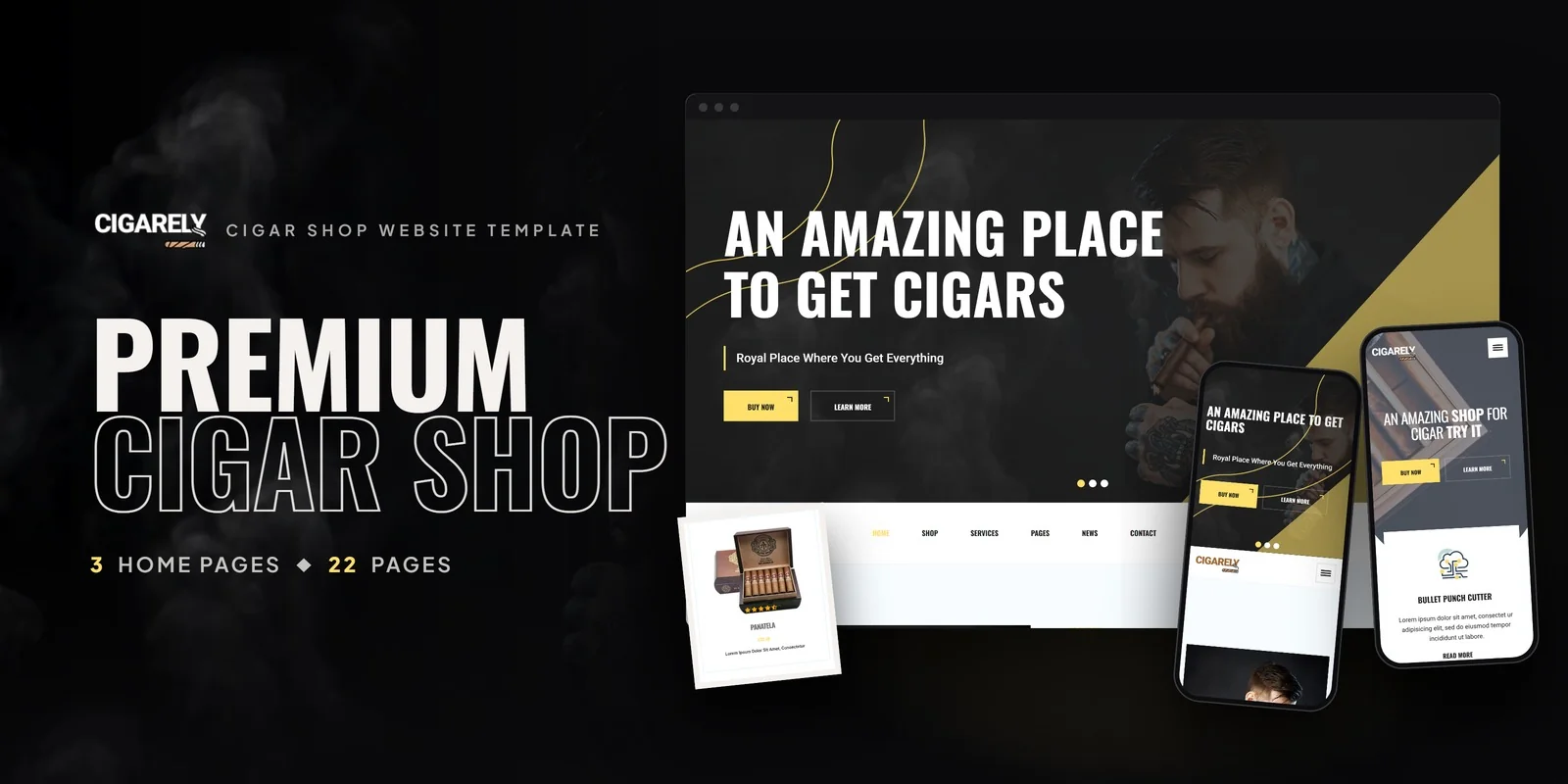
Cigarely is a refined, atmospheric HTML5 template built specifically for cigar retailers, premium tobacco shops, smoke lounges, and luxury lifestyle brands. With 20 fully crafted HTML pages and 3 unique home layouts, it delivers the sophisticated brand presence that the premium tobacco market demands. The template’s e-commerce capabilities include a shop grid, a left sidebar shop with category filtering, an individual product detail page, and a shopping cart with order summary. This complete purchase flow covers the essential customer journey from browsing to buying. The Isotope grid filtering lets customers sort products by brand, wrapper type, strength level, or price range, mirroring the way experienced cigar buyers actually shop. What distinguishes Cigarely from generic e-commerce templates is its portfolio module. Available in grid, slider, and masonry formats with individual detail pages, the portfolio system lets you showcase lounge photography, event coverage, limited-edition releases, and brand storytelling with visual impact that standard product grids cannot achieve. This dual approach, combining commerce with curation, perfectly reflects how premium cigar brands operate. The services module with overview and detail pages supports the ancillary offerings that many cigar businesses provide: humidor lockers, private events, membership programs, and cigar education. CountTo animated statistics and EasyPieChart skill displays add the visual sophistication that luxury branding demands, while Chart.js data visualization enables flavor profile displays and product comparison graphics. Built on Bootstrap 4 with Slick carousels, Isotope filtering, Magnific Popup lightbox, and Mean Menu mobile navigation, Cigarely is responsive and performant across all devices. The blog module in three formats (standard, grid, and detail) provides the content marketing infrastructure essential for a business that cannot rely on paid advertising.Launching Your Cigar Shop Website: Step-by-Step
A systematic launch process ensures your cigar shop website delivers results from day one. Phase One: Foundation (Days 1-5) Register your domain, secure hosting from a provider that permits tobacco-related content, and deploy the template. Customize branding: logo, color scheme (lean into deep, warm tones), typography, and hero imagery. Verify that your hosting provider’s acceptable use policy explicitly permits tobacco retail websites. Phase Two: Product Photography and Catalog (Days 6-12) Photograph your products with professional lighting that captures wrapper texture and color. Create product detail pages with tasting notes, specifications, pricing, and origin information. Organize products into categories for the Isotope filtering system: by brand, wrapper, strength, vitola, and price range. Phase Three: Portfolio and Content (Days 13-18) Populate the portfolio module with lounge photography, event coverage, and brand story content. Write and publish at least five blog posts: three cigar reviews targeting specific brand-name keywords, one educational post for beginners, and one pairing guide. This seed content gives search engines material to index immediately. Phase Four: Payment, Legal, and Launch (Days 19-21) Integrate your high-risk merchant account for tobacco payment processing. Add required legal disclaimers, age verification, and compliance information. Test the complete purchase flow on both desktop and mobile. Set up Google Business Profile, submit your sitemap to Search Console, launch, and begin tracking.Frequently Asked Questions
Yes, in most U.S. states and many international jurisdictions. However, you must comply with federal and state regulations including age verification at point of sale and delivery, proper licensing, tax collection and remittance, and shipping restrictions (some states prohibit direct-to-consumer tobacco shipments). Consult a tobacco-law attorney for guidance specific to your jurisdiction.
Standard processors like Stripe, Square, and PayPal do not support tobacco sales. You need a high-risk merchant account from a specialized processor. Established options include providers that specifically serve the tobacco industry and offer gateway integrations compatible with most website platforms. Expect processing fees of 3-6 percent, higher than standard retail rates.
(adsbygoogle = window.adsbygoogle || []).push({});Organic search (SEO) is your primary channel. Focus on three content types: product reviews targeting brand-name keywords, educational content for new cigar smokers, and local SEO for your physical location. Secondary channels include email marketing to your existing customer base, cigar forum participation, and partnerships with lifestyle publications and influencers.
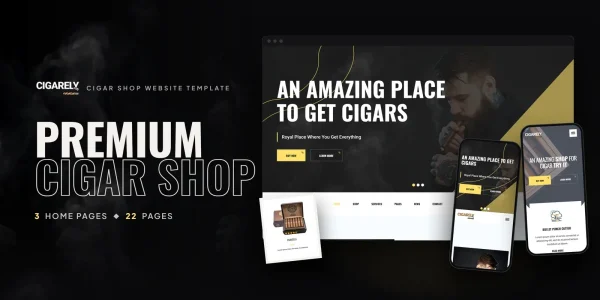
Cigarely – Bootstrap 5 Cigar Shop HTML5 Website Template
Yes. Federal law and most state regulations require age verification for online tobacco sales. At minimum, your website should include an age-gate overlay on the homepage. For e-commerce transactions, you will also need age verification at checkout and at the point of delivery. Several third-party age verification services integrate with common e-commerce platforms.
Luxury and sophistication. Dark color palettes (espresso, charcoal, mahogany, antique gold), serif typography for headings, high-quality product photography with dramatic lighting, and subtle animations create the atmospheric brand experience that cigar customers expect. Avoid bright, minimalist designs that feel clinical rather than indulgent.
Cigarely — Premium Cigars Angular Website Template
Absolutely. A portfolio module elevates your website from a simple product catalog to a brand experience. Showcase lounge photography, event coverage, limited-edition releases, cigar-maker partnerships, and behind-the-scenes content. This visual storytelling builds emotional connection with customers and differentiates your brand from competitors who only display product grids.
(adsbygoogle = window.adsbygoogle || []).push({});Very important. While cigar purchases tend to be more deliberate than impulse buys, customers frequently browse on mobile during lounge visits, social gatherings, and downtime. Mobile also dominates local search, where customers search for nearby cigar shops. Your website must deliver a complete, fully functional shopping experience on smartphones and tablets.