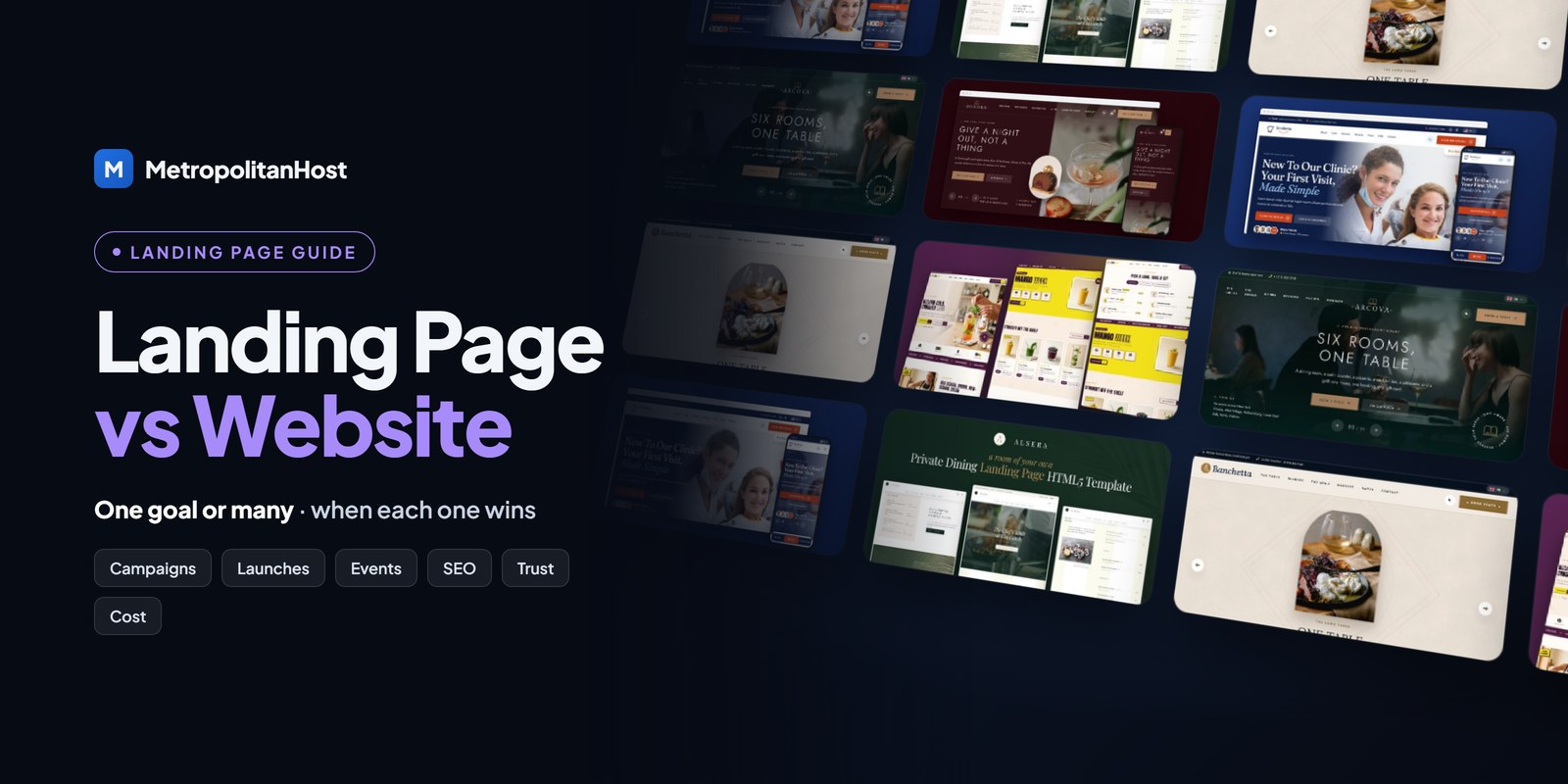
The question of landing page vs website comes up whenever a business plans a campaign, a launch or its first online presence. The short answer: a website introduces your whole business, while a landing page gets one specific action from one specific visitor. Most businesses need both, but at different moments.
Ready to choose?Tech & Education website templates — every template with its live demo, formats and prices on one page.
This guide compares the two side by side, explains when each one wins, and shows how they work together. You will also find examples of both: one-page landing pages and full multi-page website templates.
What Is a Website?
A website is a set of pages about your business: a home page, services or products, an about page, a blog, contact details and more. Visitors come for many reasons, so the website gives them many paths. For example, one visitor reads the menu, another checks opening hours, and a third applies for a job.
A website builds trust and visibility over time. In addition, it ranks for many searches at once, because each page covers a different topic.
What Is a Landing Page?
A landing page is one page with one goal. Visitors usually arrive from an ad, an email, a social post or a QR code, and the page asks them to do one thing: book, order, donate, register or leave their details.
Because it has one goal, a landing page removes distractions. There is often no main menu, and every section supports the same call to action. As a result, landing pages usually convert a larger share of their visitors than general website pages.
Landing Page vs Website: The Key Differences
| Landing page | Website | |
|---|---|---|
| Goal | One action | Many purposes |
| Pages | One | Several to hundreds |
| Navigation | Little or none | Full menu |
| Traffic | Campaigns: ads, email, social, QR codes | Search, direct visits, referrals |
| Lifespan | Per campaign or offer | Long term |
| Measured by | Conversion rate | Visits, engagement and leads overall |
| Time to launch | Hours to days | Days to weeks |
When a Landing Page Is the Better Choice
Choose a landing page when you have one clear action and a specific audience. For example:
- A campaign: an ad, an email or a social post needs a page that continues its exact message.
- A launch or offer: a new product, a seasonal menu or a limited deal.
- An event: a class, a dinner or a show with seats to fill.
- A quick start: a new business that needs bookings before the full website is ready.
- Testing an idea: one page measures interest before you build more.
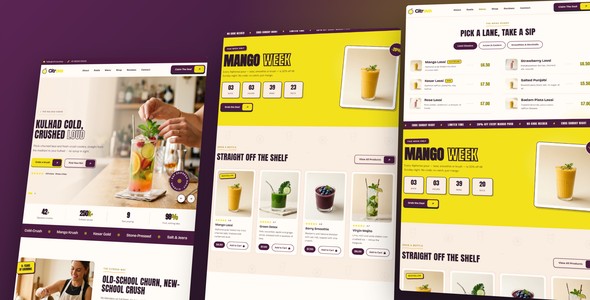
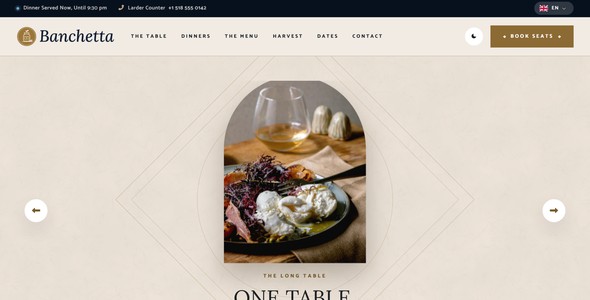
For instance, Banchetta sells seats at a long-table dinner, and Citrova runs a limited juice bar offer.
When a Website Is the Better Choice
Choose a website when visitors need to explore, compare and come back. For example:
- You offer many services or products that each need their own page.
- You want to rank on Google for many different searches.
- Customers check you out before buying: your story, team, reviews and policies.
- You publish news, recipes, guides or a blog.
In that case, a multi-page website template gives you every page you need. You can browse full website templates by industry in HTML5, React, Vue, Angular and WordPress.
Using a Landing Page and a Website Together
The strongest setup uses both. Your website builds trust and ranks for many searches. Meanwhile, each campaign gets its own landing page, so the ad, email or post leads straight to the matching action.
For example, a restaurant keeps its full website for the menu, story and location. Then it adds a landing page for group bookings, another for gift cards, and another for a seasonal tasting event. Each page has one link to share and one number to measure.
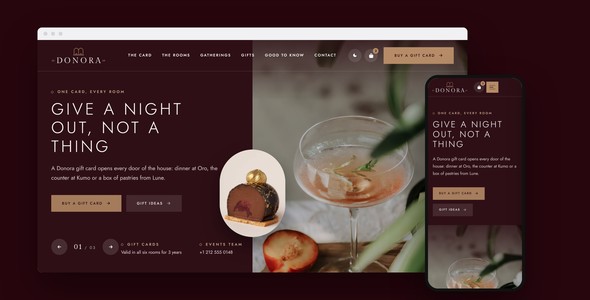
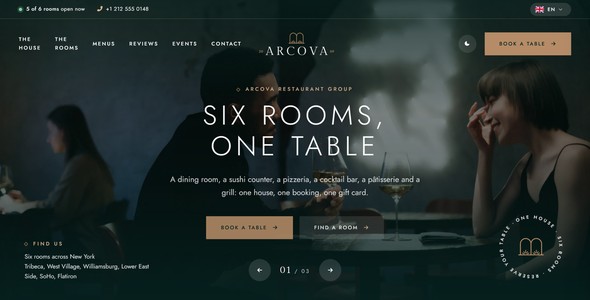
Here, Arcova handles restaurant group bookings, and Donora sells restaurant gift cards.
Landing Page vs Website by Type of Business
The right answer also depends on what you sell. Here is how the choice usually looks for common businesses:
| Business | Website for | Landing pages for |
|---|---|---|
| Restaurant or café | Menu, story, location, hours | Group bookings, gift cards, tasting events, order-ahead |
| Clinic or dentist | Services, team, insurance, locations | New-patient offers, consultations, memberships |
| Online shop | Full catalog, policies, account | Product launches, bundles, seasonal offers |
| Contractor or mover | Services, areas, past work | Quote requests by service |
| Church or charity | Beliefs, programmes, news, events | Giving, festivals, volunteer days |
| Event organiser | All events, venue, about | One registration page per event |
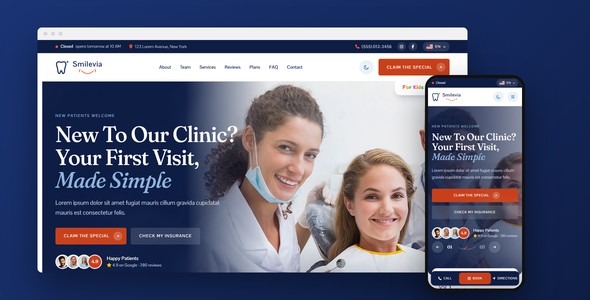
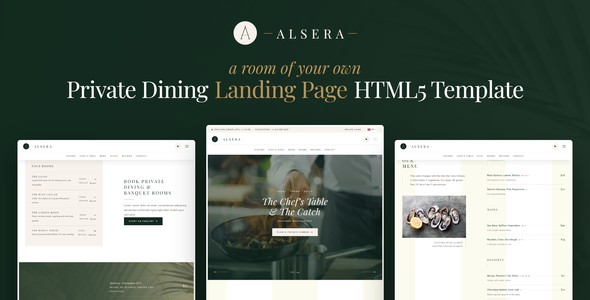
For example, a dental clinic can run its full site from a dental website template, and then add a landing page for a new-patient offer. Likewise, a restaurant can keep a restaurant website template and add a page for private dining.
Landing Page vs Home Page
A home page is the front door of a website. It greets every kind of visitor, so it links to everything: services, prices, about, blog and contact. A landing page, however, greets one kind of visitor who arrived for one reason.
That is why sending ad or email traffic to a home page usually wastes it. Visitors have to find the offer themselves, and many leave before they do. Instead, send each campaign to its own landing page, and keep the home page for people who come to explore.
Landing Page vs Sales Page and Microsite
A sales page is a type of landing page that sells one product, usually with a longer argument and a checkout at the end. A microsite, on the other hand, is a small separate website of a few pages for one campaign or product. If a campaign needs several pages, a microsite fits. If it needs one action, a landing page is simpler and faster.
Landing Page vs Website for SEO
A website usually wins for SEO, because it covers many topics on many pages and earns links over time. Still, a landing page can rank for one specific search when it has useful text, a clear title and fast loading. So use your website for broad visibility, and let landing pages target narrow, high-intent searches such as “moving quote” or “wine club membership”.
Google’s guidance on SEO fundamentals applies to both: write for people, describe the page clearly, and make it fast and easy to use.
Cost and Time to Build
A landing page is quicker and cheaper to build, because it is one page with one purpose. A ready-made HTML5 landing page template can go live the same day once you replace the text and images. A website, on the other hand, needs more content and more pages, so it takes longer even with a template.
Frequently Asked Questions
Ready to launch your next campaign? Browse one-page HTML5 landing pages, or explore full website templates for your main site.