Healthcare in 2026 begins online. Before a patient ever walks through your door, calls your front desk, or books an appointment, they have already judged your practice by its website. Research consistently shows that more than 70% of patients search online before choosing a healthcare provider, and the majority of those searches happen on a phone. In a sector where trust, credibility, and accessibility are everything, your website is not a digital afterthought. It is the front door to your practice, the first consultation, and the deciding factor in whether a prospective patient chooses you or the clinic down the road. A professional medical website template is the foundation that makes that first impression work in your favor.
Why Your Medical Website Is Your Most Important Asset
Most medical practices offer broadly similar services. Two family clinics in the same city treat the same conditions, accept similar insurance, and employ comparably qualified doctors. When the clinical offering looks identical from the outside, the differentiator becomes the patient experience, and that experience starts on your website. A medical website that loads quickly, communicates clearly, and makes booking an appointment effortless will win the patient that a slower, more confusing competitor loses. This is measurable in appointment requests, new patient acquisition cost, and the steady growth of a loyal patient base.
Mobile traffic dominates healthcare search. The majority of patients looking for a doctor, a clinic, or a specialist do so from a smartphone, often in a moment of need or worry. If your medical website does not render flawlessly on a small screen, if buttons are hard to tap or text is hard to read, you are effectively invisible to most of the people searching for the care you provide. Every design decision, from the appointment button placement to the readability of your services list, has to begin with the mobile experience and scale up to desktop, never the other way around.
Trust carries extra weight in healthcare. Patients are sharing sensitive concerns and, increasingly, sensitive data. They want to see professional design, real credentials, genuine team photos, transparent service information, and clear contact details before they pick up the phone. A website that looks outdated, generic, or hastily built signals an organization that may be equally careless with patient care. In a field where credibility is the currency, your medical web design is the single most powerful trust-building tool you control.
What Makes a Great Medical Website
Appointment Booking and Patient Access
The single most important conversion on a medical website is the appointment request. Every other element exists to move a visitor toward that action. The best healthcare website templates put booking front and center: a prominent appointment button in the header, clear calls to action on every key page, and a dedicated booking form that captures the right information without overwhelming the patient. Friction is the enemy here. Each unnecessary field, each confusing step between “I need to see a doctor” and “my appointment is requested” costs you a patient. A medical website template built for the industry treats appointment booking as the central workflow, not a contact form buried three clicks deep.
Patient access extends beyond booking. Office hours, location, parking guidance, telehealth options, insurance accepted, and what to bring to a first visit all reduce the anxiety that keeps people from picking up the phone. A well-structured medical practice template provides clear, dedicated space for this practical information so patients arrive informed and confident rather than uncertain.
Mobile-First Performance and Accessibility
Google’s Core Web Vitals directly influence your search visibility, and medical websites are frequently penalized for slow, heavy pages. Oversized hero images, unoptimized media, and bloated scripts push load times past the three-second threshold where most mobile users abandon a page. A quality medical website template is built on a lightweight framework like Bootstrap 5, with clean code, optimized assets, and responsive layouts that perform well even on older phones and slower connections.
Accessibility is not optional in healthcare. Your patients include older adults, people with visual impairments, and users relying on assistive technology. Readable type sizes, strong color contrast, logical heading structure, descriptive links, and keyboard-navigable menus are baseline requirements, not nice-to-haves. The best medical website designs build accessibility into the template from the first page, which protects both your patients and your practice while widening the audience that can actually use your site.
Services, Specialties, and Clear Information Architecture
Patients arrive at a medical website with a specific need, and they should be able to find the relevant service in seconds. A great healthcare template provides a clean services overview with individual detail pages for each specialty or treatment, so a patient searching for a particular procedure lands on focused, reassuring content rather than a wall of undifferentiated text. Structured service pages with clear descriptions, what to expect, and a direct path to booking convert far better than a single cluttered “Services” page that tries to do everything at once.
Information architecture matters as much as visual design. Logical navigation, a sensible page hierarchy, and internal links that guide patients from a symptom to a service to an appointment all reduce confusion and increase conversions. The strongest medical website templates ship with a thoughtful structure already in place, giving you a proven framework instead of a blank canvas you have to organize from scratch.
Credibility, Team Profiles, and Trust Signals
Healthcare runs on trust, and trust is built through specificity. Real photos of your doctors and staff, individual team profile pages with credentials and areas of expertise, genuine patient testimonials, and visible certifications all signal a legitimate, established practice. Generic stock photography and vague mission statements do the opposite. A cohesive medical web design that presents your team as real, qualified people turns anxious first-time visitors into confident new patients. The best medical website templates include dedicated team directories, individual profile layouts, and testimonial sections precisely because these elements do the heavy lifting of building credibility before a patient ever speaks to you.
4 Medical Website Templates Worth Using in 2026
We evaluated dozens of healthcare and medical website templates and selected the four that deliver the best combination of design quality, feature depth, and real-world usability for practices, clinics, and medical retailers. Each one is built on a clean, responsive framework, ships as a production-ready HTML5 template, and covers a distinct corner of the healthcare market, from clinical practices to medical supply e-commerce. Here is the collection at a glance.
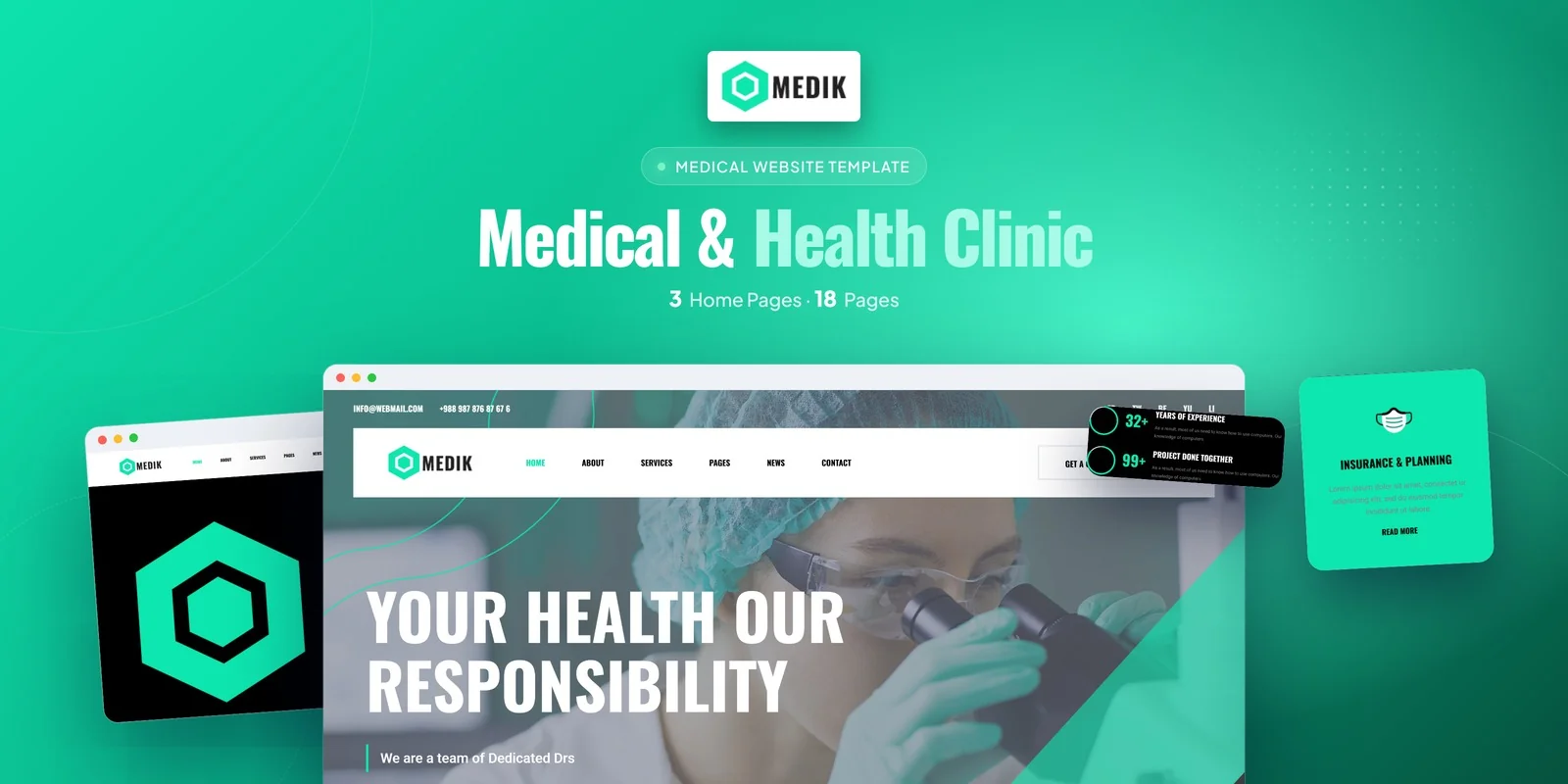
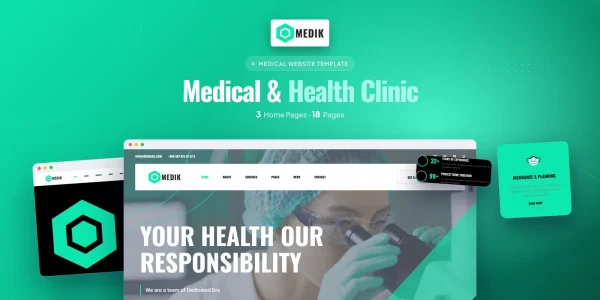
1. Medik (18 Pages)
Medik is a professional, trust-building template purpose-built for medical clinics, healthcare service providers, doctor portfolio websites, and health-focused consulting firms. Across its 18 fully crafted HTML pages it delivers three unique homepage layouts, a services section with individual service detail views, and a team directory with individual profile pages, which is exactly the structure a clinic needs to present its doctors and specialties with credibility. Portfolio sections in grid, masonry, and slider formats give you flexible ways to showcase facilities, case studies, or treatment results.
The template ships with the practical components healthcare sites rely on: a blog in grid and standard formats with article detail pages for publishing health content, an FAQ section to address common patient questions, a why-choose-us block to communicate your differentiators, and animated statistics powered by EasyPieChart and CountTo to present outcomes and credentials visually. Slick carousels and a Magnific Popup lightbox round out an interaction set that feels polished without being heavy. For a clinic or doctor that wants to look established and earn patient trust from the first visit, Medik provides a complete, well-organized foundation.
Best for: Medical clinics, doctor portfolio sites, and healthcare service providers that need a credible, services-and-team-driven web presence. View Live Demo
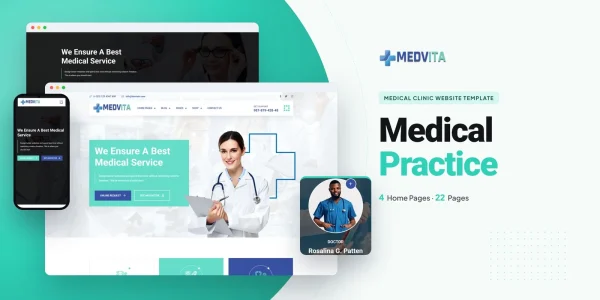
2. Medvita (23 Pages)
Medvita is the most comprehensive clinical template in this collection. Built for healthcare practices, wellness clinics, and multi-service medical teams, its 23 fully crafted HTML pages and four unique homepage layouts give you genuine room to grow. The standout feature is appointment booking: Medvita ships with dedicated booking forms, making it a natural fit for any practice where the primary goal is to convert a website visitor into a scheduled patient. Two distinct service layout styles let you present your specialties in whichever format suits your practice best.
Beyond booking, Medvita includes case study pages for documenting patient outcomes and treatment stories, a team and staff directory to introduce your providers, a product single page for practices that also sell health products, and a blog in grid, list, and detail formats for ongoing content marketing. Slick carousels power featured service and team showcases, while the Flaticon icon set and Magnific Popup lightbox keep the interface clean and contemporary. With four homepage configurations and the deepest page count here, Medvita is the template to choose when you want a patient-first healthcare site with maximum flexibility.
Best for: Healthcare practices and wellness clinics that want appointment booking front and center plus room to scale across services, team, and content. View Live Demo
3. Medical (13 Pages)
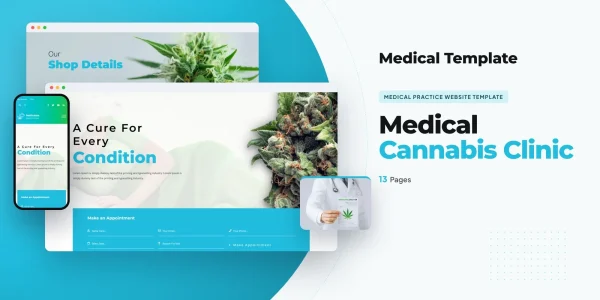
Medical is a clean, focused template designed for healthcare platforms, medical supply stores, and clinic management interfaces. At 13 purpose-built pages it is the most compact option in this list, and that is deliberate. Every page serves a clear function, covering everything from patient-facing content to an integrated shop without padding the template with sections you will never use. The professional, clinical aesthetic instills trust and credibility, which is exactly what a health-sector project needs to project from the first screen.
What sets Medical apart is its built-in e-commerce capability. A fully styled shop section with shop listings, product detail pages, and sidebar filtering lets you sell medical supplies, supplements, or health equipment directly through your site, which is a capability most clinic templates leave out entirely. The blog system supports archive, detail, and sidebar layouts for publishing health articles and practice news, and user authentication pages round out the template for platforms that require patient or staff logins. For a health-sector project that needs to combine information and commerce in one lightweight package, Medical is an efficient, fast-to-launch choice.
Best for: Healthcare platforms and clinics that want to combine patient-facing content with a built-in shop for medical supplies, supplements, or equipment. View Live Demo
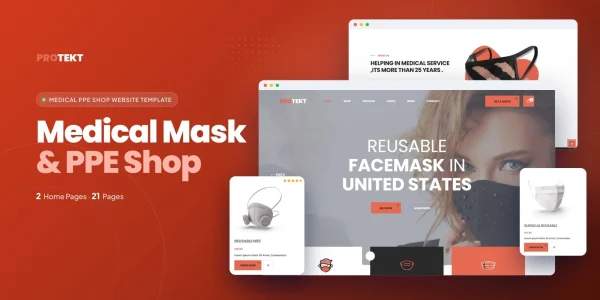
4. Protekt (21 Pages)
Protekt is a clean, trust-forward template built specifically for the medical retail side of the industry: face mask brands, PPE retailers, surgical supply stores, and certified medical equipment sellers. Across its 21 fully crafted HTML pages and two unique homepage layouts, it delivers a complete e-commerce experience with a product grid, detailed product pages, and left-sidebar filtering, so a customer can browse categories such as surgical, N95, reusable, and cotton masks without friction. For any business selling protective or medical equipment online, this is a ready-made storefront.
The template is engineered to build buyer confidence in a category where certification and quality matter. CounterUp-animated statistics highlight units sold, EasyPieChart certification visualizations communicate lab-test and compliance credentials, and ionRangeSlider price filtering lets shoppers narrow products to their budget. A services section, a portfolio gallery, and an editorial news blog give you space to explain your standards and publish updates. MeanMenu mobile navigation, Isotope category filtering, Slick carousels, and a Magnific Popup lightbox complete a feature set tuned for medical supply commerce. When your medical website is really a store, Protekt is the template built for the job.
Best for: Medical supply and PPE retailers selling masks, protective equipment, or health products online with certification-focused trust signals. View Live Demo
Essential Features Every Medical Website Needs
Whether you build from scratch or start with a medical website template, these eight features are non-negotiable for any healthcare practice or medical business competing online in 2026.
- Online appointment booking. A prominent, low-friction booking form or scheduler is the most important conversion on any medical website. Make it accessible from every page and keep the steps to a minimum so patients can request care in seconds.
- Mobile-responsive layout. Your site must perform flawlessly on smartphones and tablets. With the majority of healthcare searches happening on mobile, a poorly responsive site is functionally invisible to most prospective patients.
- Clear services and specialties pages. Patients arrive with a specific need. Dedicated service detail pages with plain-language descriptions and a direct path to booking convert far better than a single overloaded services page.
- Provider and team profiles. Real photos, credentials, and individual bios for your doctors and staff build the trust that turns visitors into patients. A team directory with profile pages is a baseline trust signal in healthcare.
- Accessibility and readability. Strong color contrast, legible type, logical headings, and keyboard navigation make your site usable for older and visually impaired patients, and protect your practice while widening your audience.
- Patient resources and FAQ. Insurance accepted, office hours, location and parking, what to bring, and answers to common questions reduce anxiety and front-desk calls while helping patients arrive prepared.
- Trust signals and testimonials. Visible certifications, genuine patient reviews, and credentials reduce hesitation. Display them on key pages, not buried on a sub-page nobody visits.
- Fast page load speed. Target under 2.5 seconds for Largest Contentful Paint. Compress images, minimize scripts, use a CDN, and choose a template built on a lightweight framework like Bootstrap 5.
Choosing the Right Template for Your Practice
Selecting a medical website template starts with understanding what kind of healthcare business you actually run. A clinic that lives or dies by appointment volume has different needs than a medical supply retailer or a doctor building a personal brand. Medvita is built for practices that want appointment booking front and center with deep service, team, and content sections to grow into. Medik suits clinics and doctor portfolios that need to project credibility through services and team profiles. Medical fits health-sector projects that want to pair patient-facing content with a built-in shop, and Protekt is purpose-made for medical retailers selling PPE, masks, and equipment online. Match the template’s architecture to your real use case rather than to whichever one has the longest feature list.
Page count is a useful indicator of scope, but more pages does not automatically mean a better fit. A 23-page template like Medvita gives you maximum flexibility and room to expand, but it also takes more time to customize and populate with real content. A 13-page template like Medical can be live in days. Be honest about your timeline and resources. A fully customized 13-page site that launches next week will serve more patients than a half-finished 23-page project that never goes live. Every template here is responsive, production-ready, and built to be customized with your branding, your services, and your team.
Budget matters, but weigh it in context. A premium medical website template costs a small fraction of custom development, and you get a professionally designed, tested, and documented starting point. The real investment is not the template price. It is the time required to make it yours with your branding, your services, and your content. Choose a template with clean, well-organized code and clear documentation to keep that effort to a minimum, and you will be online and accepting patients far sooner than a from-scratch build would allow.
Start Building Your Medical Website
Healthcare is becoming more competitive and more digital every year. Practices and medical businesses that invest in professional medical web design now are building the credibility, visibility, and patient trust that will carry them forward as expectations keep rising. Every month you operate with an outdated website, or no website at all, is a month of patients choosing a competitor whose site simply made it easier to book. The four templates featured in this article are not concepts or wireframes. They are production-ready, mobile-responsive, Bootstrap-based HTML5 templates built specifically for medical clinics, healthcare practices, and medical retailers.
Start by exploring the designs, testing the live demos, and identifying which template aligns with your practice or business model. Then customize it with your branding, populate it with your services and team, and launch. Your next patient is already searching online for the care you provide. Make sure they find a website that earns their trust. Browse All Medical Templates and pick the right foundation for your practice.