What Is an Auction Website Template?
An auction website template is a pre-designed, fully coded website built specifically for online auction platforms, bidding marketplaces, wine auction houses, specialty food e-commerce with timed sales, and any business model where products are sold through competitive bidding, flash sales, or time-limited offers. Unlike standard e-commerce templates designed for fixed-price shopping or product comparison websites that focus on feature matrices, an auction template is built around urgency-driven commerce — countdown timers, product zoom for inspection, price range filtering, wishlist management, multi-step checkout flows, and the visual merchandising tools that drive competitive purchasing behaviour.
For auction entrepreneurs and specialty retailers who need a professional bidding platform without investing $20,000 to $60,000 in custom marketplace development — and who understand that auction commerce depends on creating urgency, building trust in product quality, and streamlining the purchase flow — a purpose-built auction template provides the most practical path to launching an auction or timed-sale platform. But auction websites have unique requirements that standard e-commerce templates cannot address. Your countdown timers must create genuine urgency. Your product zoom must enable close inspection before bidding. Your checkout flow must handle the complexity of auction purchases. This guide covers everything auction entrepreneurs need to know before choosing a template.
Auction Template vs Standard E-Commerce vs Custom Build
Online auction and specialty retail businesses face three options when building their platform, and the choice determines whether their commerce model works or fights against the website structure:
| Factor | Standard E-Commerce Template | Auction Website Template | Custom Marketplace Build |
|---|---|---|---|
| Primary Focus | Fixed-price product catalogue | Timed sales, bidding, urgency commerce | Fully custom to brief |
| Upfront Cost | $19–69 | $19–69 | $20,000–60,000 |
| Monthly Cost | $3–10/month | $3–10/month | $300–800/month |
| 3-Year Total | $127–429 | $127–429 | $30,800–88,800 |
| Countdown Timers | Not included | Built into product and homepage | Custom built |
| Product Zoom | Rarely included | jQuery Zoom on hover | Custom solution |
| Price Filtering | Basic category filters | Range slider for price filtering | Custom filters |
| Multi-Step Checkout | Single-page checkout | jQuery Steps wizard checkout | Custom flow |
| Wishlist | Rarely included | Dedicated wishlist page | Custom feature |
| Shop Layouts | 1–2 layouts | 4+ distinct layouts | Unlimited |
The fundamental difference is commerce psychology. Standard e-commerce templates are designed for browse-and-buy shopping — add to cart, checkout, done. Auction templates are designed for urgency-driven commerce — countdown timers create scarcity pressure, product zoom enables pre-bid inspection, wishlist pages let buyers track items of interest, and multi-step checkout walks winners through a structured purchase completion process. Using a standard e-commerce template for an auction platform is like opening a live auction house with supermarket checkout lanes — the tools do not match the commerce model.
The Psychology of Auction Commerce
Auction websites operate on different psychological drivers than standard e-commerce. Understanding these drivers helps you evaluate whether a template supports or undermines your business model.
Urgency Through Countdown Timers
Countdown timers are the heartbeat of auction commerce. A ticking clock transforms casual browsing into urgent action. When a buyer sees “2 hours 14 minutes remaining” on a product they want, the fear of missing out overrides the tendency to postpone purchasing decisions. Countdown timers belong on the homepage for featured auctions, on product listing pages for browsing urgency, and on individual product detail pages for bid-closing pressure. Without timers, an auction site is just a shop with no reason to buy today.
Flash sale countdown timers serve the same psychological function for fixed-price specialty retailers. A wine retailer offering a weekend-only case deal, an organic market running a seasonal produce promotion, or a gourmet shop launching a limited-edition product line all benefit from timer-driven urgency that standard e-commerce templates simply do not provide.
Product Inspection Through Zoom
Auction buyers need to inspect products closely before committing their bids. In physical auction houses, buyers examine items in person before the bidding begins. Online, product zoom on hover replicates this inspection experience. jQuery Zoom allows buyers to hover over product images and see magnified detail — label quality on wine bottles, texture on artisan food products, condition details on collectibles, or craftsmanship on handmade items. This close-inspection capability builds the purchase confidence that drives higher bids and reduces post-sale disputes.
Discovery Through Price Filtering
Auction and specialty retail buyers often shop within a budget range. A price range slider — powered by ion.rangeSlider — lets buyers set their minimum and maximum price and instantly see only products within that range. This filtering experience is more interactive and intuitive than dropdown menus or text input fields. For auction platforms with items spanning broad price ranges — from $10 starter bids to $500 premium lots — price range filtering helps every buyer find items at their comfortable bidding level.
Intent Tracking Through Wishlists
Auction buyers rarely bid on the first item they see. They browse, compare, evaluate, and return to items that caught their interest. A dedicated wishlist page lets buyers save products for later — creating a personalised shortlist of items they intend to bid on or purchase. For the business, wishlists are intent signals — items frequently added to wishlists are candidates for featured placement, promotional pricing, or targeted email marketing. Without a wishlist, buyers must rely on memory or browser bookmarks, losing the structured intent-tracking that drives return visits and completed purchases.
Purchase Completion Through Multi-Step Checkout
Auction purchases are more complex than standard e-commerce transactions. Winning bidders need to confirm their winning bid, provide shipping details, select delivery preferences, review order totals including any buyer premiums, and submit payment — often with specific auction terms and conditions to acknowledge. A multi-step checkout wizard powered by jQuery Steps breaks this complex process into manageable steps with progress indicators, reducing cart abandonment by making each step feel achievable rather than overwhelming the buyer with a single, information-dense checkout page.
Urgency-Driven Commerce: Auction websites with countdown timers, product zoom, and price range filtering convert at dramatically higher rates than standard e-commerce layouts used for timed sales. When a buyer can zoom into product details, filter to their price range, save items to a wishlist, and see a countdown timer creating genuine urgency — the entire browsing experience is engineered for competitive purchasing behaviour rather than passive browsing.
Essential Features for Auction Websites
Multiple Shop Layouts
A single shop layout forces every product category into the same visual presentation. Four or more distinct shop layouts let you match the browsing experience to the product category — a gallery-style grid for visually rich auction items, a list layout for lots with detailed specifications, a compact grid for high-volume browsing, and a featured layout for premium items. Different layout options also let you A/B test which format drives the most engagement and bidding activity.
Two Product Detail Page Styles
Not every product needs the same detail page treatment. A wine bottle with tasting notes, vintage details, and region information benefits from an information-rich layout. A flash sale item with simple specifications benefits from a conversion-focused layout with prominent countdown timer and bid button. Two product detail page variants let you match the page format to the product type and sales strategy — informational depth for high-value auction items, conversion urgency for flash sales and limited offers.
Newsletter Popup for Audience Building
Auction businesses live on repeat buyers. A newsletter popup captures email addresses from first-time visitors, building the subscriber list that you notify about upcoming auctions, flash sales, and new inventory. For wine auction houses, organic markets, and specialty food retailers, an email list of engaged buyers is the single most valuable marketing asset — it drives attendance at every sale and creates the competitive bidding environment that maximises revenue.
Blog Module for Content Marketing
Blog content in grid, list, and masonry formats supports the content marketing strategy that drives organic traffic to auction and specialty retail websites. Wine tasting guides, organic food sourcing stories, artisan product profiles, and auction buying tips attract prospects who are not yet searching for your specific products but are searching for the category knowledge that your blog provides. Three blog format options ensure your content is presented in a layout that matches its visual and editorial requirements.
Account and Legal Pages
Auction platforms require more account management than standard retail — user registration, bid history tracking, winning bid notifications, and payment management. Full account pages provide the registration, login, and profile management functionality that auction participants expect. Legal pages — terms and conditions, privacy policy, and return/refund policies — are especially critical for auction businesses where disputes over product condition, bid validity, and buyer premiums require clear, accessible policy documentation.
Cost Comparison: Auction Web Presence
| Cost Component | Auction Website Template | Custom Marketplace Build | SaaS Auction Platform |
|---|---|---|---|
| Template/Design | $19–69 (one-time) | $20,000–60,000 | $0–199/month |
| Hosting | $3–10/month | $50–200/month | Included |
| Domain | $12–15/year | $12–15/year | $12–15/year |
| Transaction Fees | Payment processor only | Payment processor only | 2–8% per sale |
| Year 1 Total | $67–289 | $20,612–62,415 | $156–2,403 |
| 3-Year Total | $163–649 | $22,036–67,245 | $468–7,209 |
| Countdown Timers | Included | Custom built | Platform dependent |
| Design Control | Full customisation | Fully custom | Platform template |
| Transaction Fees | None (your gateway) | None (your gateway) | 2–8% platform cut |
The cost advantage of templates is amplified for auction businesses because SaaS auction platforms typically charge per-transaction fees on top of monthly subscriptions. A template with your own payment gateway eliminates that ongoing revenue share, which can save thousands annually as transaction volume grows.
How to Evaluate an Auction Website Template
Check for Countdown Timer Integration
Navigate the demo and look for countdown timers on the homepage, shop pages, and product detail pages. A template without countdown timers was not designed for auction or timed-sale commerce. The timer implementation should be visually prominent — displaying days, hours, minutes, and seconds — and integrated naturally into the product card and product detail layouts rather than appended as an afterthought.
Test the Product Zoom
Hover over product images on the detail page. Does the zoom activate smoothly? Is the magnification level sufficient for detail inspection? Does the zoom work on mobile with touch? Product zoom is critical for auction commerce where buyers cannot physically inspect items. If the template lacks zoom functionality, buyers must rely on standard-resolution images — insufficient for the inspection confidence that drives bidding.
Evaluate the Checkout Flow
Add an item to the cart and navigate through the checkout process. Is it a single dense page or a guided multi-step wizard? Count the steps and evaluate whether each step is logically organised. A multi-step checkout with progress indicators converts significantly better than a single-page form for complex purchases. The steps should flow naturally — item review, shipping details, payment information, order confirmation.
Inspect the Price Filtering
Navigate to the shop page and look for a price range slider. Drag the handles and observe whether the product display updates. A range slider with smooth interaction and immediate visual feedback creates the product discovery experience auction buyers expect. Dropdown filters or text input fields for price ranges are functional but lack the intuitive, visual interaction that a slider provides.
Nftfans — A Template Built for Auction and Specialty Commerce
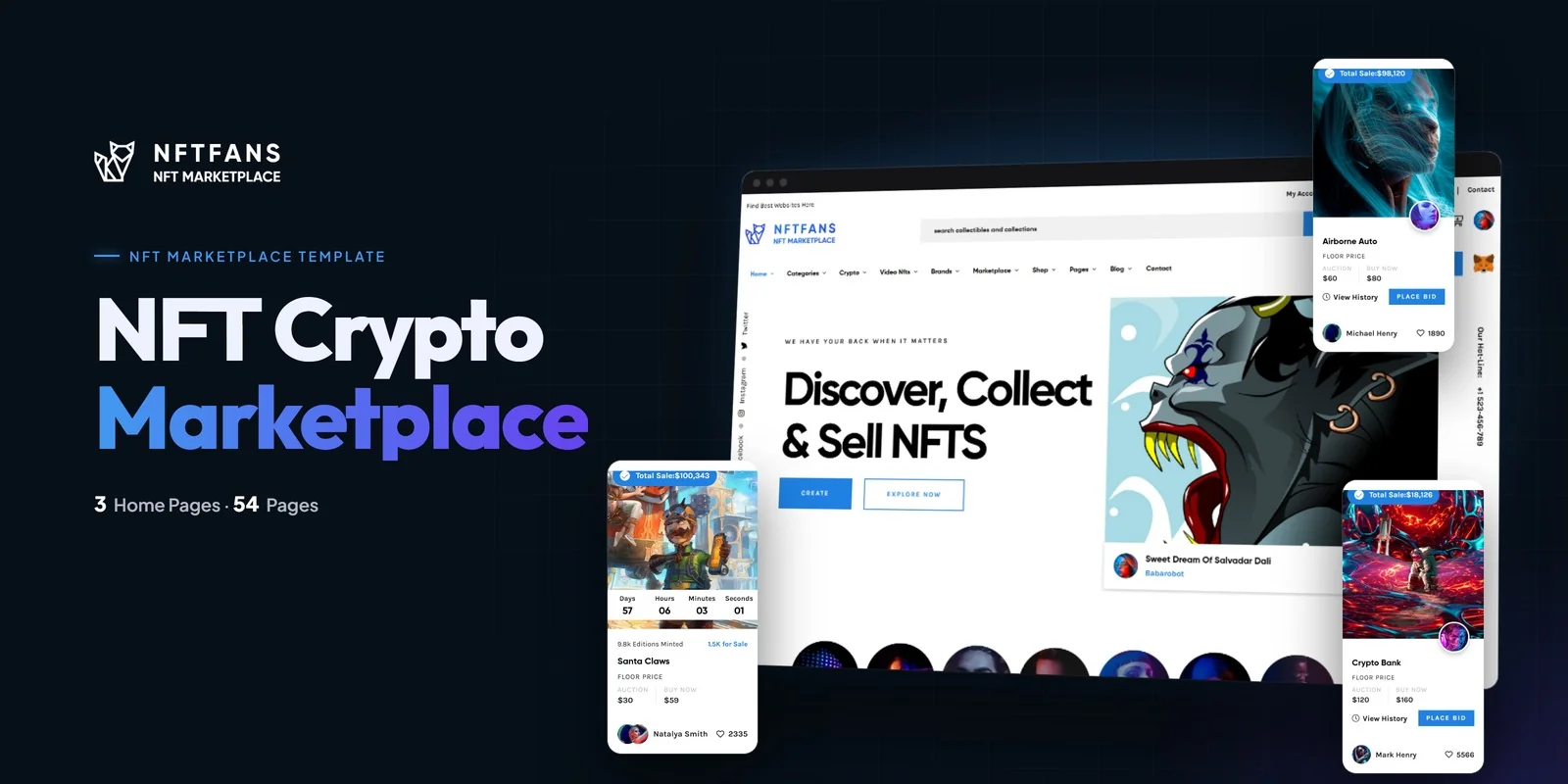
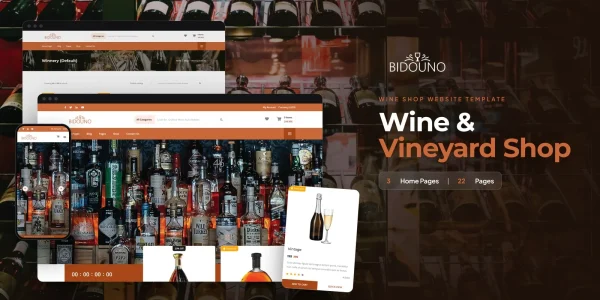
Nftfans is a specialty e-commerce HTML5 template designed specifically for online auction platforms, wine retailers, organic food stores, gourmet shops, and any business that sells through competitive bidding, timed sales, or premium product presentation. With 22 fully crafted pages, 4 shop layouts, countdown timers, product zoom, multi-step checkout, price filtering, and wishlist functionality, it delivers the complete auction commerce toolkit.
What Nftfans Includes
- 3 Unique Homepage Layouts — distinct hero styles and featured product arrangements with countdown timers
- 4 Shop Layouts — four distinct product archive page styles for different browsing experiences
- 2 Product Detail Page Styles — two single product page variants for different product types
- Multi-Step Checkout — jQuery Steps powered wizard for streamlined purchase flow with progress indicators
- Countdown Timer — for flash sales, timed auctions, and limited-time offers that create urgency
- Price Range Slider — ion.rangeSlider for filtering products by price with visual interaction
- Product Zoom View — jQuery Zoom for close-up product image inspection on hover
- Wishlist Page — save products for later purchase or bid tracking
- Cart Page — shopping cart with order summary and quantity management
- Newsletter Popup — email capture for building your buyer audience
- Blog Module — grid, list, and masonry blog formats plus full post detail page
- Isotope Filtering — category-based product filtering for shop browsing
- Account Pages — registration, login, and profile management for auction participants
- 22 Fully Designed Pages — complete e-commerce page set including legal and account pages
Why Nftfans Fits the Auction Commerce Niche
Nftfans is the only e-commerce template in the MetropolitanHost catalogue designed around urgency-driven commerce rather than standard browse-and-buy shopping. The countdown timer integration, product zoom functionality, price range slider, wishlist system, and multi-step checkout wizard are all features specifically selected for auction and timed-sale business models. Standard e-commerce templates include none of these features — they were designed for Amazon-style fixed-price retail, not eBay-style competitive commerce.
The four shop layouts and two product detail page styles provide the visual merchandising flexibility that auction platforms require — different product categories and sales formats benefit from different visual presentations. The newsletter popup builds the repeat-buyer audience that auction businesses depend on for sale attendance and competitive bidding environments.
Complete Auction Toolkit: Nftfans combines countdown timers, product zoom, price range slider, wishlist, multi-step checkout, and newsletter popup — every feature that auction and timed-sale commerce requires. When a buyer can zoom into product details, filter by price range, save items to a wishlist, watch the countdown timer create urgency, and complete their purchase through a guided multi-step checkout — the entire commerce experience is engineered for the competitive purchasing psychology that drives auction revenue.
Customisation Roadmap for Auction Entrepreneurs
Week One — Catalogue and Photography: Photograph your products with enough quality for zoom inspection — high-resolution images that look sharp at 2x magnification. Write product descriptions with the detail level auction buyers expect — provenance, condition, specifications, and estimated value where applicable. Set up your product categories for Isotope filtering. Configure countdown timers with your sale schedule. Replace all placeholder content and adjust the colour palette to match your brand.
Week Two — Commerce and Launch: Configure the multi-step checkout flow with your payment processing. Set up the price range slider boundaries for your product price range. Populate the wishlist and cart functionality. Set up the newsletter popup with your email marketing service. Populate the blog with initial content — buying guides, product category overviews, or upcoming sale announcements. Test the full purchase flow from product browsing through checkout completion on all devices. Deploy and announce your launch.
Frequently Asked Questions
Need Help Launching Your Auction Website?
MetropolitanHost provides professional web development services for HTML template deployments. Our team understands e-commerce and auction website requirements and delivers clean, conversion-optimised implementations.
- Template Installation Service — live in under 24 hours
- Full Website Package — complete front-to-back deployment with commerce integration
- Colour Customisation — match your auction brand across all 22 pages
- Website Speed Optimisation — Core Web Vitals improvements for image-heavy product pages
- Accessibility Compliance — WCAG audit and remediation