The lifestyle blog space has never been more competitive or more lucrative. Content creators who built audiences around home improvement, DIY projects, wellness routines, cooking, travel, and personal development are generating serious income through advertising, affiliate partnerships, sponsored content, and digital product sales. But behind every successful lifestyle blog sits the same infrastructure challenge: a website that needs to handle diverse content types, engage readers visually, convert casual visitors into subscribers, and — increasingly — sell products and services alongside the editorial content.
The problem most lifestyle bloggers face is not a lack of content ideas or audience interest. It is a website that does not match the quality of the content being published. They are posting beautiful photography on a template that crops it awkwardly. They are writing engaging articles that display in a single, monotonous layout. They are building audiences they cannot monetize because their website lacks the ecommerce infrastructure to sell products. And they are losing readers to competitors whose blogs simply look and function better.
This guide covers everything lifestyle bloggers and content creators need to know about building a professional blog website in 2026: the features that drive reader engagement and retention, the costs at every investment level, the design principles that keep readers browsing longer, and how to choose a template that supports both editorial content and the commercial opportunities that sustain a lifestyle brand.
Why Lifestyle Bloggers Need More Than a Basic Blog Template
A basic blog template — one homepage layout, one post format, a sidebar with widgets — was sufficient in 2015. In 2026, readers have exponentially higher expectations, search engines reward richer content experiences, and the economics of content creation demand websites that can do more than display text and images in a chronological feed.
Modern lifestyle blogs function as multimedia content platforms. A home improvement blog might publish step-by-step project tutorials, sell DIY tools and supplies through an integrated shop, offer downloadable project plans, and host a community where readers share their completed projects. A wellness blog might combine recipe content with fitness routines, sell meal plans and workout programs, and provide scheduling tools for virtual coaching sessions. The website template needs to support all of these content types and commercial functions.
Search engine optimization has also evolved in ways that reward content depth and site structure. Google’s algorithms favor websites that demonstrate topical authority — and that authority is built through comprehensive content organization with dedicated sections, category archives, and structured internal linking. A lifestyle blog on a basic template with flat navigation and a single post feed cannot achieve the site architecture that search engines reward.
Reader engagement metrics — time on site, pages per session, return visit rate — directly affect both advertising revenue and search rankings. Templates with diverse content presentation options, engaging visual elements, and intuitive navigation keep readers exploring your content longer, reading more articles, and returning more frequently. Every additional page view increases advertising impressions. Every return visit strengthens the subscriber relationship that enables email marketing and product sales.
The 10 Must-Have Features for Lifestyle Blog Websites
Lifestyle blog templates need a specific feature set that generic blog templates and basic content platforms cannot provide. Here are the features that separate professional lifestyle blogs from amateur ones.
1. Multiple Blog Layout Formats
Different types of lifestyle content perform better in different visual formats. Tutorial posts benefit from full-width layouts with large images and step-by-step structure. Recipe collections look best in card grids. Personal essays suit traditional single-column layouts with generous typography. Travel posts thrive in masonry layouts that showcase photography. A template offering six or more blog layout formats — grid, list, masonry, left sidebar, right sidebar, and full-width — gives you the flexibility to match each content type with its optimal presentation.
2. Dedicated Content Archive Sections
Lifestyle blogs that cover multiple topics — home projects, wellness, cooking, travel — need dedicated archive sections for each content pillar, not just tag-based filtering. A template with dedicated project or content archive pages with their own layout and browsing experience creates the organized content library that keeps readers engaged and signals topical authority to search engines.
3. Step-by-Step Content Presentation
DIY projects, recipes, workout routines, and tutorials all follow a step-by-step structure. Templates with jQuery Steps or equivalent multi-step content presentation break complex processes into digestible stages, keeping readers engaged through long-form instructional content rather than overwhelming them with wall-of-text posts. This format also improves mobile readability for content that would otherwise require extensive scrolling.
4. Integrated E-Commerce Shop
Successful lifestyle bloggers monetize through product sales — tools, supplies, digital downloads, merch, curated product collections, and affiliate partnerships. A template with an integrated shop section including product archive pages, individual product pages, cart, and checkout provides the commercial infrastructure that advertising revenue alone cannot match. The shop should feel like a natural extension of the content, not a separate storefront awkwardly bolted onto a blog.
5. Countdown Timers and Promotion Tools
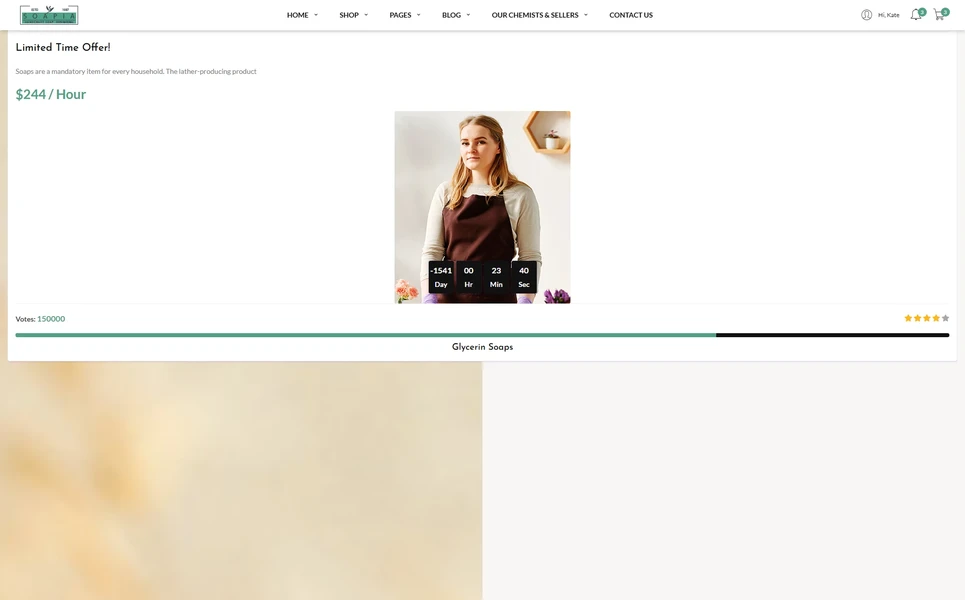
Lifestyle brands run seasonal promotions, limited product launches, challenge start dates, and event deadlines that benefit from visible countdown timers. A timer announcing that a 30-day fitness challenge starts in 5 days, or that a holiday gift guide collection is available for a limited time, creates the urgency and engagement that drives conversions on time-sensitive offers.
6. Date Picker and Scheduling
Lifestyle bloggers increasingly offer services — coaching sessions, consultations, workshop dates, project scheduling — that require date selection functionality. A DatePicker integration lets visitors choose dates for scheduled content releases, planned project start dates, or booking consultations, adding a layer of interactivity that pure content sites lack.
7. Visual-First Homepage Design
Lifestyle blog homepages need to create immediate visual impact while also communicating content breadth. The homepage should showcase featured content, recent posts, product highlights, and brand personality in a layout that invites exploration. Multiple homepage options let you test different approaches — a magazine-style layout for broad content sites, a single-focus hero for niche blogs, or a mixed layout that balances editorial and commercial elements.
8. Full-Screen Image Display
Lifestyle content is inherently visual. Food photography, project before-and-afters, travel landscapes, home interiors — these images need to be experienced at full resolution. Magnific Popup or equivalent lightbox functionality that enables full-screen image viewing with gallery navigation creates the immersive visual experience that lifestyle blog readers expect.
9. About Page and Brand Story
Lifestyle blogs are personality-driven brands. Readers follow the person behind the content as much as the content itself. An about page that tells your story, communicates your values, and establishes your authority in your niche is essential for building the personal connection that drives subscriber loyalty and supports premium pricing on products and services.
10. Responsive Mobile Experience
A majority of lifestyle blog traffic comes from mobile devices — readers scrolling during commutes, browsing during lunch, following tutorials from their phone while working on a project. Your blog must deliver a beautiful, fast, touch-friendly experience on every screen size. Images must load quickly, navigation must work with thumbs, and the shop checkout must function smoothly on small screens.
How Much Does a Lifestyle Blog Website Cost?
Lifestyle bloggers range from hobby content creators to full-time professionals generating six figures annually. The right investment level depends on where you are in that spectrum and where you want to go.
Free Blogging Platforms: $0
WordPress.com free tier, Blogger, and Medium offer zero-cost publishing. The tradeoffs are severe — limited design customization, platform branding on your site, no ecommerce capability, and no ownership of your content’s presentation. These platforms work for testing content ideas but cannot support a serious lifestyle brand.
Hosted Blog Platforms: $10 to $50 Per Month
WordPress.com premium tiers, Squarespace, and Ghost offer more customization and some ecommerce capability. Monthly costs accumulate — $30 per month costs $1,800 over five years. Design options are limited to platform themes, and advanced features often require additional paid plugins or upgrades.
Custom Blog Design: $5,000 to $20,000
A custom-designed lifestyle blog with unique layouts, custom content types, ecommerce integration, and professional branding. This investment delivers a unique result but creates ongoing dependency on the developer for updates and changes. Annual maintenance typically runs $1,000 to $5,000.
Premium HTML Templates: $14 to $59 One-Time
A single purchase delivers a complete lifestyle blog website with multiple homepage layouts, six blog format options, dedicated content archive sections, step-by-step content presentation, integrated shop with product pages and cart, countdown timers, date picker, and all supporting pages. No recurring fees. Full code ownership. The most cost-effective path for lifestyle bloggers who want professional design with commercial capability at minimal cost.
Design Principles for Lifestyle Blog Websites
Lifestyle blog design must balance visual appeal with readability, personality with professionalism, and editorial focus with commercial functionality.
Photography-Forward Layout
Lifestyle content lives and dies by its imagery. Your template should prioritize large, high-quality image display in post layouts, archive pages, and homepage features. The photography should be the hero of every page — not competing with decorative template elements, cluttered sidebars, or oversized navigation menus. Choose a template that gives images room to breathe and impact.
Readable Typography at Every Size
Lifestyle blog readers consume long-form content — tutorials that take ten minutes to read, project guides that span thousands of words, recipes with detailed instructions. Typography must be comfortable for extended reading on both desktop and mobile screens. Line height, letter spacing, font size, and paragraph spacing all affect whether readers finish your content or abandon it mid-article.
Warm and Inviting Color Palette
Lifestyle blogs should feel approachable and inviting — like stepping into a well-designed home rather than a corporate office. Warm neutral backgrounds, natural accent colors, and soft contrasts create a comfortable reading environment. Avoid harsh color schemes and high-contrast designs that work for tech and business sites but feel wrong for lifestyle content.
Seamless Commerce Integration
The transition from content to commerce should be invisible. Product recommendations within blog posts, featured products on archive pages, and shop sections that share the same design language as the blog create a unified experience. When the shop feels like a natural extension of the content — not a separate storefront with different styling — readers convert at higher rates because the commercial element does not disrupt the trust built through content.
Monetization Strategies for Lifestyle Blogs
The template you choose directly affects your ability to monetize your lifestyle blog. Each revenue stream requires specific website features to function effectively.
Product sales. Digital products — printable planners, project plans, recipe cards, workout programs, presets, and templates — have high margins and no shipping costs. Physical products — curated tool kits, branded merchandise, supplies collections — build brand identity and generate recurring revenue. Both require a shop section with product pages, cart, and checkout functionality.
Advertising revenue. Display advertising pays per impression, making page views and session duration the primary revenue drivers. Templates with diverse blog layouts, engaging visual presentation, and intuitive internal linking keep readers exploring more pages per session — directly increasing advertising revenue.
Affiliate partnerships. Product reviews, recommendation posts, and resource lists with affiliate links generate commission income. These posts perform best in blog layouts that showcase products attractively with ample space for detailed descriptions and comparison information.
Sponsored content. Brands pay lifestyle bloggers to create content featuring their products. A professional website with high design quality, diverse content presentation, and strong engagement metrics commands higher sponsorship rates. Brands evaluate the website quality as part of their creator evaluation process.
Services and coaching. Lifestyle bloggers who offer consulting, coaching, workshops, or virtual sessions need scheduling and booking functionality. Date picker integration and service description pages support this revenue stream.
Common Lifestyle Blog Website Mistakes
Lifestyle bloggers consistently make website decisions that limit their growth and revenue potential. Recognizing these patterns helps you build a stronger foundation from the start.
Choosing a single-layout blog template. A template with only one blog post format forces all your content — tutorials, listicles, photo essays, reviews, personal stories — into the same visual mold. Different content types deserve different presentations. The flexibility to display content in six or more format options creates variety that keeps readers engaged.
Ignoring commerce from the start. Many bloggers plan to add shop functionality later but choose templates without ecommerce capability. Retrofitting commerce into a blog-only template requires significant redesign or migration. Choosing a template with built-in shop functionality from the start — even if you do not use it immediately — saves you from a painful transition later.
Underinvesting in photography. Lifestyle content without strong imagery is like a cookbook without food photography — technically functional but fundamentally unappealing. Your template can only showcase images that are worth showcasing. Budget for photography equipment, editing software, and styling skills alongside your website investment.
Cluttered homepage design. Stuffing every content category, sidebar widget, social feed, and promotional banner onto the homepage creates visual chaos that overwhelms visitors. A clean homepage with curated featured content, clear navigation, and a focused call-to-action converts better than a cluttered page that tries to show everything at once.
No mobile optimization. With a majority of lifestyle blog traffic coming from mobile devices, a desktop-first design that merely scales down to small screens is insufficient. The mobile experience needs to be designed intentionally — touch-friendly navigation, fast image loading, readable typography without zooming, and streamlined checkout for product purchases.
Why Doitezy Fits the Lifestyle Blog Niche
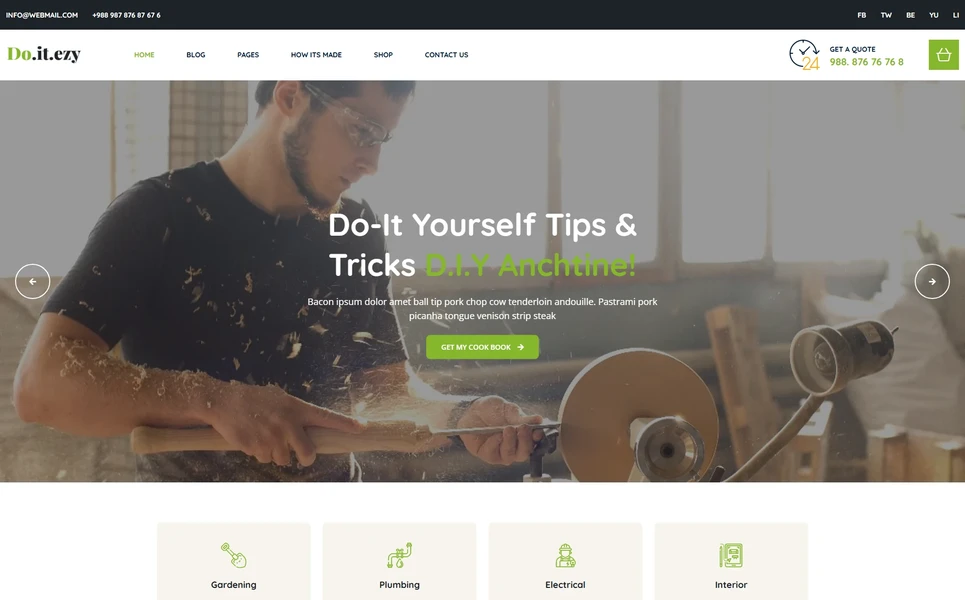
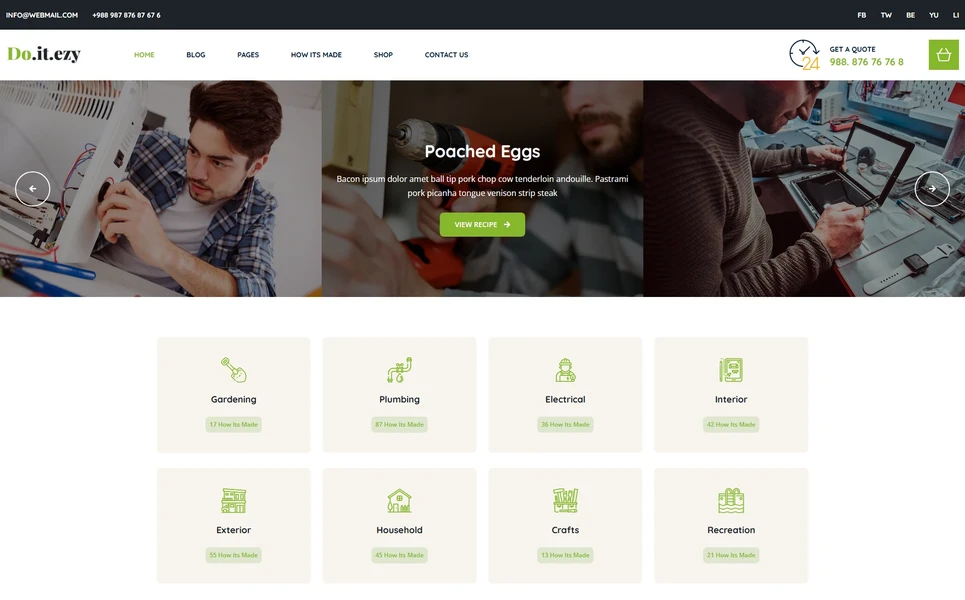
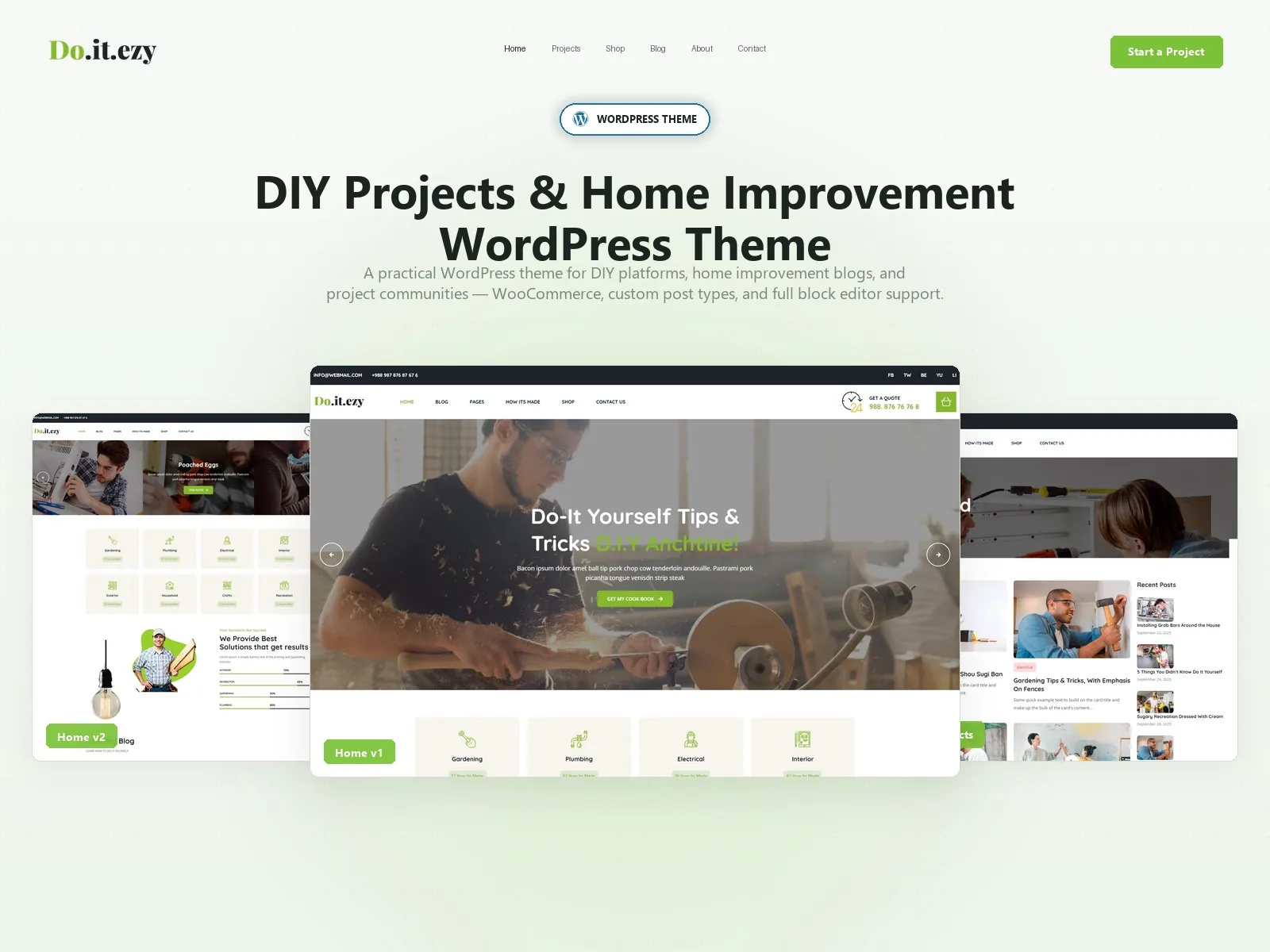
Doitezy is a professionally designed HTML5 template that ships with 18 fully crafted HTML pages built for lifestyle content creators, DIY bloggers, and home improvement publishers. The template includes two unique home layouts that let lifestyle bloggers choose between a magazine-style content showcase and a project-focused hero approach — both designed to create immediate visual impact and encourage exploration.
The six-format blog module is the template’s defining feature for lifestyle content. Grid, left sidebar, right sidebar, list, masonry, and single article layouts give you the flexibility to present every content type in its optimal format — tutorial posts in full-width with step-by-step imagery, recipe roundups in visual grids, personal essays in traditional single-column, and photography-heavy posts in masonry layouts. This format diversity keeps your blog visually interesting and matches each content type with its ideal presentation.
The dedicated DIY projects archive and step-by-step project detail section — powered by jQuery Steps — provide the structured content presentation that tutorial and how-to content demands. Readers can follow complex processes stage by stage rather than scrolling through endless single-page posts. This format significantly improves engagement with instructional content.
The integrated shop with product archive, individual product pages, and cart provides the commercial infrastructure for selling tools, supplies, digital products, and curated collections directly to your audience. The countdown timer drives urgency around limited launches and seasonal promotions. The DatePicker supports scheduling for coaching sessions, workshop dates, and project planning.
Built on Bootstrap 5 with Magnific Popup for full-screen imagery and responsive design across all devices, Doitezy delivers a production-ready lifestyle blog website that combines editorial excellence with commercial capability at a price point that leaves budget for the content creation that actually grows your audience.
Frequently Asked Questions
What features should a lifestyle blog website include?
A lifestyle blog website should include multiple blog layout formats for different content types, dedicated content archive sections, step-by-step content presentation for tutorials, an integrated ecommerce shop for product sales, countdown timers for promotions and launches, date picker for scheduling, visual-first homepage design, full-screen image display with lightbox, an about page for brand storytelling, and responsive mobile design for the majority of readers who browse on phones and tablets.
How much does a lifestyle blog website cost?
Free platforms like WordPress.com and Medium cost nothing but severely limit design and monetization. Hosted platforms run $10 to $50 per month with accumulating costs. Custom blog design costs $5,000 to $20,000 plus annual maintenance. Premium HTML templates offer the most cost-effective option at $14 to $59 one-time, delivering complete blog websites with multiple layouts, shop functionality, step-by-step content, and all supporting pages — no recurring fees and full code ownership.
Why do lifestyle blogs need ecommerce capability?
Advertising revenue alone rarely sustains a full-time lifestyle blog. Product sales — digital downloads, curated tool kits, branded merchandise, printable resources, and course materials — provide higher-margin revenue that does not depend on traffic volume. An integrated shop lets you monetize your audience directly rather than relying solely on third-party advertising and affiliate commissions. Choosing a template with built-in shop functionality from the start avoids the costly migration needed later.
How many blog layout formats do I need?
Lifestyle blogs benefit from at least four to six layout formats. Tutorials need full-width layouts with large images. Quick lists and roundups work best in card grids. Photography-heavy posts suit masonry layouts. Personal essays and long-form articles perform better in traditional single-column with sidebar. Format diversity keeps your blog visually interesting across different content types and prevents the monotony that causes readers to disengage.
What design principles work best for lifestyle blogs?
Lifestyle blogs should prioritize photography-forward layouts with large, high-quality images as the visual focus. Use warm, inviting color palettes rather than corporate or high-contrast schemes. Typography must be comfortable for extended reading on both desktop and mobile. Commerce elements should integrate seamlessly with editorial content rather than feeling like a separate storefront. The overall aesthetic should feel approachable and inviting — like a well-designed home rather than a corporate office.
How do I grow traffic to my lifestyle blog?
Focus on search engine optimization through comprehensive, original content targeting specific lifestyle topics your audience searches for. Build topical authority by creating content clusters around your main themes with dedicated archive pages and strong internal linking. Invest in quality photography that drives social sharing. Use email newsletters to bring subscribers back for new content. Engage in relevant online communities. Guest post on complementary lifestyle sites for backlink authority and audience cross-pollination.
Can I use an HTML template for a WordPress lifestyle blog?
HTML templates provide the complete front-end design that you can convert to a WordPress theme or use as a static site. For bloggers who want WordPress CMS functionality, the HTML template serves as a design blueprint that a developer can implement as a custom WordPress theme. Alternatively, the template can be used as-is for a static portfolio site, with blog content managed through a headless CMS or static site generator. The template delivers the professional design foundation regardless of the backend platform chosen.
The lifestyle blog landscape rewards creators who combine compelling content with professional presentation and commercial infrastructure. The bloggers who build sustainable businesses are not necessarily the best writers or photographers — they are the ones who treat their blog as a business from day one, investing in website infrastructure that supports content diversity, reader engagement, and multiple revenue streams. A professional template provides that infrastructure at a fraction of custom development cost, leaving budget for the content creation, photography, and audience building that actually drive growth.
Final Verdict
Lifestyle bloggers who invest in a purpose-built website with diverse content layouts, step-by-step presentation, integrated commerce, and professional design build audiences faster, monetize more effectively, and create more sustainable businesses than those publishing on basic templates or platform profiles. The template investment is one of the smallest line items in a content creation budget. The difference it makes in reader engagement, professional perception, and monetization capability is one of the largest. Every month on a mediocre template is a month of underperforming content, missed revenue, and competitive ground ceded to creators who understood that presentation is half the product.