Most business websites fail at one thing: turning visitors into clients. They look polished on the surface but lack the structure needed to guide someone from landing on the homepage to filling out a contact form. A strong business website template solves this problem from day one. It gives you tested layouts, conversion-focused sections, and the responsive foundation that modern businesses require.
We reviewed dozens of business and corporate website templates and narrowed the list to eight that stand out in 2026. Each one ships with Bootstrap 5, clean HTML5 markup, and layouts designed for specific industries. Whether you run an agency, architecture firm, construction company, or general corporate operation, this guide covers the templates worth your time.
Why Business Website Design Drives Revenue
Your website is the first sales conversation most prospects will ever have with your company. Research from Stanford’s Web Credibility Project found that 75% of users judge a business’s credibility based on its website design. That judgment happens in under 50 milliseconds. A business website template built around conversion principles handles that first impression for you, so you can focus on delivering services instead of debugging CSS.
The financial impact is measurable. Businesses with well-structured websites see 2-3x higher lead generation compared to those using generic, one-size-fits-all designs. The difference comes down to layout decisions: where the call-to-action sits, how services are presented, whether the portfolio section builds trust before asking for contact information. These are not cosmetic choices. They are revenue decisions baked into the template structure.
A purpose-built business website template also saves development time. Instead of spending 40-60 hours building a corporate site from scratch, you start with 15-20 pre-built pages, tested navigation patterns, and responsive grids that work across every screen size. The ROI calculation is straightforward: faster launch means faster revenue.
What Separates a Professional Business Website from a Generic One
Not every template labeled “business” actually works for business. The gap between a professional-grade template and a generic one comes down to four structural elements.
Clear Value Proposition Above the Fold
The hero section needs to answer one question in under five seconds: what does this company do, and why should I care? Professional business website templates dedicate the above-the-fold area to a strong headline, a supporting subheadline, and a single primary call-to-action. Generic templates waste this space with sliders that cycle through vague stock imagery. The best templates give you a hero layout that communicates value immediately. Pay attention to whether the template uses a static hero or an animated one. Static heroes with a single strong message typically outperform rotating carousels because they eliminate decision fatigue and focus attention on one clear action.
Portfolio and Case Study Sections
Prospects want proof. A business template should include dedicated portfolio pages with filterable galleries, individual project detail pages, and enough visual space to showcase results. Case study layouts that pair project images with metrics (budget, timeline, outcomes) convert significantly better than simple image grids. The best templates include at least two portfolio layout options: a grid view for browsing and a detailed single-project view that tells the full story of each engagement. Look for templates that treat portfolio sections as sales tools, not just decoration.
Lead Capture That Works
Contact forms alone are not enough. Professional templates integrate lead capture at multiple touchpoints: a sticky header CTA, inline forms within service pages, appointment booking widgets, and newsletter opt-ins. The goal is to match the visitor’s intent at every stage. Someone browsing your portfolio has different readiness than someone reading your pricing page. The template should accommodate both.
Mobile Performance
Over 60% of business website traffic comes from mobile devices. A template built on Bootstrap 5 handles responsive behavior out of the box, but the details matter. Touch-friendly navigation, properly sized tap targets, images that scale without layout shifts, and forms that are easy to complete on a phone screen. These are baseline requirements in 2026, and any business website template that skips them is not worth considering.
8 Best Business Website Templates (2026)
Each template below has been tested for code quality, responsive behavior, page speed, and real-world usability. All are built on Bootstrap 5 with valid HTML5 and CSS3.
1. Agencia – Digital Agency Template
Best for: Digital agencies, marketing firms, creative studios
Agencia is built specifically for agencies that need to showcase work and book clients. The template ships with 20 pages covering every section an agency website needs: service breakdowns, case study layouts, team directory, testimonial grids, and a built-in appointment booking flow. The case study pages stand out because they pair full-width project imagery with structured content blocks for scope, timeline, and deliverables.
The team directory is another strong point. Each team member gets a dedicated profile with bio, social links, and skill indicators. For agencies where talent is the product, this section does real selling work. The homepage uses a bold hero with portfolio previews below the fold, guiding visitors toward the work before asking for contact. Navigation is clean and logical, with dropdown menus for services and portfolio categories that keep the header uncluttered while still providing quick access to deep pages.
From a technical standpoint, Agencia’s code is well-organized with modular CSS sections and commented JavaScript. Customizing colors, fonts, and layout spacing is straightforward even for developers unfamiliar with the codebase. The template also includes a working contact form with field validation, reducing the integration work needed at launch.
2. Binit – Multi-Purpose Corporate Template
Best for: Corporate businesses, consulting firms, professional services
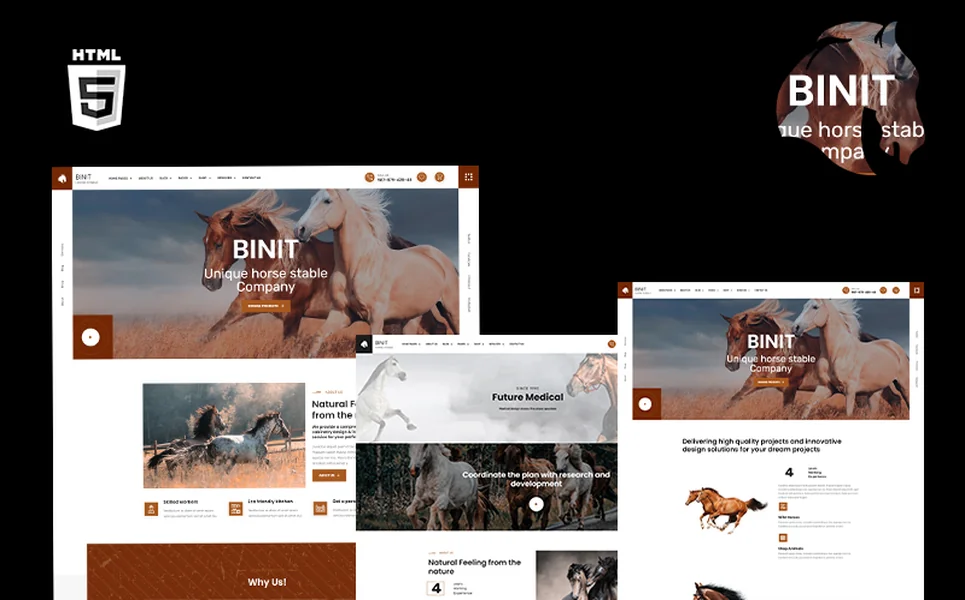
Binit takes a broad approach to business website design, offering layouts that adapt to consulting, finance, IT services, and general corporate use. The template includes multiple homepage variations, each tuned for a different corporate tone. The dark-header variation works well for tech companies, while the clean white layout suits consulting and accounting firms.
What sets Binit apart is its service page structure. Each service gets a dedicated page with icon-driven feature lists, pricing comparison tables, and an inline contact form. This means prospects can evaluate and inquire within the same page without navigating elsewhere. The blog section is equally polished, with sidebar layouts, category filtering, and related post suggestions that keep visitors engaged. Binit also includes a client logos section on the homepage and a dedicated partners page, both of which help corporate businesses display their professional network and client base. The footer is comprehensive, with contact details, recent blog posts, and a newsletter subscription form that captures leads from every page.

3. Disambi – Business Corporate Template
Best for: Established businesses, B2B companies, enterprise landing pages
Disambi focuses on trust-building layouts that work for businesses selling to other businesses. The homepage opens with a stats counter section showing company metrics like years of experience, projects completed, and team size. These credibility indicators sit above the services section, priming visitors with social proof before they evaluate your offerings.
The template includes a well-structured about page that combines a company timeline with team profiles and client logos. For B2B companies where relationships and track record matter, this structure answers the “why should we trust you” question visually. The contact page includes both a form and an embedded map, which is especially useful for businesses with physical offices that clients may visit. Disambi’s service pages follow a consistent layout with icon headers, detailed descriptions, and a sidebar call-to-action that stays visible as visitors scroll through the content. The overall design language is restrained and professional, avoiding flashy animations in favor of clean typography and structured whitespace that lets the content breathe.
4. Fornia – Business Template
Best for: Startups, small businesses, landing pages
Fornia strips away complexity and gives you a lean business website template that loads fast and converts well. The layout prioritizes a single-column flow with generous whitespace, making it easy for visitors to scan services, read testimonials, and reach the contact section without distractions. This simplicity is intentional and effective for small businesses that need a professional web presence without the overhead of managing dozens of pages.
The pricing section is one of Fornia’s strongest components. It uses a three-tier card layout with highlighted “recommended” plans, feature checklists, and clear CTA buttons. For service-based businesses that sell packages, this section does the heavy lifting of presenting options and nudging toward the middle tier. The template also includes a FAQ accordion that reduces support inquiries by answering common questions upfront.

5. Gridly – Event and Business Template
Best for: Event companies, conference organizers, businesses with active blogs
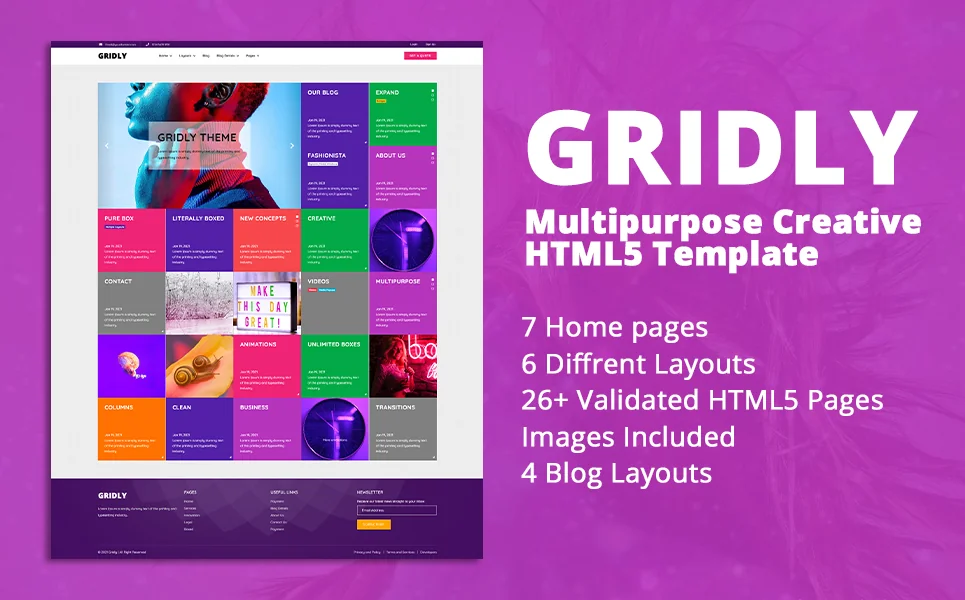
Gridly combines business functionality with event management layouts, making it a strong fit for companies that host conferences, workshops, or networking events. The event listing pages use a card-based grid with date badges, venue details, and registration CTAs. Each event has a dedicated detail page with speaker profiles, agenda timelines, and a registration form.
The blog section is where Gridly really earns its place on this list. It offers multiple blog layouts including a masonry grid, a list view with featured images, and a magazine-style layout with a hero article at the top. For businesses that rely on content marketing to drive traffic, these layouts give you publishing flexibility that most corporate templates lack. The sidebar supports widgets for categories, recent posts, tags, and newsletter signup. Gridly also handles pagination well, with numbered page navigation and a load-more option for infinite scrolling. If your business publishes weekly articles, case studies, or industry reports, the blog infrastructure here is stronger than what you will find in most competing templates.
6. Archa – Architecture Portfolio Template
Best for: Architecture firms, interior design studios, real estate developers
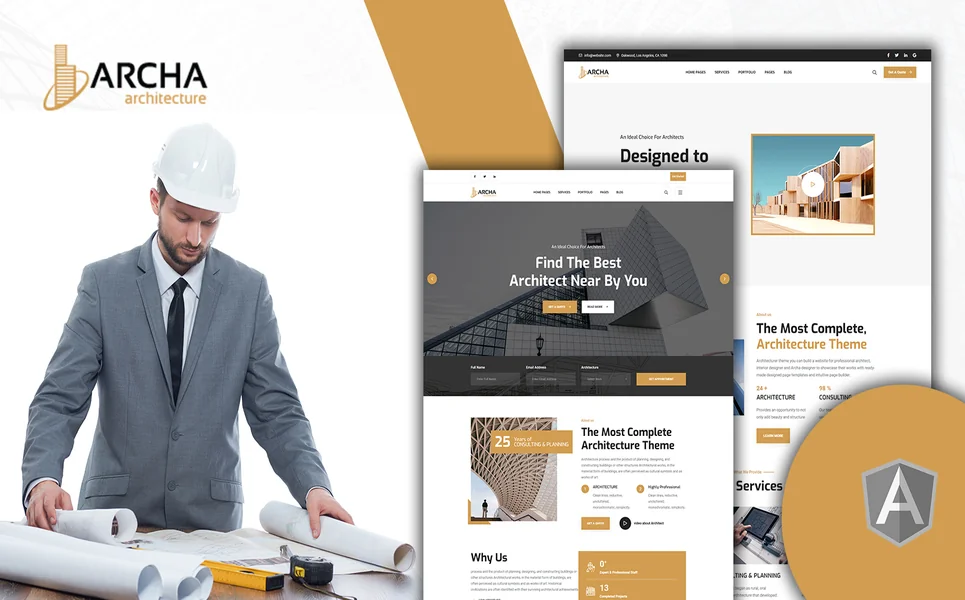
Archa is designed for architecture and design firms where visual presentation is everything. The template uses full-width image sections, parallax scrolling effects, and a portfolio grid that lets project photography dominate the page. Each portfolio item opens to a detail page with image galleries, project specifications (location, area, budget, year), and a description layout that balances text with visuals.
The homepage hero uses a full-screen image or video background with minimal overlay text, letting the architecture speak for itself. Below the hero, a services section presents capabilities like residential design, commercial projects, and renovation work with clean iconography. The team page pairs professional headshots with credentials and specialization areas. For architecture firms competing on portfolio quality, Archa provides the visual framework to win projects.
7. Constructi – Construction Company Template
Best for: Construction companies, contractors, engineering firms, building services
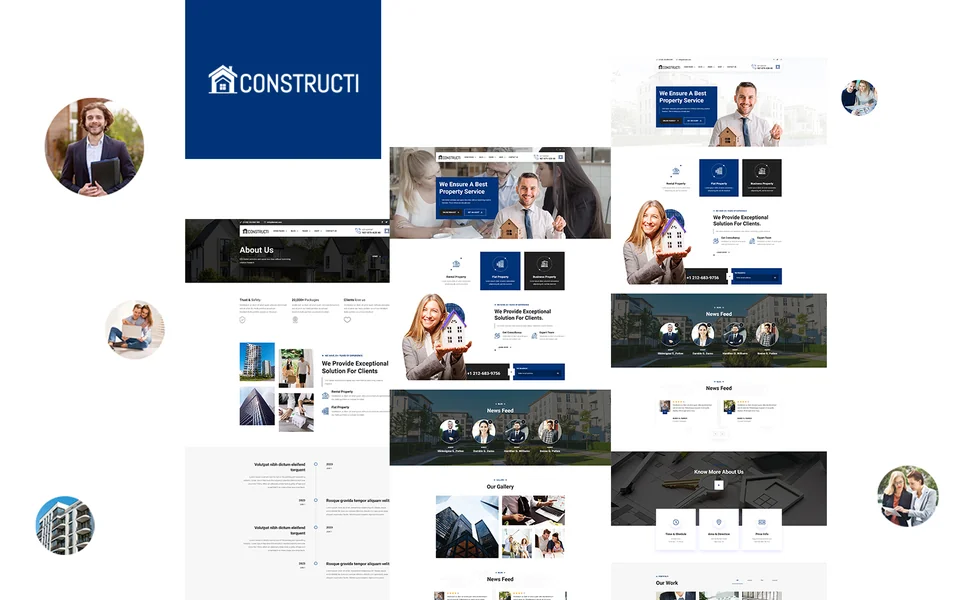
Constructi understands what construction companies need from a website: proof of completed projects, clear service descriptions, and easy-to-find contact information. The template opens with a bold hero section featuring project imagery and a “Get a Quote” button that stays visible in the sticky header as visitors scroll. This persistent CTA is critical for an industry where phone calls and quote requests drive revenue.
The project gallery uses a filterable grid sorted by project type (residential, commercial, infrastructure), with each project linking to a detail page showing before/after images, project scope, and completion timelines. The services section uses icon cards with expandable descriptions, keeping the page scannable while still providing depth. Constructi also includes a dedicated safety and certifications page, which is a practical addition for construction firms that need to demonstrate compliance to potential clients. The testimonials section pairs client quotes with project photos, creating a stronger trust signal than text-only reviews. For construction companies that win work through referrals and reputation, this visual proof of satisfied clients carries real weight.
8. Zwalonski – Business Corporate Template
Best for: Corporate firms, financial services, management consulting
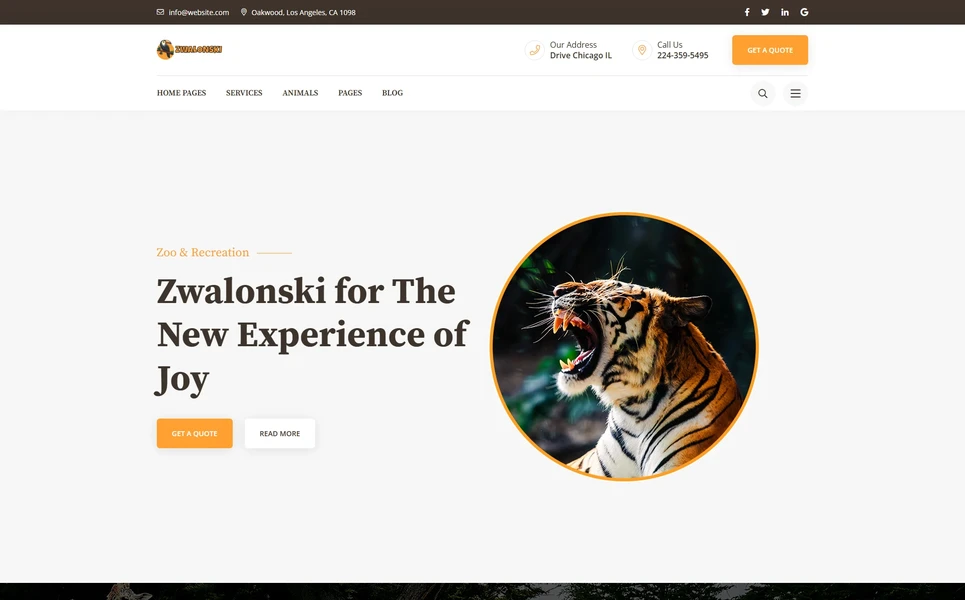
Zwalonski delivers a polished corporate design aimed at established companies that want a commanding online presence. The template uses a dark color scheme with gold accent tones, creating a premium feel that suits financial services, law firms, and management consultancies. The homepage combines a video hero with scrolling client logos, establishing authority before the visitor reads a single word of copy.
The inner pages are where Zwalonski demonstrates its depth. The about page includes a company history timeline, leadership team grid, and a “by the numbers” section with animated counters. Service pages use a tabbed layout that lets visitors explore different offerings without page reloads. The testimonials section rotates client quotes with company names and headshots, building trust through real attribution. For corporate businesses that compete on reputation, Zwalonski provides the visual gravitas to match.
Must-Have Features for Business Websites
Beyond the specific templates above, here are the features every business website template should include in 2026.
- Bootstrap 5 Framework – Responsive grid system with no jQuery dependency, utility classes for rapid customization, and consistent cross-browser rendering.
- SEO-Friendly HTML Structure – Semantic markup with proper heading hierarchy (H1 through H6), structured data readiness, and clean URLs for search engine indexing.
- Fast Page Load Speed – Optimized images, minified CSS and JavaScript, lazy loading for below-the-fold content. Target under 3 seconds on mobile connections.
- Contact Forms with Validation – Client-side validation for email, phone, and required fields. Server-side integration points for PHP mailers or third-party form services.
- Portfolio/Project Galleries – Filterable image grids with lightbox functionality, category sorting, and detail pages for individual projects.
- Testimonial Sections – Slider or grid layouts for client reviews with name, company, photo, and rating attribution for credibility.
- Blog Layouts – Multiple post formats (standard, gallery, video), sidebar support, pagination, and social sharing buttons.
- Team Member Pages – Profile cards with photos, bios, role descriptions, and social media links.
- Google Maps Integration – Embedded maps on contact pages for businesses with physical locations.
- Cross-Browser Compatibility – Tested rendering in Chrome, Firefox, Safari, and Edge. Consistent behavior across operating systems.
- Accessibility Compliance – Proper ARIA labels, keyboard navigation support, sufficient color contrast ratios, and screen reader compatibility.
- Sticky Navigation – Header that remains visible during scrolling, keeping primary CTAs within reach at all times.
Choosing the Right Business Template
Selecting a business website template is not about finding the prettiest design. It is about matching the template’s structure to your specific business needs. Here is a practical framework for making the decision.
Identify your primary conversion goal. If your business runs on client inquiries, choose a template with prominent contact forms and quote request buttons (Constructi and Agencia excel here). If you sell packaged services, look for pricing table layouts (Fornia handles this well). If your reputation drives sales, prioritize portfolio depth (Archa and Zwalonski).
Count your content pages. A startup with five pages does not need a 30-page template. Fornia or Disambi offer lean page counts that get you online fast. An established agency with case studies, team bios, and a blog archive will benefit from the 20-page depth of Agencia or the blog flexibility of Gridly.
Consider your industry. Generic corporate templates work, but industry-specific designs convert better because they include the sections your prospects expect. Architecture firms should look at Archa. Construction companies should start with Constructi. Digital agencies will get the most out of Agencia. The closer the template matches your industry, the less customization you need.
Check mobile behavior. Open the demo on your phone. Navigate through the pages. Try filling out a form. If anything feels clunky on mobile, move on. All eight templates in this guide pass mobile testing, but your specific customizations could introduce issues, so always verify after making changes.
Evaluate code quality. View the page source of the demo. Clean, well-commented HTML with semantic elements (header, nav, main, section, footer) indicates a template that will be easy to maintain and extend. Avoid templates with deeply nested divs, inline styles scattered throughout, or JavaScript errors in the browser console. The templates in this guide all follow modern coding standards, but this check is worth doing for any template you consider outside this list.
Plan for growth. Your website needs will expand as your business grows. A template with blog support, multiple page layouts, and a modular component structure gives you room to add services, launch content marketing, and build new landing pages without switching templates. Investing 30 minutes evaluating these factors upfront saves hours of migration work later.
Launch Your Business Website Today
Every week without a professional website is a week of missed leads. The templates in this guide give you a proven starting point with tested layouts, clean code, and responsive design across every device. Pick the one that matches your industry, customize it with your branding and content, and launch. You do not need to build from scratch when these foundations already exist.
For agencies, Agencia delivers the portfolio depth and booking flow you need. Corporate firms will find their match in Binit, Disambi, or Zwalonski. Architecture and construction companies should start with Archa or Constructi. Startups and small businesses will benefit from Fornia’s lean efficiency, while content-driven businesses will appreciate Gridly’s blog infrastructure.
Browse all business website templates and find the right fit for your company. Each template includes full source code, documentation, and responsive layouts ready for your content.