The live music economy in 2026 is a multi-billion-dollar industry, and for the bands and artists driving it, the website has quietly become the most valuable piece of real estate they own. Live music and concert ticketing alone now generate well over $30 billion in annual revenue worldwide, and the artists who capture the largest share of that money are not always the most talented. They are the ones who are easiest to find, easiest to follow, and easiest to book. In a streaming era where social platforms own the relationship between artist and fan, a dedicated band website is the one channel a musician fully controls. A professional band website template is no longer a vanity project. It is the foundation of a working music career.
Why Your Band Website Is Your Most Important Asset
Streaming platforms and social networks rent you an audience. They do not give you one. An algorithm change, a shadow-ban, or a shift in platform priorities can erase your reach overnight, and the followers you spent years building belong to the platform, not to you. A band website is the only place where the relationship between you and your fans is fully yours. It is where people buy tickets, join your mailing list, stream your latest single, and book you for shows without an intermediary taking a cut or controlling who sees what. Every serious music career eventually runs through a website you own.
Mobile traffic dominates music discovery. The overwhelming majority of fans find a band on their phone, between songs, during a commute, or while standing in line at a venue. If your band website does not load fast and look stunning on a small screen, you lose the fan in the three seconds it takes the page to stutter. Tour dates that are hard to read, a ticket link buried two taps deep, or a hero image that takes forever to render all translate directly into empty seats. Every design decision for a music site must start with the phone in the fan’s hand and scale up to desktop, not the other way around.
First impressions carry enormous weight in music because taste is emotional and instant. A fan decides whether your band feels legitimate within seconds of landing on your page. A site with a striking animated hero, professional photography, and a clear discography signals that you take your craft seriously, and that perception bleeds into how people hear the music itself. A dated, generic, or broken website tells a promoter or a label that you are an amateur, no matter how good the recordings are. Your band web design is the visual handshake that happens before a single note plays.
What Makes a Great Band Website
An Immersive Hero and Visual Identity
Music is an emotional medium, and a band website has to deliver an emotional hit in the first second. The best band website designs open with an immersive, full-screen hero that captures the energy of the act, whether that is a moody, atmospheric particle animation for a synth project or a high-contrast, stage-lit photograph for a rock band. This is where animated effects earn their place. A particle background, a full-screen image carousel, or a subtle scroll animation transforms a static page into something that feels alive and performative. The hero is your album cover, your stage entrance, and your first chord all at once, and a band website template built for the music industry treats it that way.
Visual identity has to carry through every page after the hero too. Consistent typography, a confident color palette, and cohesive photography turn a collection of pages into a brand. Fans should be able to recognize your band from a single screenshot. The strongest music templates give you a deliberate visual system rather than a generic corporate skeleton, so the personality of the act comes through whether a visitor is reading your bio, browsing the gallery, or checking the next tour date.
Music, Albums, and Discography Showcase
At its core, a band website exists to present the music. That means a proper discography: an albums archive where visitors can browse releases, and individual album detail pages with tracklists, artwork, and streaming or purchase links. Fans who land on your site want to hear something immediately, and a well-built music template makes that frictionless. The best band website designs treat each release as its own destination, with room for liner notes, credits, embedded players, and links out to Spotify, Apple Music, and Bandcamp. A single embedded player buried in a sidebar is not enough anymore.
For bands selling physical records and merchandise, the discography also doubles as a storefront. Templates that pair an albums archive with a cart and checkout let you sell vinyl, CDs, and merch directly to fans without routing them to a third-party marketplace that owns the customer data. Owning the transaction means owning the email address, the buying history, and the relationship, which is exactly the leverage independent artists need to build a sustainable career.
Tour Dates, Tickets, and Booking
Live performance is where most working bands actually earn their living, which makes the tour and tickets section the commercial heart of the site. A great band website template includes a clear, scannable schedule of upcoming shows, with venue, city, date, and a prominent ticket link for each. Features like a date picker for event scheduling and a countdown timer to the next show or release are not decoration. They create urgency and turn casual visitors into ticket buyers. When a fan can see at a glance that you are playing their city next month and buy a ticket in two taps, you convert interest into revenue.
The booking path matters just as much for the business side. Promoters, venues, and event organizers who want to hire you need an obvious contact and booking route, ideally with a dedicated form and clear professional details. A band website that makes booking effortless gets booked more often. Templates designed for the music and festival space build these conversion points in from the start, so you are not bolting a ticket button onto a layout that was never meant to sell anything.
Performance, Gallery, and Social Proof
Bands live and die on perceived momentum, and a website is where you manufacture that perception honestly. A photo gallery of past shows, packed crowds, and behind-the-scenes moments tells a promoter and a new fan that you are an active, drawing act. Animated statistics such as shows played, fans reached, or years performing reinforce that story with hard numbers. Lightbox galleries, filterable photo grids, and carousel-driven highlight reels give visitors a sense of the live experience before they ever buy a ticket, which is the single most persuasive thing a band site can do.
Performance also means raw speed. Music sites are notorious for heavy hero videos, oversized images, and bloated scripts that tank load times on mobile. Google’s Core Web Vitals influence whether new fans ever find you in search, and a sluggish page is penalized in rankings and abandoned by impatient visitors alike. A quality band website template is built on a lightweight framework like Bootstrap 5, with optimized assets and animations that add atmosphere without dragging performance down. Looking good and loading fast are not a trade-off when the template is engineered correctly.
4 Band Website Templates Worth Using in 2026
We evaluated the full music and festival collection and selected the four templates that deliver the best combination of design energy, music-specific features, and real-world usability for bands and artists. Each one is built on Bootstrap, fully responsive, and available as a clean HTML5 build with documented source code. Every template below was assessed against its live demo so the features described here are the features you actually get. Here are the four band website templates worth building on this year.
1. Donto (13 Pages)
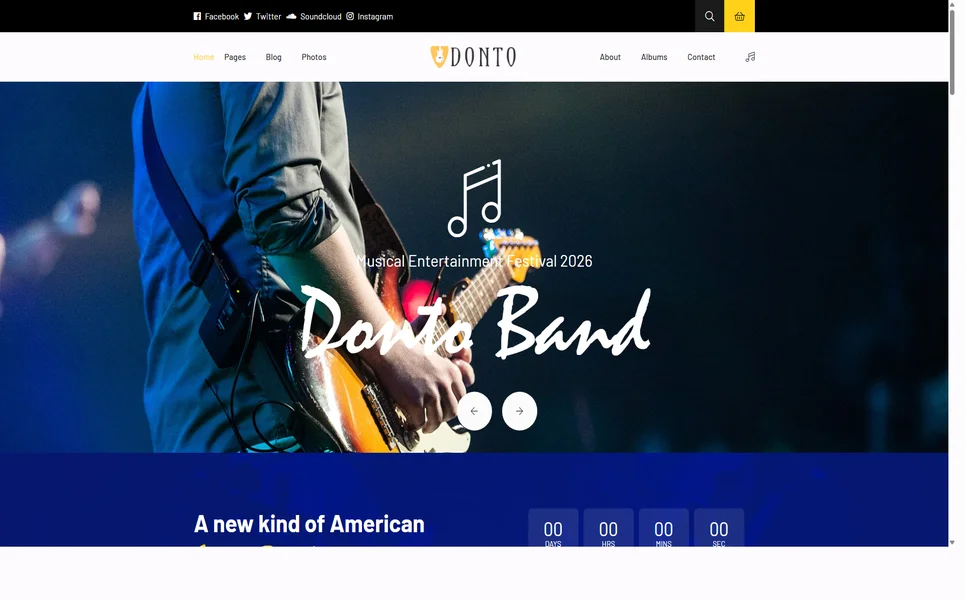
Donto is the most complete band website template in this collection, and it is the one that reads most clearly as a dedicated band site rather than a generic event page. Across 13 fully designed HTML pages it brings together everything a working band needs: a music albums archive with individual album detail pages, an artist profiles section for showcasing band members, a tickets and event dates page, a gallery, and three distinct blog formats for tour news and updates. The hero leads with a Particles.js animated background that gives the home page the dynamic, stage-lit feel of live music the moment a visitor arrives.
What makes Donto stand out is how thoughtfully it serves the band use case specifically. The albums module lets you archive your discography with dedicated detail pages for each release, the artist section showcases band members and performers, and the DatePicker-powered event scheduling plus countdown timer turn the tickets page into a genuine conversion tool. Swiper carousels handle featured artists and highlight sliders, and the three blog layouts give you grid, sidebar, and full-article formats for publishing tour diaries and release announcements. For a band that wants one site to cover music, shows, and storytelling, Donto covers all three without padding.
Best for: Bands and recording artists that want a complete site with a full discography archive, artist profiles, ticketed event dates, and a real content blog. View Live Demo
2. Bombo (7 Pages)
Bombo takes the opposite approach to Donto and proves that focus can be a feature. With a lean 7-page set, it is built to make a single, high-impact impression rather than to sprawl. The design leans into drama: a Particles.js animated hero, a Swiper full-screen carousel, dark overlay backgrounds throughout, and WOW.js scroll animations that fire energetic entrances as the visitor moves down the page. For a band or an artist whose brand is built on atmosphere and visual punch, this is the template that turns a homepage into a stage entrance.
Despite the compact page count, Bombo includes the pieces that matter most for presenting an act. There is a full artist lineup page and individual artist detail pages with bio, social links, and upcoming shows, which work just as well for the members of a band as they do for a festival roster. A festival gallery with Magnific Popup lightbox showcases past performances, Isotope filtering lets visitors sort that content by category, and CounterUp animated statistics put your numbers, artists performing, tickets sold, years running, front and center. A DatePicker handles event scheduling and a two-part blog covers news and full articles. It is a focused, fast-launching template for acts that want maximum impact from minimum pages.
Best for: Solo artists and bands that want a bold, atmospheric one-statement site with artist profiles, a performance gallery, and fast time to launch. View Live Demo

3. Martilo (10 Pages)
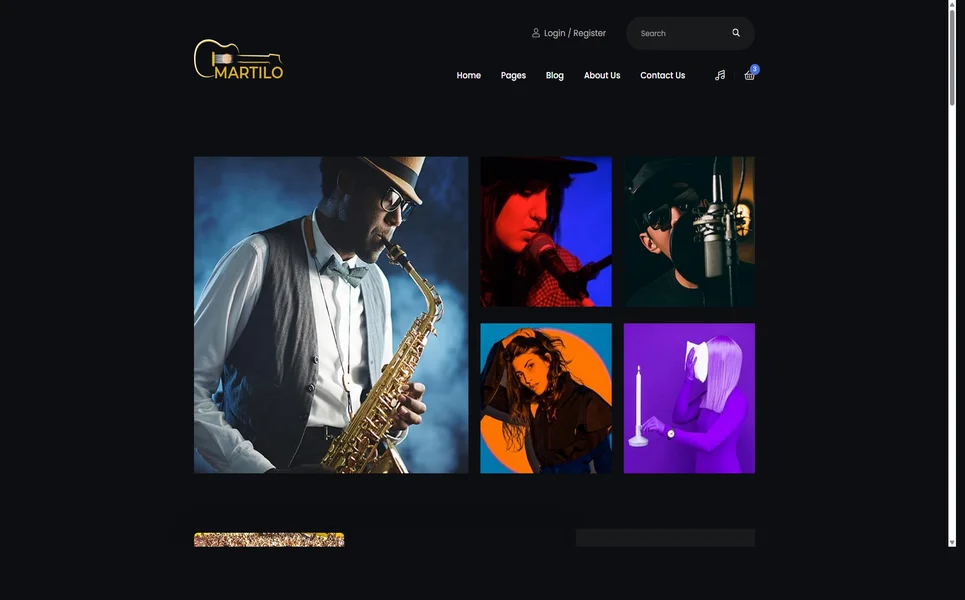
Martilo is the template for bands and musicians who want to sell as much as they showcase. Built specifically for musicians, music artists, and album retailers, its 10 HTML pages pair a bold, discography-driven home layout with a full albums archive, individual album detail pages, and, crucially, a complete cart and checkout flow. That commerce backbone is what sets Martilo apart in this list. It is not just a place to display your music, it is a place to sell records and merchandise directly to fans, keeping the transaction and the customer relationship entirely under your control.
The atmosphere is handled by Particles.js backgrounds for that stage effect, WOW.js scroll-triggered entrance animations, and NiceScroll smooth scrolling that gives the whole site a premium, polished feel. Countdown timers build anticipation for concerts, tours, and release dates, while CounterUp animated statistics surface your albums released, shows played, and fan counts. Isotope grid filtering lets visitors sort your music by genre or release type, Swiper carousels power the featured album sliders, and a Magnific Popup lightbox handles full-screen album art. With a blog for artist updates rounding it out, Martilo is a music storefront and a band brand in one cohesive package.
Best for: Musicians and bands focused on selling albums and merch, who need a discography showcase wired to a real cart and checkout. View Live Demo
4. Mimata (9 Pages)
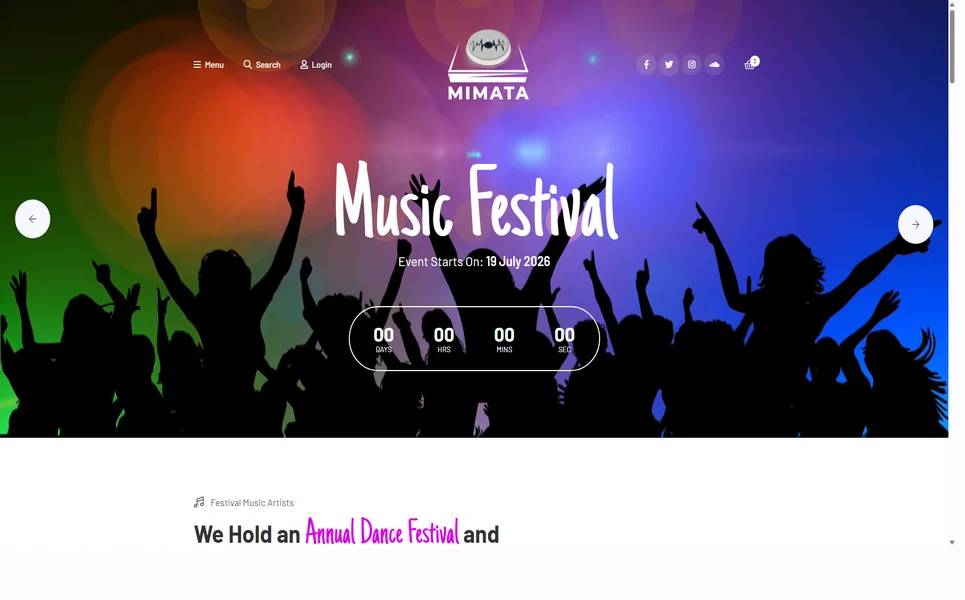
Mimata is the most events-and-ticketing-focused template in this roundup, which makes it the natural choice for bands that play heavily, run their own shows, or operate at the festival end of the live spectrum. Its 9 HTML pages are organized around performance: a full artist line-up page, individual artist detail pages with biographies, a dedicated shows and schedule page for managing your event timetable, pricing plans for ticket tiers, and a complete ticket cart and checkout flow. For an act whose business is built on getting people through the door, Mimata puts the entire ticket-buying journey on the website itself.
The feature set is tuned for urgency and conversion. DatePicker event scheduling and Countdown launch timers create pressure around ticket sales, while CounterUp animated attendance statistics build social proof. Particles.js animated hero backgrounds and WOW.js scroll animations supply the high-energy stage feel, NiceScroll delivers smooth browsing, Isotope filtering lets fans sort artists or events by genre, and Swiper carousels drive the artist showcases. A Magnific Popup lightbox handles full-screen imagery. Mimata is the template to reach for when your shows are the product and you want the website to sell the tickets.
Best for: Gigging bands and live acts that run their own ticketed shows and want lineup pages, a schedule, pricing tiers, and built-in ticket checkout. View Live Demo
Essential Features Every Band Website Needs
Whether you build from scratch or start with a band website template, these eight features are non-negotiable for any band or artist competing for attention online in 2026.
- An immersive, mobile-first hero. A full-screen hero with strong photography or an animated background that captures the band’s energy in the first second, and that looks flawless on a phone where most fans will first see it.
- Discography and album pages. A browsable albums archive with individual detail pages for each release, tracklists, artwork, and links to stream or buy. The music has to be front and center, not buried.
- Tour dates and ticket links. A clear, scannable schedule of upcoming shows with venue, city, date, and a prominent ticket button for each, ideally with a countdown to the next gig.
- Music and streaming integration. Embedded players and clear links out to Spotify, Apple Music, Bandcamp, and YouTube so a new visitor can hear you instantly without leaving the page.
- Merch and album store. A cart and checkout for selling records, merchandise, and downloads directly to fans, keeping the customer data and the revenue in your hands.
- Photo and video gallery. A lightbox gallery of live shows and behind-the-scenes moments that proves you are an active, drawing act and gives promoters confidence.
- Booking and contact path. An obvious, dedicated route for promoters, venues, and event organizers to reach you, with a booking form and professional details.
- Fast page load speed. Target under 2.5 seconds for Largest Contentful Paint. Compress images, keep animations lightweight, and choose a template built on Bootstrap 5 so atmosphere never costs you performance.
Choosing the Right Template for Your Band
Selecting a band website template starts with an honest read of what your act actually does. A band whose career runs on recorded music and a deep catalog has different needs than a gigging act that lives off ticket sales, or a project that earns through merch and direct-to-fan commerce. Donto is the broadest choice, with a full discography archive, artist profiles, event dates, and a real blog, which makes it the safe pick for a band that wants one site to do everything. Mimata leans hardest into shows and ticketing, with lineup pages, a schedule, pricing tiers, and ticket checkout, so it suits acts whose business is live performance. Match the template’s architecture to how you actually make money, not to whichever one has the longest feature list.
Page count is a practical signal of scope, but more pages does not automatically mean a better fit. Donto’s 13 pages give you maximum room to grow into, while Bombo’s focused 7-page set can be customized and launched in a fraction of the time. A 7-page site that goes live this week and starts selling tickets will outperform a sprawling project that sits half-finished for three months. If commerce is central to your plan, Martilo’s built-in cart and checkout matters more than raw page count, because retrofitting a store onto a template that was never designed for one is far more work than it looks. Be honest about your timeline and your priorities and let those choose the template.
Budget matters, but consider it in context. A premium band website template costs a fraction of what custom development runs, and you get a professionally designed, tested, and documented starting point engineered specifically for music. The real cost is not the template purchase. It is the time required to customize it with your branding, your music, your photos, and your tour dates. Choose a template with clear documentation and clean, well-organized code to minimize that effort. Every template in this list is built on Bootstrap with documented source code, so you can move from purchase to a live, gig-ready band website without fighting the codebase.
Start Building Your Band Website
The music industry rewards the artists who are easiest to find, follow, and book, and a professional website is how you become all three. Every month you operate without one, relying entirely on platforms that own your audience and can change the rules at will, is a month of lost tickets, missed merch sales, and bookings that went to a band with a better web presence. The four templates featured in this article are not concepts or mockups. They are production-ready, mobile-responsive, Bootstrap-built band website templates designed for real musicians, with the discography pages, tour schedules, ticket flows, and animated heroes that the music industry actually demands.
Start by exploring the designs, testing the live demos, and identifying which template aligns with how your act makes its living. Then customize it with your branding, load in your music and tour dates, and launch. Your next fan is already searching for your band online, and your next promoter is deciding whether you look like a professional act. Make sure both find a site that closes the deal. Browse All Band Templates and pick the right foundation for your music.